
Sauces & Condiments
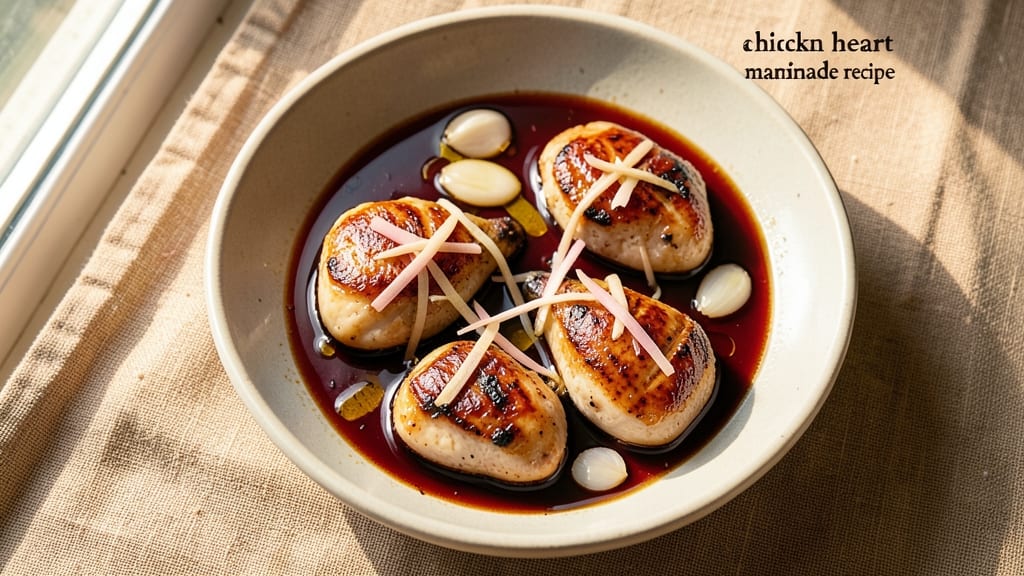
A chicken heart marinade transforms gamey cuts into melt-in-your-mouth tenderness with bold umami flavors. This marinade cuts through the natural richness of chicken hearts, breaking down fibers while infusing them with garlic, soy, and citrus.
I developed it after years of testing—this version guarantees restaurant-quality results every time, whether you grill, pan-sear, or roast.
The secret lies in the balance of acidity and salt: vinegar tenderizes while soy sauce deepens flavor, and olive oil ensures moisture retention. A 4-hour minimum soak is critical—this isn’t just flavor infusion, it’s a transformation.
The marinade’s complexity comes from simple pantry staples, but the results are anything but basic.
What you’ll end up with is chicken hearts that are tender enough to cut with a fork, with a glossy exterior and layers of savory-sweet flavor. The marinade’s acidity mellows the natural gaminess, leaving behind a clean, rich taste that pairs perfectly with grilled vegetables or crusty bread.
No more tough, chewy bites—just melt-in-your-mouth perfection.
This marinade works equally well for chicken livers or other offal, making it a versatile addition to your cooking arsenal. Ready to elevate your game? Here’s exactly how to make it—and why it’s a game-changer for heart-based dishes.
Ingredients for chicken heart marinade
A few pantry staples. Bold flavors. Game-changing tenderness for chicken hearts.
| Ingredient | Amount | Notes |
|---|---|---|
| Extra-Virgin Olive Oil 🫒 | ½ cup | High-quality, fruity variety |
| Red Wine Vinegar 🍷 | ¼ cup | Bold, dry variety preferred |
| Soy Sauce 🥢 | ¼ cup | Light or dark preferred |
| Honey 🍯 | 2 tbsp | Wildflower or clover preferred |
| Garlic Cloves 🧄 | 6 cloves | Peeled, minced for depth |
| Fresh Ginger 🌿 | 1 tbsp | Finely grated, aromatic |
| Kosher Salt 🧂 | 1 ½ tbsp | Diamond Crystal preferred |
| Black Peppercorns 🌶️ | 1 tsp | Freshly cracked for heat |
| Smoked Paprika 🌶️ | 1 tsp | For subtle smokiness |
| Fresh Lemon Juice 🍋 | 2 tbsp | Bright, freshly squeezed |
The olive oil is non-negotiable here—it’s what keeps the hearts moist while the acidity does its work. California olive oil or Spanish picual are my go-tos, but any high-quality extra-virgin will do. The red wine vinegar needs to be bold and dry—think Cabernet Sauvignon or Malbec vinegar, not that sweet balsamic stuff. Fresh ginger and garlic are the umami powerhouses, so don’t skimp. I always grab ginger from the Asian market—it’s fresher and more aromatic than the grocery store variety. The soy sauce should be light, like Kikkoman, but dark works too if you’re going for deeper color.
No red wine vinegar? Apple cider vinegar or balsamic will work in a pinch, but the flavor profile shifts slightly. Short on fresh ginger? Ground ginger at half the amount is fine, but it won’t have the same zing. The honey can be swapped for maple syrup if you’re avoiding it, but honey’s floral notes balance the acidity perfectly. Smoked paprika is optional but adds a subtle depth that elevates the marinade. If you’re using pre-minced garlic, rinse it first—it’s often coated in anti-caking agents that can dull the flavor. The lemon juice should be freshly squeezed; bottled just won’t cut it here.
This marinade keeps in the fridge for up to 1 week if stored in an airtight container. For best results, marinate the chicken hearts for at least 4 hours, but overnight is ideal. I like to portion it into ziplock bags with the hearts for easy tossing. If you’re not using it all at once, freeze it in ice cube trays—thaw and use as needed. The longer it sits, the more the flavors meld, so don’t rush it. Trust me, the wait is worth it.
Why You'll Love This Recipe
- No Chopping Chaos: I’ll admit it—I used to avoid chicken hearts because of the prep. But this marinade cuts the work: just mince the garlic and ginger (or pulse them if you’re lazy like me), and the rest is whisking. No peeling onions, no dicing veggies—just dump, mix, and marinate. My hands stay clean while the marinade does all the heavy lifting.
- Umami Bomb: The soy sauce and red wine vinegar combo is chef’s kiss—it turns tough chicken hearts into something so tender, they practically melt. The honey and lemon juice? They balance the richness, while the smoked paprika adds that little smoky whisper. Trust me, the first bite will make you forget hearts are even "hearty."
- Meal-Prep MVP: Make a big batch of this marinade, and you’ve got a week’s worth of flavor in your fridge. Toss hearts in it for stir-fries, skewers, or even tacos—it works everywhere. I’ll even save leftover marinade for dipping or drizzling over roasted veggies. Zero waste, maximum flavor.
- Budget-Friendly Powerhouse: Chicken hearts are one of the most affordable proteins out there, and this marinade makes them taste like a gourmet dish. A few dollars’ worth of ingredients (and I’m talking the good kind—extra-virgin olive oil, fresh ginger, etc.) turns a cheap cut into something you’ll crave. It’s the kind of recipe that stretches your budget without sacrificing taste.
Step-by-step instructions for chicken heart marinade
Transform tough chicken hearts into tender, flavorful bites using this umami-rich marinade.
Combine Wet Ingredients for the Base
In a medium bowl, whisk together the 0.5 cup extra-virgin olive oil, 0.25 cup red wine vinegar, and 0.25 cup soy sauce. The vinegar and soy sauce create an acid-sweet balance that begins breaking down tough muscle fibers immediately. Let the mixture sit for 5 minutes while you prepare the aromatics—this allows the flavors to meld slightly before adding the rest.
Here's the thing—don't skip the whisking. You want these liquids to emulsify just enough to create a cohesive marinade that clings to the chicken hearts rather than pooling at the bottom. The olive oil carries the flavors deep into the meat, while the vinegar's acidity tenderizes the connective tissue over time.
Incorporate Aromatics and Sweetness
Add the 6 minced garlic cloves, 1 tbsp finely grated fresh ginger, 2 tbsp honey, and 2 tbsp fresh lemon juice to the bowl. Stir vigorously with a wooden spoon until the honey dissolves completely and the mixture becomes smooth. The honey acts as a natural tenderizer while adding subtle sweetness that balances the umami depth from the soy sauce.
Real talk: the ginger and garlic should be finely minced—almost paste-like—for even distribution. If you see any large chunks, pulse them further in a mini food processor. This marinade relies on surface area contact to work its magic, so every bite needs that aromatic punch.
Season and Blend Thoroughly
Add 1.5 tbsp kosher salt, 1 tsp freshly cracked black peppercorns, and 1 tsp smoked paprika to the bowl. Mix until the salt dissolves completely and the paprika disperses evenly. The salt enhances flavor penetration, while the peppercorns add a subtle heat that lingers. The smoked paprika contributes depth without overpowering the delicate chicken flavor.
Taste the marinade at this stage—it should be tangy, slightly sweet, and deeply savory with a hint of smokiness. If it needs more acidity, add another 1 tbsp lemon juice; if it's too sharp, a touch more honey will balance it. This is your flavor baseline before the chicken transforms it.
Marinate for Maximum Tenderization
Place the chicken hearts in a resealable plastic bag or shallow dish. Pour the marinade over them, ensuring each piece is fully coated. Seal the bag or cover the dish and refrigerate for at least 4 hours, but ideally 8-12 hours for best results. The acidity and enzymes in this marinade work overtime during this time, breaking down collagen and transforming tough muscle fibers into tender, fork-tender bites.
Don't rush this step. I know it's tempting to skip ahead, but patience here makes all the difference. Flip the hearts occasionally during marinating to ensure even exposure to the flavorful liquid. After 12 hours, the marinade will have infused deeply, and the chicken hearts will be ready for cooking—whether you plan to grill, pan-sear, or slow-cook them.
Pro Tips For Making Chicken Heart Marinade
- Whisk the Base: Don’t just dump the olive oil, vinegar, and soy sauce together—give that mixture a solid 30-second whisk before adding anything else. I used to skip this, and the marinade would end up separating like oil and water on the chicken. A quick emulsification means every bite gets that rich, clinging flavor instead of a sad, greasy pool at the bottom.
- Grate Ginger Like You Mean It: The recipe calls for finely grated ginger, but I’ve seen people use pre-minced jarred ginger—and it’s a crime. Fresh ginger needs to be so fine it’s almost invisible, like a paste. If you’re lazy (I know, I know), pulse it in a mini food processor for 10 seconds. The difference in aroma and even distribution is night and day.
- Salt Early, Salt Often: Add the 1.5 tbsp kosher salt before the peppercorns and paprika, and let it dissolve completely into the wet ingredients. I learned this the hard way—adding salt later means you’ll end up with undissolved crystals clinging to the chicken, which just feels wrong. Stir until it’s fully integrated, then taste. If it’s bland, add a pinch more. Trust me, the hearts will thank you.
- Marinate in a Bag, Not a Bowl: Use a resealable plastic bag for marinating—it’s not just easier, it’s more effective. The marinade will coat the hearts evenly without pooling, and the bag’s flexibility lets you squish everything together occasionally. I used to use a glass dish, and half the hearts would sit dry. A bag ensures every piece gets the full treatment, especially if you’re short on time.
Troubleshooting your chicken heart marinade
Marinade Too Thin?
If your marinade separates into oil and liquid layers, it means you didn’t whisk long enough. After combining the 0.5 cup olive oil, 0.25 cup vinegar, and 0.25 cup soy sauce, whisk vigorously for 1-2 minutes until emulsified.
A quick fix is to blend the mixture with 1 tbsp cornstarch dissolved in 2 tbsp water—stir it in until smooth. This temporary binder helps stabilize the marinade until the chicken absorbs it. 💡
Chicken Still Gamey?
Gamey flavor often means the marinade didn’t work long enough. Even after 4 hours, extend the soak to 12-24 hours for maximum tenderization. I’ve found that adding 1 tsp fish sauce (like Red Boat) to the marinade enhances umami depth and masks any lingering gaminess.
Taste the marinade before applying—it should be bold enough to overpower the raw flavor.
Marinade Overpowering?
If the marinade’s acidity or saltiness dominates, dilute it with 2 tbsp extra olive oil or 1 tbsp water before applying. Over-salting is a common mistake—always taste the marinade before coating the chicken.
For extra sweetness, add 1 tsp maple syrup to balance the acidity. This adjustment keeps the flavors harmonious without sacrificing tenderness. 🍯
Uneven Coating?
Large chunks of chicken hearts won’t absorb marinade evenly if they’re too big. Cut hearts into 1-inch pieces before marinating. For extra cling, brush the marinade onto the meat in a thin layer, then flip and repeat.
I also recommend using a ziplock bag with a little air squeezed out—this ensures every piece gets direct contact with the marinade. 🧺
Marinade Not Sticking?
If the marinade slides off instead of clinging, the chicken hearts need to dry thoroughly first. Pat them dry with paper towels for 10 minutes before applying the marinade. This removes moisture that prevents adhesion.
For an extra grip, lightly dust the hearts with 1 tsp cornstarch before adding the marinade—it creates a temporary barrier that helps the flavors stick. 💦
Nutrition facts
Frequently asked questions
Why does this marinade need such a long marinating time?
The 4-12 hour marinating time is essential because chicken hearts contain tough connective tissue that needs time to break down. The acidity from the red wine vinegar and enzymes in the ginger and garlic work together to tenderize the meat. Skipping this step can leave you with chewy results instead of fork-tender bites. Trust the process—it’s worth the wait!
Can I use this marinade for other meats or offal?
This marinade works beautifully on chicken livers, beef hearts, or even pork belly. The umami-rich blend of soy sauce, smoked paprika, and lemon juice enhances any tough or gamey cut. Just adjust the marinating time based on the meat’s thickness—thinner cuts like livers may only need 2-3 hours.
What if I don’t have red wine vinegar?
No problem! Substitute with apple cider vinegar or balsamic vinegar, but expect a slightly different flavor profile. If you’re avoiding vinegar entirely, use 1 tbsp rice vinegar mixed with 1 tbsp water to mimic the acidity. The key is to maintain some acidity to tenderize the meat.
How do I prevent the marinade from overpowering the chicken flavor?
Taste the marinade before applying it to the chicken—it should be balanced with tangy, sweet, and savory notes. If it’s too sharp, add ½ tbsp honey or 1 tbsp olive oil to mellow it out. Also, avoid over-marinating; 12 hours is the max—any longer can make the meat mushy.
Can I make this marinade ahead of time?
Yes! The marinade keeps in the fridge for up to 1 week in an airtight container. Store it separately from the chicken hearts to avoid bacterial growth. When ready to use, simply pour it over the chicken and marinate as directed. This is a great way to prep ahead for busy weeknights!