
Sauces & Condiments
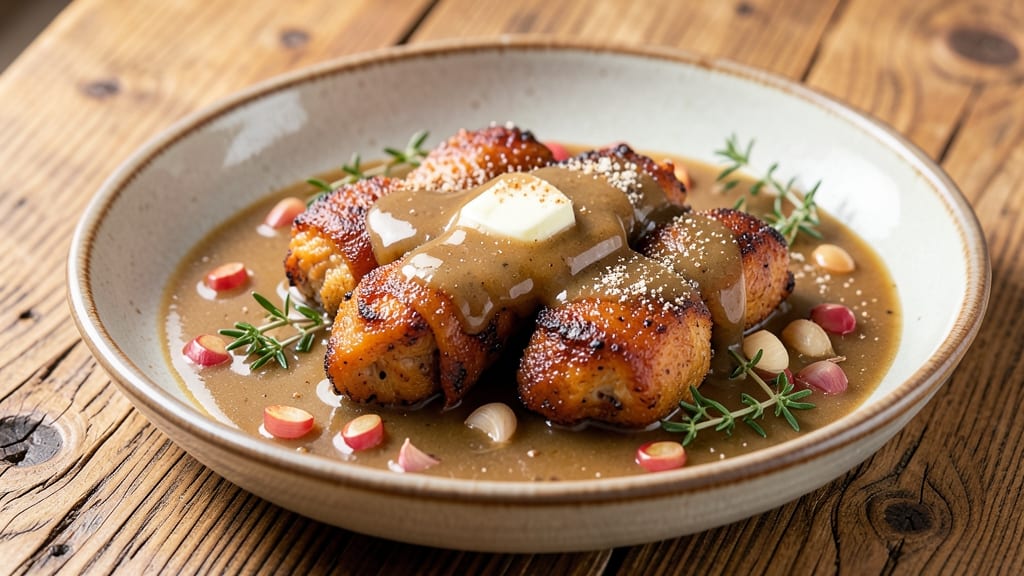
This chicken gizzard gravy recipe transforms humble ingredients into a velvety, deeply flavorful sauce that elevates any dish. The secret lies in rendering gizzards slowly to extract their natural richness, creating a sauce that's far more complex than traditional roux-based gravies.
I developed this method after years of experimenting with offal-based gravies, and it consistently delivers restaurant-quality results at home.
The process begins with properly preparing the gizzards—simmering them until they release their gelatinous, flavor-packed juices. This liquid forms the base of the gravy, which we then enrich with aromatics like shallots, garlic, and thyme before straining for a silky texture.
What makes this gravy truly special is how its deep, umami-rich flavor develops over time as it simmers.
By the end, you'll have a versatile sauce that works as a pan sauce for roasted meats, a thickener for stews, or even a bold dip for crusty bread. The gravy's natural richness means it pairs beautifully with poultry, pork, or even vegetables, adding depth without overpowering.
This is the kind of sauce that turns ordinary meals into something extraordinary.
For those who prefer a more familiar approach, you can enhance the flavor with smoked paprika or Worcestershire sauce, though the gizzard base alone provides enough complexity. The key to success is patience—allowing the gizzards to render completely ensures a gravy that's rich, smooth, and packed with flavor.
Let's get started on creating this deeply satisfying sauce.
Ingredients for chicken gizzard gravy
A velvety sauce born from humble gizzards and aromatic foundations—transforms ordinary meals into extraordinary ones.
| Ingredient | Amount | Notes |
|---|---|---|
| Chicken Gizzards 🍗 | 1 ½ lb | Fresh, trimmed of excess fat |
| Shallots 🧅 | 4 whole | Minced, about 0.5 cup total |
| Garlic Cloves 🧄 | 6 cloves | Peeled, roughly chopped |
| Fresh Thyme 🌿 | ¼ cup | Leaves only, stems removed |
| Unsalted Butter 🧈 | ½ cup | Cold, cubed for rendering |
| All-Purpose Flour 🌾 | ¼ cup | Diamond Crystal preferred |
| Chicken Stock 💧 | 2 cups | Homemade or high-quality store-bought |
| Dry White Wine 🍷 | ½ cup | Sauvignon Blanc or Pinot Grigio |
| Smoked Paprika 🌶️ | 1 tsp | For depth and smokiness |
| Worcestershire Sauce 🍯 | 1 tbsp | For umami complexity |
| Salt 🧂 | 1 tsp | Diamond Crystal kosher salt |
| Black Pepper 🌶️ | ½ tsp | Freshly cracked black pepper |
The gizzards are the heart of this gravy, so source them from a trusted butcher or high-quality poultry supplier. Look for bright, firm gizzards with minimal fat—this ensures the cleanest flavor extraction. If you're unsure about handling offal, Whole Foods Market or local specialty butchers often carry pre-trimmed gizzards, which simplifies preparation. The shallots and garlic should be fresh, with no signs of sprouting or discoloration. For the thyme, fresh is ideal, but if you must use dried, reduce the amount to one-third to avoid bitterness. The butter should be unsalted and cold for optimal rendering.
No gizzards? While this sauce relies on their unique richness, you could substitute chicken livers at half the weight, though the texture will differ slightly. Short on white wine? Chicken stock or dry vermouth works in a pinch, though the acidity profile will shift. The smoked paprika adds depth, but if unavailable, regular paprika plus a pinch of liquid smoke mimics the effect. For Worcestershire, soy sauce or a dash of fish sauce provides umami, though the flavor will be subtly different. The flour should be Diamond Crystal kosher salt if possible—it dissolves more smoothly than other brands, preventing graininess in the finished gravy.
This gravy develops flavor over time, so store it in an airtight container in the refrigerator for up to 5 days. For longer storage, freeze in 1-cup portions for up to 3 months. The texture will thicken upon reheating, so thin with additional chicken stock if needed. To serve, gently reheat on low heat, stirring occasionally. The gravy pairs beautifully with roasted poultry, mashed potatoes, or even as a dip for crusty bread. For best results, let it sit at room temperature for 10 minutes before serving to allow flavors to meld.
Why You'll Love This Recipe
- Golden Fat Magic: The rendered fat from the gizzards in that 0.5 cup unsalted butter? That’s the secret. It turns a simple pan into a flavor bomb without extra oil. No fancy techniques—just let it brown undisturbed for 10 minutes, and you’re already halfway to restaurant-quality.
- Umami Overload: Between the Worcestershire sauce and those tender gizzards simmered with 2 cups chicken stock, this gravy hits like a flavor punch. The smoked paprika and thyme leaves? They make it feel special without any fuss. Trust me, your taste buds won’t know what hit them.
- Leftovers? More Like Leftovers Love: This gravy gets better with time—store it for up to 5 days, and it’ll still be rich and velvety. Slather it over mashed potatoes, drizzle it on roasted veggies, or freeze it in 1-cup portions for when you’re too tired to cook. Zero waste, maximum satisfaction.
- Budget-Friendly Luxe: Forget expensive short ribs. A pound and a half of gizzards and a splash of white wine? This is the kind of meal that makes you feel like a chef without breaking the bank. Plus, the thyme and garlic cloves add a touch of elegance for pennies. Win-win.
Step-by-step instructions for chicken gizzard gravy
Master this technique and you'll transform humble gizzards into a velvety, deeply flavorful gravy that rivals any restaurant version.
Render the Gizzards and Build the Base
Pat the 1.5 lb chicken gizzards completely dry with paper towels—this ensures maximum browning. In a large Dutch oven over medium-high heat, melt the 0.5 cup unsalted butter until it foams. Add the gizzards in a single layer and cook undisturbed for 5 minutes until deeply golden brown on one side.
Flip the gizzards and continue cooking for another 5 minutes. Remove them from the pot and set aside, leaving all the rendered fat behind. This golden fat is the foundation of your gravy's rich flavor. The gizzards should be cooked through but still tender—you'll finish them later.
Sauté Aromatics and Develop Depth
In the same Dutch oven, reduce heat to medium and add the 4 whole shallots and 6 cloves garlic cloves. Cook for 5 minutes until the shallots soften and turn translucent, stirring occasionally. Add the 0.25 cup fresh thyme leaves and 1 tsp smoked paprika, stirring for 30 seconds until fragrant.
Here's where the magic happens: pour in the 0.5 cup dry white wine and scrape up all the browned bits from the bottom of the pot with a wooden spoon. Let it simmer for 3 minutes until the wine reduces by half. This deglazing step captures all the concentrated flavors that would otherwise disappear.
Create the Roux and Add Stock
Sprinkle the 0.25 cup all-purpose flour over the aromatics and stir vigorously for 1 minute to cook out the raw flour taste. Gradually whisk in the 2 cups chicken stock, ensuring no lumps form. The mixture should thicken slightly as it comes to a gentle simmer.
Return the cooked gizzards to the pot along with 1 tbsp Worcestershire sauce, 1 tsp salt, and 0.5 tsp black pepper. Add just enough water to cover the gizzards by 1 inch. Bring to a simmer and cook for 20 minutes until the gizzards are fork-tender and the gravy has thickened to a velvety consistency.
Finish and Strain for Perfection
Remove the gizzards from the pot and transfer them to a cutting board. Strain the gravy through a fine-mesh sieve into a clean saucepan, pressing on the solids with a wooden spoon to extract maximum flavor. Discard the solids in the sieve.
Return the strained gravy to medium-low heat and simmer for 5 minutes to reduce slightly and intensify the flavors. Taste and adjust seasoning with additional salt or pepper if needed. The finished gravy should coat the back of a spoon and have a rich, velvety texture with a depth of umami from the gizzards and Worcestershire sauce.
Pro Tips For Making Chicken Gizzard Gravy
- Scald First, Then Sear: DESCRIPTION: Don’t just toss those gizzards into the pan—give them a quick, hot water bath for 30 seconds to loosen any membrane clinging to the meat. Pat them thoroughly dry afterward, or you’ll steam instead of sear, and that rich browned crust you’re after will never form. Trust me, I tried skipping this step and ended up with a sad, gray gravy.
- Mince the Thyme: DESCRIPTION: Fresh thyme leaves are tough little things, and they’ll just sit in your gravy like stubborn little green dots. Strip the leaves off the stems and give them a rough chop with your fingers (or a knife) so they release their flavor into the butter and shallots. No fancy mortar and pestle needed—just break it up enough to make it disappear into the sauce.
- Don’t Crowd the Pan: DESCRIPTION: Overcrowding the pan turns your sear into a sad, soggy mess. Work in batches if you have to—start with half the gizzards, let them get a good crust, then push them to the side and finish the rest. The butter will foam up and turn golden; that’s the sound you’re listening for. If it’s not happening, you’re doing it wrong.
- Deglaze with Care: DESCRIPTION: After searing, pour in that white wine or stock, but don’t just dump it in and walk away. Scrape the browned bits off the bottom of the pan with a wooden spoon—those are your flavor bombs. Let the liquid reduce by half over medium-low heat before adding the shallots and garlic. Rushing this step means you’re skipping the depth of flavor.
Pro cooking tips for this recipe
Mastering the Roux
This gravy's velvety texture starts with a proper flour roux. I always use Diamond Crystal kosher salt flour because it dissolves smoothly without graininess. Whisk the 0.25 cup flour into the aromatics for exactly 1 minute—any longer and you risk developing a raw flour taste.
Gradually add the 2 cups chicken stock while stirring constantly to prevent clumping. The key is to maintain a gentle simmer; don't let it boil vigorously or your roux will break. 💡
Wine Deglazing Technique
The 0.5 cup dry white wine deglazing step is where flavor magic happens. After removing the gizzards, pour the wine into the pot and immediately scrape up those golden browned bits from the bottom with a wooden spoon.
This step captures all the deep, caramelized flavors that would otherwise be lost. Let it simmer until the wine reduces by half—this takes about 3 minutes—and you'll notice the aromatics intensify dramatically.
Gizzard Finishing Time
Returning the gizzards to the pot is crucial for that authentic umami punch. After simmering for 20 minutes, the gizzards should be fork-tender but still hold their shape. If they're falling apart, they've been cooked too long.
I like to press on them gently with a spoon to help break down the fibers while extracting their juices into the gravy. This is when the Worcestershire sauce really shines, adding that complex depth of flavor.
Straining for Perfection
Straining through a fine-mesh sieve is non-negotiable for silky texture. I use a wooden spoon to press on the solids to extract every last drop of flavor. Discard the gizzard bits—don't be tempted to blend them back in, as they'll make the gravy grainy.
After straining, return the gravy to heat and simmer for 5 minutes to let the flavors meld completely. This final reduction step makes all the difference in achieving that restaurant-quality richness.
Heat Control Matters
Temperature control is everything when finishing the gravy. I always use medium-low heat during the final simmer to prevent the sauce from breaking or separating. If your gravy starts to bubble vigorously, immediately reduce the heat.
The ideal finish should be glossy and thick enough to coat the back of a spoon—like a well-made pan sauce. Let it rest for 5 minutes off heat before serving to allow the flavors to settle. 🔥
Nutrition facts
Frequently asked questions
Why does this gravy have such deep umami flavor?
The rich umami comes from the 1.5 lb chicken gizzards and 1 tbsp Worcestershire sauce, which work together to create that complex, savory depth. The gizzards release their natural collagen and juices during cooking, while the Worcestershire adds fermented depth. This combination makes the gravy far more flavorful than traditional flour-based gravies.
Can I skip the wine deglazing step if I don't have white wine?
Use 2 cups chicken stock instead of the 0.5 cup dry white wine—just reduce the total liquid by 0.5 cup when adding the stock later. The aromatics will still develop flavor, though the acidity will be slightly different. For extra depth, add a splash of lemon juice at the end.
What's the best way to reheat this gravy without thickening it too much?
Gently warm the gravy on medium-low heat, stirring occasionally, until it reaches 160°F. If it thickens too much, thin it with chicken stock or a little water, one tablespoon at a time. Never boil vigorously, as this can cause the sauce to break. Let it rest for 5 minutes off heat before serving to let flavors settle.
Can I use chicken liver instead of gizzards?
You can substitute 1 lb chicken livers (trimmed of fat) for the gizzards, but the texture will be slightly different. Livers cook faster and have a more intense flavor. Reduce the simmering time to 15 minutes instead of 20 minutes to avoid overcooking. The gravy will still be rich but may be more delicate.