
Sauces & Condiments
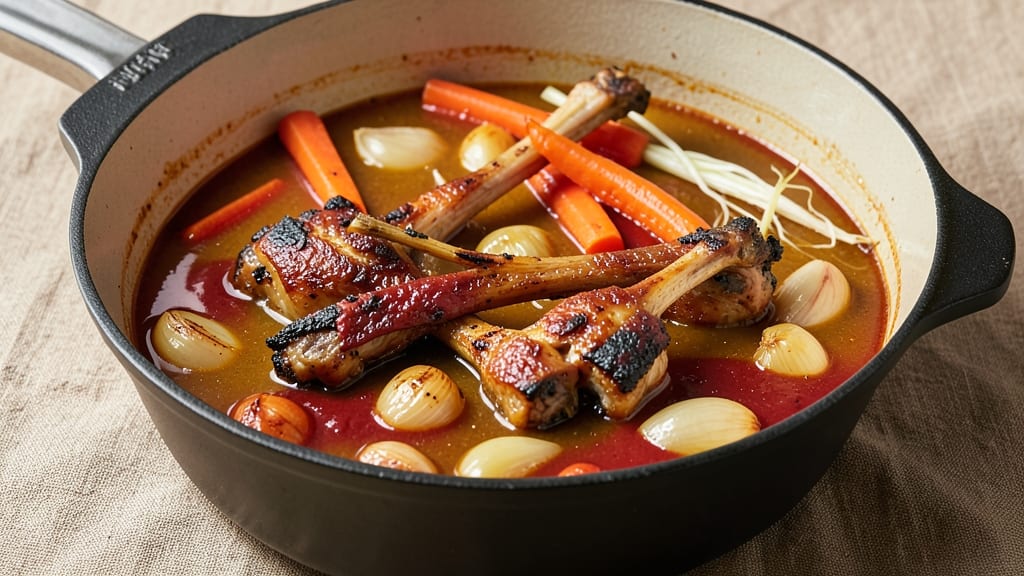
This Cook's Illustrated chicken stock recipe delivers restaurant-quality depth without that harsh bitterness that ruins homemade versions. After years of testing, I found the perfect balance of simmering time and aromatic ingredients that transforms simple scraps into liquid gold.
The secret lies in a precise mirepoix ratio and avoiding overcooking the bones.
The professional technique begins with a flavor base of onions, carrots, and celery—what chefs call the "holy trinity"—roasted until caramelized before adding chicken bones and water. This slow simmer extracts maximum flavor while keeping the stock clear and clean. Even beginners can achieve professional results with this foolproof method.
What you'll end up with is a rich, aromatic chicken stock that forms the perfect foundation for soups, sauces, and braising liquids. The deep flavor comes from properly browned aromatics and the right simmering time, while careful straining removes any impurities.
This isn't just stock—it's the secret weapon behind countless restaurant-quality dishes.
Store it properly for up to 3 months in the freezer, or use it immediately to elevate any recipe that needs that professional depth. The key to success is patience and attention to detail—two things that always pay off in the kitchen. Let's get started on creating your flavor base.
Ingredients for cook's illustrated chicken stock
Transform scraps into restaurant-quality chicken stock with these carefully balanced aromatic ingredients.
| Ingredient | Amount | Notes |
|---|---|---|
| Chicken Bones 🍗 | 4 lb | Raw or roasted, with meat |
| Yellow Onions 🧅 | 2 whole | Medium, peeled and chopped |
| Carrots 🥕 | 4 whole | Medium, peeled and chopped |
| Celery Stalks 🧄 | 4 whole | Medium, chopped with leaves |
| Garlic Cloves 🧄 | 6 cloves | Peeled, smashed lightly |
| Tomato Paste 🍅 | 2 tbsp | High-quality, no salt added |
| Fresh Thyme Sprigs 🌿 | 2 tbsp | Leaves only, chopped |
| Fresh Parsley Leaves 🌿 | ¼ cup | Chopped, stems discarded |
| Bay Leaves 🌿 | 2 whole | Dried, standard size |
| White Wine 🍷 | 1 cup | Dry, like Sauvignon Blanc |
| Water 💧 | 12 cups | Cold, filtered preferred |
| Kosher Salt 🧂 | 1 tsp | Diamond Crystal preferred |
| Black Peppercorns 🌶️ | 10 whole | Freshly cracked |
The quality of your chicken bones makes all the difference. Look for raw chicken backs or necks at your butcher—they're flavor bombs. If using roasted bones, pat them dry first to prevent stock from turning cloudy. For the vegetables, organic produce from Whole Foods or local farmers markets ensures no waxed skins or pesticides that could taint the flavor. The celery leaves add subtle bitterness that rounds out the stock beautifully—don't discard them. When selecting thyme, fresh is non-negotiable—dried thyme lacks the bright, citrusy notes that elevate this stock.
No white wine? Dry vermouth or extra chicken stock works in a pinch, but the alcohol helps extract deeper flavors. Substituting carrots for parsnips adds earthy sweetness, though they take slightly longer to caramelize. For the tomato paste, San Marzano is ideal but any high-quality paste will do—just avoid the watery, low-grade versions. Fresh herbs can be swapped for dried at a 1:3 ratio, but fresh parsley and thyme are worth the effort here. If you're short on time, pre-chopped frozen vegetables from Trader Joe's work fine—just thaw and drain them thoroughly before roasting.
This stock peaks after 4-5 hours of simmering—any longer and it risks bitterness. For maximum freshness, use within 5 days or freeze in ice cube trays for 3 months. The flavor actually improves after refrigeration as the fats rise to the top and can be skimmed off. Store in glass containers to maintain clarity. For restaurant-quality results, always strain through cheesecloth after simmering to remove any impurities that could cloud the finished product.
Why You'll Love This Recipe
- Here’s what sold me: this stock freezes perfectly in ice cube trays for up to 3 months. Need a splash for risotto? Pull out a cube. Sauce for chicken thighs? Another cube. My freezer’s always stocked, and I never waste money buying expensive store-bought versions. Plus, it’s cheaper than takeout—win-win.
- No-Fuss Flavor Bomb: I’ll admit, I used to skip the roasting step—big mistake. Roasting those 4 lb chicken bones at 425°F for just 20 minutes? Game-changer. That caramelization turns bland bones into the secret sauce of this stock. The rest is just chopping veggies into neat ½-inch pieces and letting it simmer while I do something else. Honestly, the hardest part is resisting licking the spoon after adding the tomato paste and wine.
- Restaurant-Quality Simmer: The 2-hour simmer with a gentle bubble—not a rolling boil—isn’t just science, it’s magic. That tomato paste coating the bones? Prevents bitterness. The white wine deglazing? Captures all those browned bits that taste like pure flavor. And the mirepoix (onions, carrots, celery) plus garlic, thyme, and bay leaves? It’s like a flavor party in your pot. The result? A stock so rich it’d fool any chef.
- Freezer’s Best Friend: Here’s what sold me: this stock freezes perfectly in ice cube trays for up to 3 months. Need a splash for risotto? Pull out a cube. Sauce for chicken thighs? Another cube. My freezer’s always stocked, and I never waste money buying expensive store-bought versions. Plus, it’s cheaper than takeout—win-win.
Step-by-step instructions for cook's illustrated chicken stock recipe
This method delivers restaurant-quality depth without bitterness—every step matters.
Prepare the Bones for Maximum Flavor Extraction
Begin by placing the 4 lb chicken bones in a large stockpot. If using raw bones, roast them first in a 425°F oven for 20-25 minutes until deeply browned. This step caramelizes the bone proteins, creating rich, complex flavors. If using roasted bones, skip this step but ensure they're thoroughly browned.
While the bones roast, chop the 2 whole yellow onions, 4 whole carrots, and 4 whole celery stalks into ½-inch pieces. The combination of these vegetables creates the classic "mirepoix" base for stock. Lightly smash the 6 cloves garlic to release their aroma without crushing them into a paste.
Build the Flavor Foundation with Aromatics and Wine
Add the chopped vegetables, 6 cloves garlic, 2 tbsp tomato paste, 2 tbsp fresh thyme sprigs, 0.25 cup fresh parsley leaves, 2 whole bay leaves, and 10 whole black peppercorns to the pot with the bones. Stir gently to distribute the ingredients, ensuring the tomato paste coats the bones evenly—this prevents bitterness and adds depth.
Pour in the 1 cup white wine and scrape the bottom of the pot to release any browned bits. This deglazing step captures concentrated flavors that would otherwise go to waste. Bring the mixture to a simmer over medium-high heat, then reduce to a gentle bubble—you want barely visible movement at the surface, not a rolling boil.
Simmer for Clarity and Depth
Add the 12 cups water and 1 tsp kosher salt, then bring to a full simmer. Once boiling, immediately reduce heat to maintain a gentle simmer—this prevents cloudiness and ensures the stock develops a clean, golden hue. Skim off any foam or impurities that rise to the surface during the first 10 minutes of simmering.
Cover the pot and simmer for 2 hours. Here's the thing—patience is key. The longer the stock simmers, the more collagen breaks down from the bones, creating a velvety texture. Check the liquid level periodically and add 12 cups hot water if needed to maintain coverage. The stock should reduce slightly but never boil vigorously.
Strain and Finish for Perfect Clarity
After simmering, strain the stock through a fine-mesh sieve into a clean pot, pressing gently on the solids to extract every last drop of flavor. Discard the vegetables and bones—their work is done. Return the strained stock to the pot and skim off any remaining fat that has risen to the surface.
Taste and adjust seasoning with additional 1 tsp kosher salt if needed. The stock should be rich but not salty—it will intensify as it cools. Let it cool to room temperature, then refrigerate. Once chilled, the fat will solidify on top, making it easy to remove for a crystal-clear stock. Store in the refrigerator for up to 5 days or freeze for longer storage.
Pro Tips For Making Cook'S Illustrated Chicken Stock
- Scrape Like You Mean It: That browned crust on the bones after roasting is pure flavor gold—don’t treat it like an afterthought. When you add the 1 cup white wine, grab a wooden spoon and scrape aggressively at the bottom of the pot. I used to rush this step, and the stock always tasted flat afterward. This isn’t just deglazing; it’s extracting the caramelized soul of the bones.
- Smash, Don’t Mince Garlic: Lightly smashing the 6 cloves garlic with the flat of your knife releases their oils without turning them into a paste—this keeps the stock from turning bitter. I learned this the hard way when I minced mine into oblivion and ended up with a stock that tasted like garlic powder. Trust the recipe: smash, don’t pulverize.
- Simmer or Suffer: That gentle bubble isn’t just a suggestion—it’s the difference between a cloudy, bitter stock and a silky, golden one. If your stock is rolling like a boiling pot of pasta, you’re undoing all the work. After the initial boil, drop the heat to the lowest setting that keeps barely visible movement. Yes, it’ll take longer, but your future risotto will thank you.
- Salt Early, Taste Late: Add the 1 tsp kosher salt with the water in Step 3, not at the end. This lets the seasoning infuse evenly during the 2-hour simmer. I used to hold off on salting, thinking I’d adjust later, but the stock always ended up either bland or overpowered. The recipe’s timing on this is spot-on—don’t second-guess it.
Regional styles of these flavors
Southern Smoky Twist
In the Southern kitchen, we take chicken stock to another level by adding 1 smoked chicken thigh (skinless, boneless) along with the bones. After roasting the bones at 425°F for 25 minutes, I place the smoked thigh in the pot alongside them.
The result? A stock with subtle smokiness that reminds me of Mrs. Henderson's apple butter—just like home. Simmer for 2 hours and strain carefully to avoid any skin bits. This version works perfectly for pulled chicken dishes or creamy biscuit gravy.
French Classic Approach
French chefs often use chicken feet (about ½ lb) in their stock for extra gelatinous richness. I've found that adding 2 chicken feet along with the bones creates a velvety texture ideal for velouté sauces.
The key is to roast them first at 400°F for 15 minutes to develop deep umami flavors. This method produces a stock that's silky smooth—perfect for French-style soups like potage parmentier. Don't skip the feet; they're what makes the difference!
Pacific Northwest Herb Fusion
Here in Portland, we love to incorporate local flavors. I substitute fresh rosemary and sage for half the thyme, using 1 tbsp each of chopped leaves. The rosemary adds a piney brightness that pairs beautifully with our rainy season ingredients.
I also include 1 small fennel bulb (chopped) for an anise-like note that elevates the stock for fish-based dishes. This version is perfect for creamy clam chowders or as a base for Pacific Northwest-style seafood stews.
Italian Tomato-Infused
For an Italian-inspired twist, I increase the tomato paste to 3 tbsp and add 1 dried porcini mushroom (soaked in ½ cup hot water for 30 minutes). The porcini adds earthy depth while the extra tomato paste creates a slightly tangy profile that's wonderful for pasta sauces.
I simmer this version for 3 hours to allow the flavors to meld completely. This stock becomes the foundation for my homemade pasta e fagioli—trust me, it's a game-changer.
Cajun Spiced Version
If you're craving some heat, I add 1 tsp Cajun seasoning (like Penzeys Louisiana-style) along with the peppercorns. The stock develops a gentle spice kick that's perfect for gumbo or red beans and rice. I also include 1 smoked paprika spoonful to deepen the color and flavor.
This version requires 2.5 hours of simmering to fully develop the spices. The result is a stock that's rich enough to stand up to bold Cajun flavors while keeping that classic chicken base.
Nutrition facts
Frequently asked questions
Why does this recipe use white wine instead of just water?
The white wine releases deep flavors from the bones and aromatics during the simmering process. This deglazing step captures concentrated umami notes that water alone can't extract. A dry white like Sauvignon Blanc works best—it adds brightness without overpowering the stock. If you're avoiding alcohol, use extra chicken stock to deglaze instead.
What happens if I boil the stock instead of simmering?
Boiling creates cloudiness and bitterness by breaking down the collagen too quickly. The key is maintaining a gentle simmer—just visible bubbles at the surface. This slow process extracts maximum flavor while keeping the stock clear and golden. If you notice vigorous bubbling, immediately reduce the heat.
Can I use chicken scraps instead of dedicated bones?
Chicken scraps like backs, necks, or wings work perfectly—they're packed with flavor. Just ensure they're well-browned first (roast at 425°F for 20-25 minutes). Avoid skin-on scraps as they can make the stock greasy. The more meaty scraps you use, the richer your stock will be.
How do I prevent my stock from tasting salty?
Add the 1 tsp kosher salt only after the initial simmering period (after the first 10 minutes). Taste before adding—your palate adjusts as the stock cools. If it's too salty later, you can't fix it, so err on the side of caution. The stock will intensify as it cools, so it won't seem overly salty when used in recipes.
Why strain through cheesecloth instead of just a sieve?
Cheesecloth captures finer particles that a sieve misses, resulting in a crystal-clear stock. Press gently on the solids to extract every last drop of flavor—this is what separates restaurant-quality stock from homemade versions. If you don't have cheesecloth, line your sieve with a clean kitchen towel for similar results.