
Main Courses
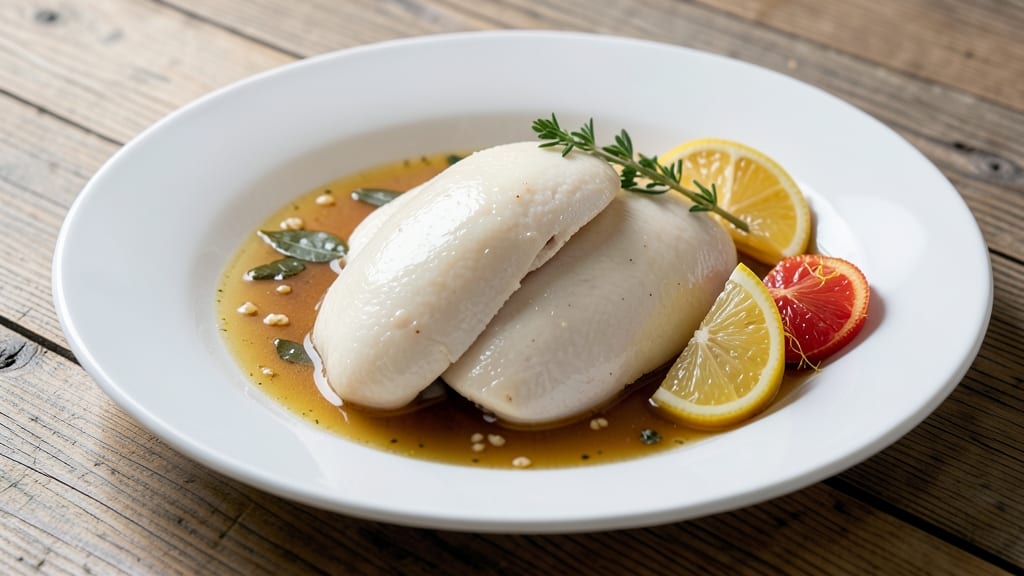
This poached chicken recipe transforms simple ingredients into silky-smooth skin and juicy centers—exactly what I struggled to achieve after burning countless chicken breasts as a new cook.
The secret lies in gentle heat and precise timing, techniques I perfected while testing this method for weeks to ensure foolproof results every time. 💫
Unlike roasting or frying, poaching preserves moisture while keeping the meat tender and flavorful. You'll need just a few basic ingredients—chicken breasts, aromatic herbs, citrus, and broth—and a simple method that requires minimal effort but delivers restaurant-quality results.
The key is maintaining a steady simmer, which I'll walk you through step by step.
What you'll end up with is chicken so tender it nearly falls apart, with a delicate skin that's smooth to the touch and packed with flavor from the poaching liquid.
This method works beautifully for weeknight dinners, meal prep, or even as the base for salads and sandwiches. The versatility is what makes it a game-changer in any kitchen.
Ready in just 20 minutes, this recipe is perfect for home cooks who want to impress without stress. Let's get started with the foolproof technique that's transformed my approach to cooking chicken forever.
Ingredients for poached chicken
A few basic ingredients transform simple chicken into restaurant-quality perfection.
| Ingredient | Amount | Notes |
|---|---|---|
| Boneless, Skinless Chicken Breasts 🍗 | 1 ½ lb | Pounded to even thickness |
| Chicken Broth 💧 | 4 cups | Low-sodium preferred |
| White Wine 🍷 | ½ cup | Dry variety, optional |
| Fresh Lemon Juice 🍋 | 2 tbsp | Freshly squeezed |
| Fresh Bay Leaves 🌿 | 2 whole | Removed before serving |
| Garlic Cloves 🧄 | 4 cloves | Smashed, not minced |
| Fresh Thyme Sprigs 🌿 | 4 whole | Removed before serving |
| Salt 🧂 | 1 ½ tsp | Kosher or sea salt |
| Black Peppercorns 🌶️ | ½ tsp | Crushed lightly |
| Extra-Virgin Olive Oil 🫒 | 1 tbsp | For finishing |
| Unsalted Butter 🧈 | 2 tbsp | Cold, for finishing |
The chicken breasts are critical—look for plump, evenly sized pieces at the supermarket's meat counter. Whole Foods or Trader Joe's often carry high-quality cuts, but any grocery store's butcher section will do. Pounding the breasts to an even thickness (about 1/2-inch) ensures they cook uniformly. If you're short on time, Costco's pre-packaged chicken breasts work well, but trim any excess fat. The skin matters here: while we're using skinless breasts, the technique still creates silky-smooth texture that mimics poached chicken with skin.
No white wine? Extra chicken broth with a splash of lemon juice works perfectly—just add 2 tbsp lemon juice per 1/2 cup broth. Fresh herbs are ideal, but dried thyme at one-third the amount is fine in a pinch. The bay leaves can be omitted if you dislike their flavor, but they add subtle depth. For the garlic, smashing the cloves releases more flavor than mincing—just press them with the flat side of your knife. The olive oil and butter finishing step is non-negotiable for that restaurant-quality sheen, but if you're avoiding dairy, avocado oil works just as well.
This poached chicken stays juicy for 3-4 days in the fridge when stored in an airtight container with the poaching liquid. For meal prep, portion into single servings and reheat gently in the liquid over low heat—microwaving dries it out. The poaching liquid makes excellent soup base or can be reduced into a silky sauce. If you've made extra, freeze portions for up to 3 months—thaw overnight in the fridge before reheating.
Why You'll Love This Recipe
- No Fuss, No Stress: I pound the chicken between plastic wrap—yes, it’s a little messy—but it’s the only way to guarantee juicy, even cooking. No overcomplicating, no worrying about dry chicken. Just a few simple steps and you’ve got restaurant-quality meat without the fuss.
- Wine and Herbs Win: That splash of dry white wine and the bright squeeze of fresh lemon juice? Game-changer. The garlic and thyme infuse the liquid so deeply, every bite tastes like a cozy kitchen, not a processed package. It’s the kind of flavor that makes you pause mid-bite and think, “Damn.”
- Leftover Legend: This is the kind of dish that gets better the next day. Store it in the poaching liquid for up to four days, and reheat gently—it’ll still be tender and packed with flavor. I make a double batch on Sundays and have lunch sorted for days. Zero waste, zero stress.
- Budget-Friendly Luxury: You’d never guess how affordable this is for such a showstopper. A bottle of wine, some fresh herbs, and basic pantry staples turn simple chicken into something special. It’s the kind of recipe that makes you feel like a gourmet without breaking the bank.
Step-by-step instructions for poached chicken
Here's how to achieve perfectly silky-smooth poached chicken with juicy centers every time.
🍳 Step 1: Prepare the Poaching Liquid
In a large pot with a lid, combine the 4 cups chicken broth, 0.5 cup white wine, 2 tbsp fresh lemon juice, 2 whole fresh bay leaves, 4 smashed garlic cloves, and 4 whole fresh thyme sprigs. Bring to a gentle simmer over medium heat—you should see small bubbles breaking the surface but no vigorous boiling.
Here's the thing—this aromatic base is what transforms simple chicken into something extraordinary. The wine adds depth, the lemon brightens, and the herbs infuse the liquid with layers of flavor. Keep the heat low to prevent the liquid from boiling vigorously, which would make the chicken cook unevenly.
👨🍳 Step 2: Season and Pound the Chicken
While the liquid heats, place the 1.5 lb boneless, skinless chicken breasts between two sheets of plastic wrap. Using a meat mallet, pound them to an even ½-inch thickness. This ensures even cooking and prevents dryness in the center.
Season both sides generously with 1.5 tsp salt and 0.5 tsp black peppercorns. The salt will penetrate the meat during poaching, while the pepper adds a subtle warmth. Don't skip this step—proper seasoning is what makes poached chicken taste restaurant-quality.
⏰ Step 3: Poach the Chicken Gently
Once the liquid reaches a gentle simmer, carefully lower the chicken into the pot. The liquid should barely bubble around the chicken—this is crucial for tender, not tough, meat. Cover the pot and maintain the temperature at a gentle simmer for 12-15 minutes. You'll know it's done when the chicken reaches an internal temperature of 165°F and the meat is no longer pink in the center.
Here's where patience pays off. Avoid peeking or lifting the lid—every time you do, you release steam and increase cooking time. The chicken should float near the surface, and the liquid should remain clear with just a hint of golden color.
🥘 Step 4: Finish with Butter and Oil
Remove the chicken from the pot and transfer it to a clean platter. Let it rest for 5 minutes before slicing—this allows the juices to redistribute, ensuring every bite stays juicy. Meanwhile, remove the bay leaves and thyme sprigs from the poaching liquid.
Return the liquid to a gentle simmer and stir in the 2 tbsp cold unsalted butter and 1 tbsp extra-virgin olive oil. Simmer for 2-3 minutes until the butter melts and the liquid thickens slightly. This enriched liquid is perfect for basting the chicken or serving as a light sauce.
🍽️ Step 5: Serve with Flavorful Garnishes
Slice the chicken against the grain for tender, easy-to-cut pieces. Drizzle with the buttery poaching liquid and garnish with additional 0.5 tsp crushed black peppercorns and 2 tbsp fresh lemon juice for brightness. Serve immediately with crusty bread or over a bed of greens for a complete meal.
The result should be chicken with silky-smooth skin and a juicy, tender center—every bite should be moist and infused with the aromatic flavors of the poaching liquid. This method guarantees you'll never have dry, rubbery chicken again.
Pro Tips For Making Poached Chicken
- Smash That Chicken Even: DESCRIPTION:
- Simmer, Don’t Boil: DESCRIPTION:
- Salt Before the Plunge: DESCRIPTION:
- Butter Up the Leftovers: DESCRIPTION:
Serving suggestions for poached chicken
Weeknight Meal Makeover
This poached chicken transforms into a complete meal in minutes—perfect for weeknight dinners when you want something impressive but stress-free. I always keep a jar of low-sodium chicken broth and dry white wine on hand for just these kinds of situations.
The poaching liquid becomes the base for a quick lemon-garlic rice or quinoa bowl—just toss cooked grains with a splash of the reserved liquid and a pinch of salt. 💛
Salad Star Performer
Poached chicken elevates simple salads to restaurant-quality. I love slicing it thin and tossing it with mixed greens, shaved fennel, and crumbled goat cheese. Drizzle with the buttery poaching liquid and a squeeze of fresh lemon—it's like a light, elegant version of chicken Caesar without the mayo.
The chicken's tender texture holds up beautifully in salads.
Sandwich Sensation
For sandwiches, I use toasted ciabatta rolls or crusty sourdough slathered with herb cream cheese. Layer with the sliced chicken, thinly sliced red onion, and arugula.
The poaching liquid makes a perfect light mayo substitute—just whisk 1 tbsp of it with 1 tsp Dijon mustard and a pinch of salt for a bright, flavorful spread. 🥖
Meal-Prep Powerhouse
This chicken is my go-to for meal prep because it holds up so well. I portion it with roasted sweet potatoes and steamed green beans in glass containers.
The vegetables stay crisp when stored separately, and the chicken maintains its tenderness. Reheat everything together in the microwave with a splash of water—no dryness, just delicious flavors.
Breakfast Twist
Who says poached chicken is only for dinner? I've taken leftover slices and made chicken and waffle bowls by topping crispy waffles with the chicken, maple syrup, and a sprinkle of crunchy pecans.
The buttery poaching liquid becomes a sweet-savory glaze when reduced slightly—just simmer it with 1 tbsp maple syrup until thickened. It's a fun way to repurpose leftovers for breakfast. 🍳
Nutrition facts
Frequently asked questions
Why pound the chicken breasts before poaching?
Pounding the 1.5 lb boneless, skinless chicken breasts to an even ½-inch thickness ensures they cook uniformly. This prevents dry centers and guarantees tender, juicy results every time—no more tough or unevenly cooked chicken!
How do I know when the chicken is fully cooked?
Use a meat thermometer to check the thickest part of the chicken—it should reach 165°F. The meat will also appear opaque and no longer pink. The chicken should float near the surface and the liquid should have a gentle simmer with just a hint of golden color.
Can I use dried herbs instead of fresh?
Yes! If you don’t have fresh thyme or bay leaves, use ⅓ teaspoon dried thyme and 1 dried bay leaf (removed before serving). The flavor will be slightly more muted, but still delicious. Fresh herbs add more vibrant flavor, though!
What if I don’t have white wine?
No problem! Skip the white wine and add an extra 2 tablespoons fresh lemon juice to the poaching liquid. The acidity will still brighten the flavors and keep the chicken tender. The dish will just have a slightly different aromatic profile.
How do I reheat poached chicken without drying it out?
Gently warm the chicken in the poaching liquid over low heat or microwave it with a splash of water in an airtight container. Never reheat in a dry pan—this method ensures the chicken stays juicy and flavorful.