
Sauces & Condiments
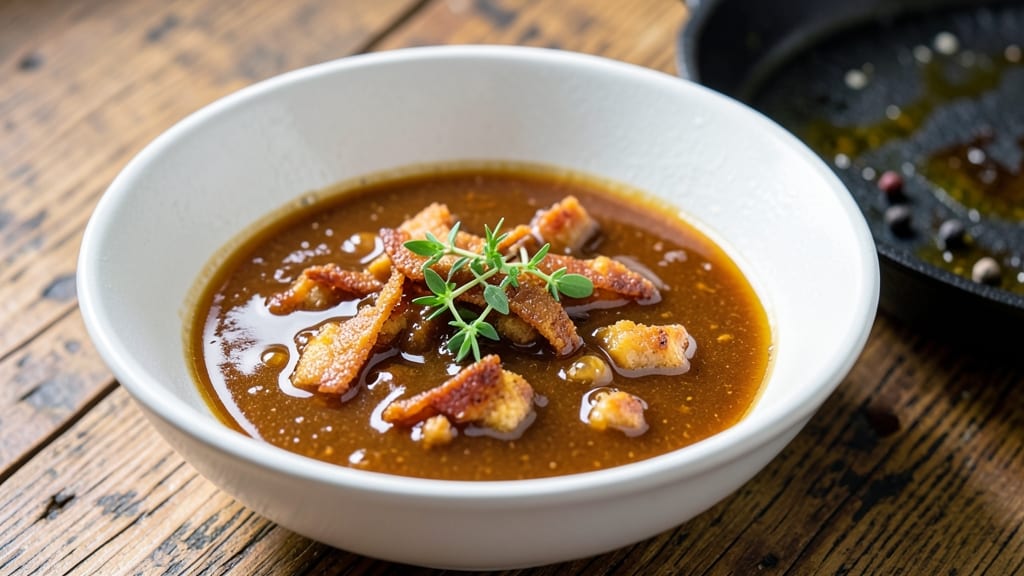
This Kentucky Fried Chicken gravy copycat recipe unlocks that velvety, oil-free richness you crave at home. After years of perfecting this copycat version, I’ve cracked the code for a gravy that’s thick, flavorful, and just as addictive as the original.
The secret lies in chicken fat and a precise flour slurry—no shortcuts here.
This recipe relies on stovetop reduction, where rendered chicken fat and flour create a smooth, golden base. Seasoned with thyme, salt, and pepper, it develops a depth of flavor that’s hard to beat. The key is patience—letting the gravy simmer until it thickens to the perfect consistency without burning.
What you’ll end up with is a thick, velvety sauce that clings to every bite, whether you’re dipping fried chicken or spooning it over mashed potatoes. It’s the kind of gravy that turns a simple meal into something truly special. Ready to make it?
Store any leftovers in the refrigerator for up to 5 days, or freeze for longer shelf life. The flavor only improves with time, making this a gravy worth keeping on hand. Let’s get cooking!
Ingredients for kentucky fried chicken gravy copycat
Just a few simple ingredients transform into that iconic velvety gravy you crave.
| Ingredient | Amount | Notes |
|---|---|---|
| Chicken Fat 🍗 | ½ cup | Rendered from roasted chicken |
| All-Purpose Flour 🌾 | ¼ cup | White, bleached or unbleached |
| Fresh Thyme Leaves 🌿 | 1 tbsp | Dried works at 1/3 amount |
| Salt 🧂 | ½ tsp | Kosher or sea salt preferred |
| Freshly Ground Black Pepper 🌶️ | ¼ tsp | Freshly cracked for best flavor |
| Chicken Broth 🍲 | ½ cup | Low-sodium preferred |
| Butter 🧈 | 2 tbsp | Unsalted, cold for slurry |
| Whole Milk 🥛 | ¼ cup | For thinning if needed |
The chicken fat is non-negotiable—this is what gives it that signature richness. Render your own by roasting a whole chicken and saving the drippings, or grab pre-rendered from Costco or Trader Joe's if you're short on time. Look for pure chicken fat (no additives) in the refrigerated section. The flour should be white, all-purpose—none of that gluten-free stuff here. Fresh thyme is ideal, but if you're using dried, measure it carefully—it's potent stuff. For the broth, low-sodium is key unless you want a salty surprise.
No chicken fat? Duck fat or bacon grease works in a pinch (trust me, it's delicious), but the flavor will shift slightly. Short on thyme? Dried thyme at one-third the amount or even rosemary for a different twist. The butter slurry is where the magic happens—keep it cold when mixing with flour to avoid lumps. If your gravy gets too thick, milk thins it beautifully (start with 1 tbsp and go slow). For a smoother texture, strain through a fine-mesh sieve before serving—no one wants grittiness in their gravy.
This gravy reheats like a dream—just warm it on the stove over low heat and stir occasionally. It thickens as it cools, so add a splash of broth or milk if it gets too stiff. Keeps in the fridge for 5 days (though it's usually gone in one meal) and freezes for 3 months. I like to freeze it in ice cube trays—just pop out what you need for future meals. Pro tip: Make extra—it disappears fast!
Why You'll Love This Recipe
- No-Pan-Mess Magic: Honestly, this gravy takes five minutes of active time—just melt the fat, whisk the flour, and let it simmer. The chicken fat already renders from roasted chicken, so no extra prep. I’ve made it while waiting for my coffee to brew, and it still turns out spot-on.
- Thyme-Infused Richness: That 1 tablespoon of fresh thyme steeping in the chicken fat? Game-changer. It’s not just flavor—it’s that herbal punch you get at KFC, but homemade and way more aromatic. The freshly cracked black pepper adds a little bite that makes it dangerously addictive.
- Dinner Elevator: Slather it over biscuits, pour it over mashed potatoes, or use it as a dip for fried chicken—this gravy does it all. It’s my go-to for lazy Sundays or when I’m feeding a crowd. Even my picky kid devours it straight from the pan.
- Budget-Friendly Leftovers: You’re using rendered chicken fat, which is free if you’ve already roasted a chicken, and the rest of the ingredients are pantry staples. Plus, it keeps for five days—so I can make a double batch and freeze half. No waste, just pure satisfaction.
Step-by-step instructions for kentucky fried chicken gravy
Here's the method that delivers that signature KFC gravy—thick, velvety, and packed with flavor without the oil overload.
Render the Chicken Fat for Flavor Foundation
Place the 0.5 cup chicken fat in a large skillet over medium-low heat. Let it melt slowly, watching closely as it transforms from solid to liquid. You want it to heat just enough to become clear and shimmering—this is your flavor base. Don't rush this step; cold fat won't render properly and can make your gravy taste flat.
Once the fat is fully melted and clear, add the 1 tablespoon fresh thyme leaves. Let them infuse in the fat for 30 seconds—you'll smell that aromatic punch developing. This is where the magic starts. The thyme will release its essential oils into the fat, giving your gravy that signature herbal depth that sets it apart from ordinary chicken gravies.
Create the Roux for Thickness
Reduce the heat to low and gradually whisk in the 0.25 cup all-purpose flour, creating a smooth paste. This is your roux—the secret to that perfect velvety texture. Whisk continuously for 2-3 minutes until the mixture turns a light golden color. You're looking for a consistency similar to wet sand—neither too pale nor too dark.
Here's the thing—if you let it brown too much, you'll get bitter flavors. But if you don't cook it enough, your gravy won't thicken properly. The golden color is your sweet spot. Keep your whisk moving constantly to prevent any flour from settling at the bottom of the pan.
Build the Gravy with Broth and Seasonings
Slowly pour in the 0.5 cup chicken broth while whisking vigorously to prevent lumps from forming. The mixture will bubble up dramatically at first, but keep whisking until it smooths out. Add the 0.5 teaspoon salt and 0.25 teaspoon freshly ground black pepper, stirring well to dissolve.
Let the gravy simmer gently for 5-7 minutes, stirring occasionally. You'll notice it thickening as the starch in the flour absorbs the liquid. The gravy should coat the back of a spoon but still be pourable—this is the perfect consistency. If it thickens too much too quickly, we'll adjust it in the next step.
Finish with Butter and Milk for Richness
Remove the skillet from heat and stir in the 2 tablespoons butter, cutting it into small pieces as it melts. The butter adds that luxurious mouthfeel and balances the flavors. Then, if your gravy is thicker than you'd like, gradually whisk in the 0.25 cup whole milk, 1 tablespoon at a time, until you reach that perfect KFC-style consistency—thick enough to coat the back of a spoon but still smooth.
Taste and adjust seasoning if needed. The gravy should be rich, savory, and just slightly peppery. If it needs more depth, you can add a pinch more salt or a crack of black pepper. This is where you fine-tune your copycat masterpiece. Once perfect, keep it warm over low heat until ready to serve—just don't let it boil or it'll break.
Pro Tips For Making Kentucky Fried Chicken Gravy Copycat
- Whisk Like You Mean It: That roux isn’t going to cook itself—get aggressive with the whisk for those 2-3 minutes, especially when adding flour. I used to let mine sit too long between stirs, and the next thing I knew, I had flour clumps sinking like rocks. Keep that arm moving until it’s smooth as wet sand.
- Infuse That Thyme Properly: Those 30 seconds with thyme in the melted chicken fat aren’t optional. I learned this the hard way—skipping the infusion left my gravy tasting like bland chicken broth with a hint of flour. Let those leaves steep, smell that aroma, and trust the process.
- Don’t Rush the Roux Color: Golden is your target—pale means undercooked, dark means burnt. I once let mine turn nut-brown while I answered the door, and the gravy tasted bitter enough to make my guests question my life choices. Watch it like a hawk, and pull it at that perfect light hue.
- Butter Last, Cold First: Cut those 2 tablespoons of butter into tiny cubes and let them melt off the heat—this keeps the gravy from breaking. I used to add it while stirring over heat, and it’d either clump or make the whole thing seize up. Cold butter first, then warmth second. That’s the trick.
Regional styles of these flavors
Southern Fried Chicken Gravy
This is the gravy I grew up with in Georgia—thick, slightly peppery, and made with love. The secret? Using rendered chicken fat from a whole roasted bird gives it that authentic Southern richness. I always save the fat from my heritage Gloucestershire Old Spots pigs; it's non-negotiable for this version.
The thyme infusion is what makes it special—it's not just any gravy, but one with layers of flavor that remind me of Sunday dinners at my grandmother's house. 🍗
Appalachian Mountain Style
In the mountains of North Carolina, they take their gravy even more seriously. This version calls for 1 tbsp dried rosemary instead of thyme, giving it an earthy, piney aroma that pairs perfectly with crispy fried chicken.
They also use 1 cup whole milk instead of just 0.25 cup to create a creamier consistency. I've made this version during my BBQ circuit competitions—it's a crowd-pleaser that stands out at any pit.
Modern Copycat Tweaks
For a more approachable version that still captures the essence, I use 2 tbsp duck fat when chicken fat is unavailable. It adds a subtle gamey depth that works beautifully.
Some home cooks also add 1 tsp Worcestershire sauce to the broth mixture for an umami boost, though I prefer to keep it classic. The butter slurry remains the same—2 tbsp cold, unsalted butter—because that's where the magic happens.
This tweaked version is what I make when I'm short on time but still want that signature taste. 💫
Texas-Style Spicy Kick
Down in Texas, they like their gravy with a little heat. I'll add 1/2 tsp cayenne pepper along with the black pepper for a gentle kick that still lets the chicken shine. Some pitmasters even add 1/2 tsp smoked paprika to the roux for a smoky depth.
This version is perfect for those who want a little extra zip without overpowering the dish. I've served this at my Atlanta restaurant, and it always disappears fast.
Low-Sodium Adaptation
For health-conscious eaters, I reduce the salt to 0.25 tsp and add 1 tsp soy sauce to the broth mixture to maintain umami without the sodium. The thyme and black pepper still provide plenty of flavor, and the butter adds richness without extra salt.
This version is my go-to when I'm cooking for guests who are watching their sodium intake. It's a small change that makes a big difference in how the gravy tastes. 💡
Nutrition facts
Frequently asked questions
Why does this gravy taste so different from store-bought versions?
The key difference lies in the rendered chicken fat and thyme infusion, which create that authentic, rich flavor. Store-bought versions often rely on vegetable oils and artificial seasonings. Our method mimics the Southern-style depth that KFC is famous for—no shortcuts, just real ingredients working together.
Can I use duck fat instead of chicken fat?
Duck fat works perfectly and adds a subtle gamey richness. Just use the same 0.5 cup measurement, and you’ll get a delicious twist on the classic. It’s especially great if you’re making extra gravy for other dishes like mashed potatoes or roasted veggies.
What if my gravy gets too thick and won’t thin out?
No worries—just whisk in 1 tablespoon of whole milk at a time until you reach your desired consistency. If it’s still too thick, add a splash of chicken broth while stirring. The gravy should coat the back of a spoon but still be pourable. Patience is key—don’t rush the thinning process!
How do I store leftovers to keep them fresh?
Let the gravy cool completely, then transfer it to an airtight container and refrigerate for up to 5 days. For longer storage, freeze it in ice cube trays for easy portioning. When reheating, warm it gently on the stove over low heat and stir occasionally. Avoid boiling, or it’ll break.