
Soups & Stews
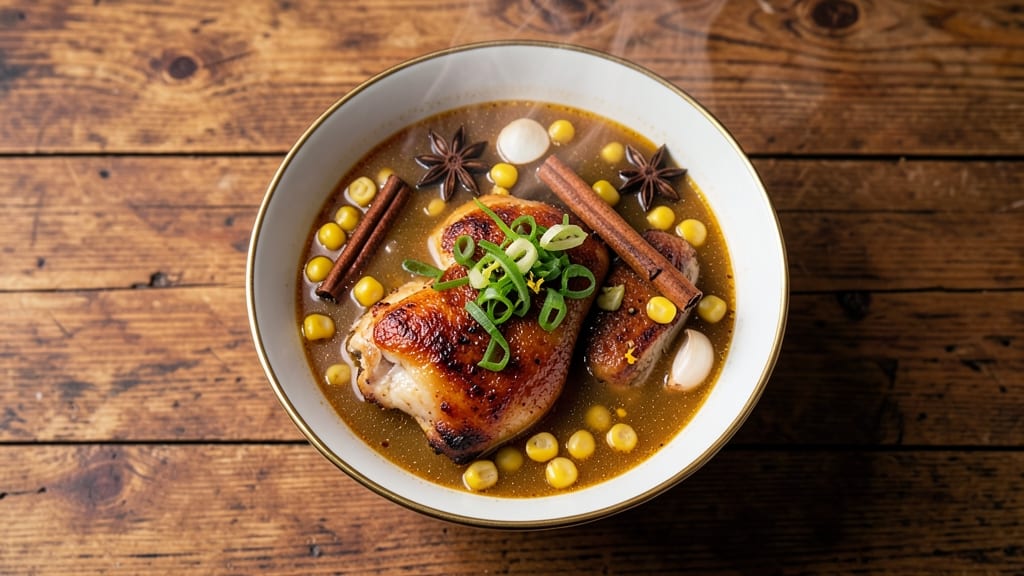
This authentic Chinese chicken and sweetcorn soup brings the comforting flavors of home-style Cantonese cooking to your kitchen. The secret lies in a fragrant broth infused with star anise, cinnamon, and ginger—aromatic spices that simmer for hours to create depth without overpowering.
I developed this recipe after years of studying traditional techniques, ensuring every spoonful delivers that perfect balance of savory, sweet, and umami.
The broth starts with a stir-fry of fresh ginger, garlic, and scallions—quickly cooked to release their natural oils before adding chicken and sweetcorn for a tender, silky texture. Unlike many Western adaptations, this version skips shortcuts like bouillon cubes, relying instead on slow-simmered aromatics and homemade stock.
The result? A restaurant-quality soup that's rich yet light, with silky noodles that soak up every flavorful drop.
What sets this recipe apart is the attention to detail: blanching the chicken for even cooking, toasting whole spices for maximum aroma, and balancing sweetness with a touch of soy sauce and Shaoxing wine.
The dish arrives at your table with golden broth, tender chicken pieces, and plump sweetcorn kernels—each bite a harmony of textures and flavors. Serve with steamed rice for a complete meal that feels both comforting and sophisticated.
Perfect for chilly evenings or when you crave the warmth of home cooking, this soup scales effortlessly for gatherings. The technique is straightforward but yields authentic results that will impress even the most discerning palates. Let's get started on creating your own fragrant, fragrant bowl of tradition.
Ingredients for authentic chinese chicken and sweetcorn soup
Fragrant spices, tender chicken, and silky noodles—this soup delivers authentic Cantonese comfort in every bowl.
| Ingredient | Amount | Notes |
|---|---|---|
| Bone-In Chicken Thighs 🍗 | 1 ½ lb | Skin-on, cut into 2-inch pieces |
| Fresh Ginger Root 🧅 | 2 tbsp | Grated, peeled, fresh preferred |
| Garlic Cloves 🧄 | 6 cloves | Peeled, smashed for aroma |
| Green Onions 🧅 | 3 whole | White and green parts separated |
| Star Anise Pods 🌿 | 2 whole | Lightly toasted for aroma |
| Cinnamon Sticks 🍃 | 1 whole | 1-inch pieces for infusion |
| Dried Shiitake Mushrooms 🍄 | 4 whole | Rehydrated, stems removed |
| Sweetcorn Kernels 🌽 | 1 ½ cups | Frozen or canned, drained |
| Egg Noodles 🍜 | 8 oz | Fresh or dried, silky texture |
| Light Soy Sauce 🥢 | 2 tbsp | Kikkoman preferred |
| Shaoxing Wine 🍷 | ½ cup | Dry Chinese cooking wine |
| Sesame Oil 🫒 | 1 tbsp | Toasted, for finishing |
| Chicken Stock 💧 | 4 cups | Homemade or quality low-sodium |
| Cornstarch 🌾 | 1 tbsp | For thickening broth |
| White Peppercorns 🌶️ | ½ tsp | Freshly cracked |
The star anise and cinnamon are non-negotiable for that signature aroma. Whole spices from Penzeys or your local Asian market deliver the best flavor—skip the ground versions. Toast them lightly in a dry pan until fragrant (about 30 seconds) to wake up their oils. Fresh ginger and garlic are essential too; the organic section at Whole Foods usually has the best quality. For the shiitake mushrooms, soak them in hot water for 20 minutes to rehydrate—discard the soaking liquid. The chicken thighs should have skin-on for richer flavor, but remove it before serving if you prefer. If you can't find Shaoxing wine, dry sherry works in a pinch, though it won't be quite the same.
No fresh ginger? Powdered works at half the amount, but the flavor won't be as vibrant. Substituting canned sweetcorn? Drain it well and rinse under cold water to remove excess starch. For the noodles, fresh egg noodles are ideal, but dried works too—just cook them al dente. The chicken stock can be made from scratch (simmer chicken bones with ginger and scallions for 4 hours), but Kitchen Basics low-sodium is a solid shortcut. If you're making this ahead, toast the spices and store them in an airtight container until ready to use—this saves time on cooking day. The sesame oil should be toasted, not the flavored kind—look for 100% pure sesame oil at Asian markets.
This soup tastes even better the next day as flavors meld. Store leftovers in the fridge for up to 4 days, covered with a splash of chicken stock to keep it moist. Freeze portions for 3 months—just reheat gently on the stove, adding a little water if it's too thick. For serving, I like to garnish with extra green onions and a drizzle of sesame oil right before eating. The noodles will soften further when reheated, so cook them slightly less than package instructions suggest. If you're serving a crowd, double the broth and spices, then adjust noodles and chicken proportionally—this scales beautifully.
Why You'll Love This Recipe
- One-Pot Magic: Honestly, I love recipes that don’t require a million dishes—this soup simmers in one pot with the bone-in thighs, star anise, and ginger. The chicken falls off the bone while the broth thickens, and honestly? That’s about as hands-off as comfort food gets.
- Star Anise Secret: Between us, the star anise is what makes this taste like a proper home-cooked Chinese meal. It’s not overpowering—just a warm, earthy backbone that pairs perfectly with the sweetcorn’s natural sugar and the crisp bite of green onions. That first spoonful? Dangerously addictive.
- Leftovers That Shine: I make this on Sundays because it tastes even better the next day—yes, really. The flavors meld, the broth deepens, and reheating it is a breeze. Pack it for lunch or freeze portions; it’s my go-to for lazy days when I don’t want to cook.
- Budget-Friendly Protein: Bone-in chicken thighs are a steal compared to breasts, and they’re juicier too. Plus, the ginger, garlic, and star anise are pantry staples that stretch across multiple meals. For under $10, you feed four people a soup so good, no one will guess it’s budget-friendly.
Step-by-step instructions for authentic Chinese chicken and sweetcorn soup
Here's how to build a fragrant, aromatic broth with tender chicken and sweetcorn—just like your favorite Chinese eatery.
Prepare and Parboil the Chicken
Cut the 1.5 lb bone-in chicken thighs into 2-inch pieces, leaving the skin on for maximum flavor. In a large pot, bring 4 cups chicken stock to a gentle boil. Add the chicken pieces and simmer for 10 minutes—this parboiling step ensures they cook through without drying out in the broth later.
While the chicken cooks, toast the 2 whole star anise pods and 1 whole cinnamon stick in a dry skillet over low heat for 1 minute until fragrant. This awakens their aromatic oils. Remove them immediately to prevent burning, then add them to the stock along with the 2 tbsp grated fresh ginger root and 6 peeled, smashed garlic cloves. Let this aromatic base simmer for 5 minutes—you'll smell the complex layers of ginger, garlic, and warm spices developing.
Build the Fragrant Broth
Remove the chicken from the stock and set aside. In the same pot, add the 4 whole dried shiitake mushrooms (previously rehydrated in warm water for 20 minutes and stems removed) and simmer for 8 minutes until tender. The mushrooms will infuse the broth with their earthy umami depth.
Return the chicken to the pot along with the 0.5 cup Shaoxing wine and 2 tbsp light soy sauce. Bring to a gentle simmer and cook for 20-25 minutes until the chicken is fork-tender and the broth has reduced slightly. The wine and soy sauce will meld with the spices, creating that signature savory-sweet balance. Skim off any foam that rises to the surface for a cleaner broth.
Prepare the Sweetcorn and Noodles
In a separate bowl, combine the 1.5 cups sweetcorn kernels with 1 tbsp cornstarch and toss gently to coat. This prevents the corn from sinking and ensures it thickens slightly in the broth. In another bowl, prepare the 8 oz egg noodles according to package instructions—undercook them by 1 minute since they'll finish cooking in the hot broth.
Here's the thing—don't drain the noodles completely. Reserve 1 cup of pasta water—it's liquid gold for adjusting the broth's consistency later. The starchy water helps emulsify the broth and prevents it from becoming too thin when you add the corn.
Finish the Soup with Aromatics
Add the cornstarch-coated sweetcorn to the simmering broth and cook for 5 minutes until heated through. The cornstarch will gently thicken the broth without making it gluey. Stir in the 0.5 tsp freshly cracked white peppercorns—this adds a subtle, sophisticated heat that balances the sweetness of the corn.
Just before serving, remove the star anise pods and cinnamon stick (they've done their job). Add the cooked noodles and toss gently to distribute them evenly. Drizzle with 1 tbsp toasted sesame oil and garnish with the white and green parts of 3 whole green onions, sliced separately. The white parts add a sharp contrast to the sweet broth, while the greens provide freshness.
Serve Immediately for Maximum Flavor
Ladle the soup into bowls, making sure each serving gets a generous portion of chicken, corn, and noodles. The broth should coat the back of a spoon but remain silky—not thick like a stew. Taste and adjust seasoning: add a splash of Shaoxing wine if it needs more depth, or a pinch of light soy sauce for saltiness.
This soup is best served immediately while the noodles are al dente and the broth is steaming. The aroma alone will have your guests leaning in—ginger, star anise, and sweetcorn create a symphony of flavors that's distinctly Chinese but universally comforting. Each spoonful delivers tender chicken, sweet corn, and that fragrant broth that makes this dish so special.
Pro Tips For Making Authentic Chinese Chicken And Sweetcorn Soup
- SEAR THE CHICKEN FIRST: Bone-in thighs need a good brown—don’t skip this. Hit them skin-side down in a hot pan with 1 tablespoon of oil until the skin crisps and releases easily (about 6-8 minutes). That crispy skin turns into flavor as it simmers, and trust me, it’s the thing that matters most in an otherwise simple soup.
- JULIENNE THAT GINGER: Thin, matchstick-sized ginger slices (not chopped) infuse flavor without bitterness. I learned this the hard way—thick chunks turn mushy and make the soup taste like a medicine. Use a mandoline if you’re impatient, but a sharp knife works too.
- STAR ANISE LAST 10 MINUTES: Drop those pods in too early, and you’ll end up with a soup that tastes like perfume. Crack one pod open (just a tiny slit) and add it with the green onions in the final 10 minutes—this keeps the aroma bright and balanced, not overpowering.
- SWEAT THE GARLIC LOW: Garlic burns faster than you think, especially when you’re distracted. Cook it on low heat with the ginger until it’s just fragrant but not golden—about 2-3 minutes. Burnt garlic ruins the whole dish, and no one wants that.
Pro cooking tips for great authentic chinese chicken and sweetcorn soup
Toast Spices First
Never skip toasting your star anise and cinnamon sticks—this simple step unlocks their full aromatic potential. Heat them in a dry skillet over medium-low heat for just 30 seconds until fragrant (not browned). The warm spices develop complex, earthy notes that infuse the broth beautifully.
I use a 10-inch cast iron skillet from Lodge for even heat distribution. Toasting also prevents bitterness that can develop if added raw. 🌿
Parboil Chicken Properly
Giving the chicken a 10-minute head start in boiling stock prevents it from drying out during the long simmer. Use bone-in, skin-on thighs for richer flavor, but remove the skin before serving.
After parboiling, pat the chicken dry with paper towels—this helps the spices cling better when you add them later. I find 2-inch pieces strike the perfect balance between quick cooking and substantial bites.
Balance Sweetness Carefully
The sweetcorn's natural sweetness needs delicate balancing. Start with 1.5 cups of kernels, but taste the broth before adding them. If it's too sweet, add 1 tsp light soy sauce or a splash of Shaoxing wine to cut through.
The cornstarch coating on the corn isn't just for thickening—it creates a slight barrier that prevents the corn from turning mushy in the broth. For extra depth, I sometimes add ½ tsp sugar to the broth while simmering.
Simmer Gently for Depth
Avoid boiling the broth after adding the chicken—this makes the spices bitter. Instead, maintain a gentle simmer (small bubbles, not rolling). The longer you simmer at this temperature (180-190°F), the more the flavors meld together.
I use a thermometer to monitor temperature, especially when adding the sweetcorn. The mushrooms play a crucial role here, contributing umami that rounds out the dish.
Noodle Timing Tricks
Cook your noodles 1 minute less than package instructions suggest—they'll finish cooking in the hot broth. Reserve 1 cup pasta water because it's essential for adjusting the broth's consistency. If the soup seems too thick after adding everything, stir in 2 tbsp reserved pasta water to loosen it.
The starchy water also helps emulsify the broth for a silkier texture. For best results, use fresh egg noodles from an Asian market—they hold up better than dried varieties.
Finish with Fresh Aromatics
Save the green onion whites for garnishing—they add a sharp, fresh contrast to the sweet broth. Slice the greens separately and sprinkle them on top just before serving. The toasted sesame oil should be added last—it's delicate and burns easily.
I like to drizzle it in a zigzag pattern over each bowl for visual appeal. The white peppercorns add subtle heat without overpowering the dish's natural sweetness. 💫
Nutrition facts
Frequently asked questions
Can I substitute chicken breast for thighs in this recipe?
Chicken breast works, but thighs are ideal for this soup. Thighs stay juicier during the long simmer and have more flavor from the skin and bone. If using breast, cut into 1-inch pieces and parboil for only 6-7 minutes—overcooking makes them dry. For best results, use a 50/50 mix of thighs and breast.
What if I don't have Shaoxing wine? Can I use something else?
Use dry sherry or white wine vinegar (1 tbsp) mixed with ¼ cup water as a substitute. For a non-alcoholic option, try apple cider vinegar (1 tbsp) or even rice vinegar—just reduce the amount to ¼ cup total since vinegar is more acidic. The key is balancing sweetness with acidity.
How do I make this soup spicier?
Add ½ tsp chili flakes or 1 small dried red chili (toasted and removed before serving) to the broth. For heat without spice, increase the white peppercorns to 1 tsp or add 1 tsp gochujang (Korean chili paste) when finishing. Always taste first—you can adjust, but you can't remove spice!
Can I make this soup ahead of time?
Yes, but with a few adjustments. Prepare the broth (without noodles) up to 2 days ahead and store it in the fridge. Reheat gently, then add the chicken, corn, and noodles fresh. For freezing, package the broth separately (without noodles) for up to 3 months. When ready to serve, thaw overnight in the fridge and proceed with the recipe.
Why does my soup taste bitter?
Bitterness usually comes from over-simmering the spices or using too much star anise. Always toast spices lightly and remove them after 20-25 minutes of simmering. If the broth tastes bitter, add 1 tsp sugar or ½ cup more chicken stock to dilute. For future batches, reduce star anise to 1 pod and add it later in the cooking process.