
Sauces & Condiments
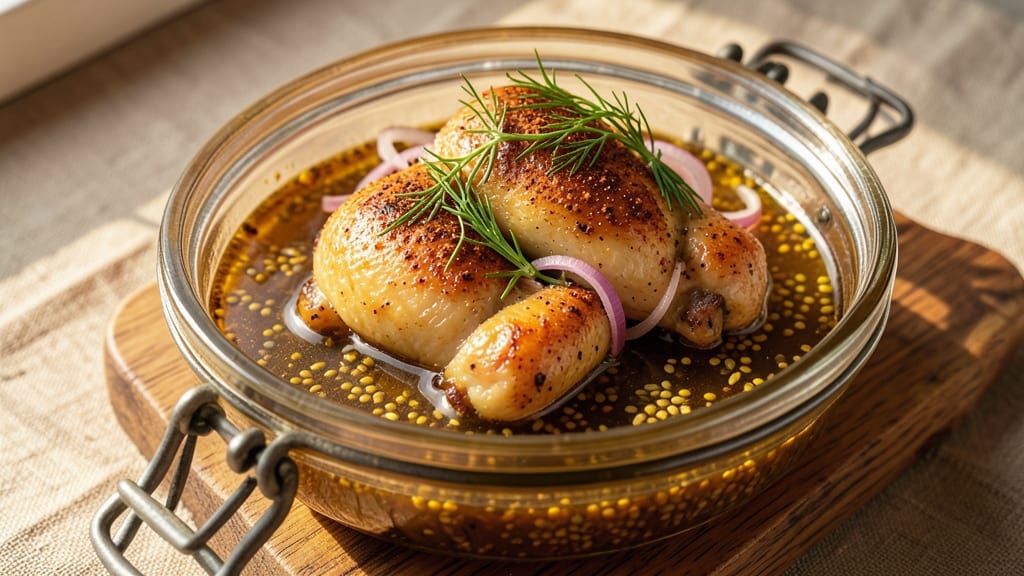
This pickle brine recipe for chicken unlocks a world of smoky, tangy depth that elevates any protein—no pickling jar required. The secret lies in balancing vinegar, salt, and aromatic spices to create a marinade so versatile it works for chicken, pork, or even vegetables.
I developed this after realizing store-bought brines lacked the complexity of homemade versions, where every ingredient plays a role in flavor development.
The brine's magic comes from its simplicity: just white vinegar, water, salt, and a blend of mustard seeds, coriander, and smoked paprika. These elements work together to tenderize meat while infusing it with layers of tangy, slightly sweet, and smoky notes.
Unlike traditional pickling solutions, this version stays liquid and ready to use for up to three months in the refrigerator—perfect for batch cooking or last-minute flavor boosts.
What makes this brine truly transformative is its ability to penetrate proteins deeply, creating a crust that's both tender and flavorful.
Whether you're marinating chicken breasts for 4 hours or basting ribs during the final stages of grilling, the result is meat that tastes like it's been slow-cooked in a smoky, vinegary bath.
The brine also doubles as a quick-pickling solution for vegetables, making it a pantry essential for any home cook.
Ready to elevate your cooking with this foolproof, restaurant-quality technique? The instructions will guide you through precise measurements and storage tips to ensure your brine remains potent and ready whenever inspiration—or cravings—strike. Let's get started with a method that turns simple ingredients into a flavor powerhouse.
Ingredients for pickle brine recipe for chicken
Pantry essentials transform into a restaurant-quality marinade—no exotic ingredients required.
| Ingredient | Amount | Notes |
|---|---|---|
| White Distilled Vinegar 🍶 | 2 cups | 5% acidity minimum for balance |
| Water 💧 | 2 cups | Filtered preferred for clarity |
| Diamond Crystal Kosher Salt 🧂 | ½ cup | Coarse grain for even dissolution |
| Yellow Mustard Seeds 🌶️ | 1 tbsp | Whole, lightly toasted for depth |
| Ground Coriander Seeds 🌿 | 1 tbsp | Freshly ground for citrusy brightness |
| Smoked Paprika 🌶️ | 1 tbsp | High-quality Spanish variety |
| Black Peppercorns 🌶️ | 1 tsp | Freshly cracked for aromatic punch |
| Garlic Cloves 🧄 | 4 cloves | Smash lightly for infusion |
| Bay Leaves 🍃 | 2 whole | Fresh for maximum aroma |
| Brown Sugar 🍯 | 2 tbsp | Lightly packed for subtle sweetness |
The vinegar selection matters here. White distilled vinegar provides the cleanest tang without overpowering, but apple cider vinegar adds subtle sweetness if you prefer complexity. Penzeys Spices or bulk bins at Whole Foods are ideal for sourcing mustard seeds and coriander—they retain freshness far better than pre-ground options. Smoked paprika should be Spanish-style for authentic depth; avoid the super-hot varieties. For the salt, Diamond Crystal kosher dissolves perfectly, but any coarse salt works. The garlic and bay leaves can be purchased fresh at local farmers markets for superior aroma, though dried substitutes work in a pinch.
No mustard seeds? Dijon mustard at half the amount delivers similar tang, though the texture will differ. Substituting coriander with ground cumin at one-third the quantity maintains earthy notes, though the flavor profile shifts slightly. Running out of smoked paprika? Liquid smoke at 1/4 teaspoon provides a similar smoky backbone, but use sparingly. The brown sugar can be swapped for honey or maple syrup, though it may alter the brine's clarity. For a quicker version, pre-made chicken broth can replace half the water, adding umami depth without additional prep.
This brine maintains peak potency for 3 months when stored in a clean glass jar with an airtight seal. The addition of vinegar acts as a natural preservative, but always refrigerate after opening. For extended use, freeze portions in ice cube trays—thaw overnight in the fridge before use. The brine's versatility means it can be reused up to 3 times, with each subsequent use delivering slightly less intensity. For maximum flavor extraction, always marinate proteins at 40°F or below for optimal absorption.
Why You'll Love This Recipe
- No-Fuss Flavor Boost: I love that this brine takes five minutes of active prep—just simmering the vinegar, water, and salt—while the spices toast and infuse. No chopping, no peeling, just tossing whole mustard seeds and garlic cloves into the pot. Honestly, the hardest part is waiting for it to cool.
- Smoky Sweet Magic: The smoked paprika and brown sugar create this dangerously addictive balance—earthy, slightly sweet, with a kick of vinegar brightness. I’ll be real: that first bite of chicken brined in this stuff? The crispy skin meets the juicy meat with a depth that makes store-bought chicken seem sad.
- Weeknight & Feast Flex: Need a quick weeknight dinner? Use half the brine on chicken thighs for a 30-minute meal. Hosting a potluck? Double the recipe and brine a whole chicken—it’ll be the star. My daughter even grabs the leftovers for her lunchbox (yes, even on a Tuesday night).
- 3-Month Flavor Bank: This brine doesn’t just sit in the fridge—it lasts. Store it in a glass jar, and you’ve got a pantry staple for roasted chicken, fried pickles, or even marinating pork. I keep a jar in my freezer for when I’m too tired to cook but still want restaurant-quality flavor. Spot-on.
Step-by-step instructions for preparing smoky chicken brine
This brine transforms ordinary chicken into restaurant-quality centerpieces with crispy skin and deep flavor.
Combine Base Liquids and Salt
In a large, non-reactive pot, combine the 2 cups of white distilled vinegar and 2 cups of water. Bring to a gentle simmer over medium heat until the salt fully dissolves. I use a non-reactive pot to prevent any metallic flavors from developing during the process.
Add the 0.5 cup of diamond crystal kosher salt and stir constantly until completely dissolved—this may take 3-4 minutes. The solution should be fully transparent with no visible salt crystals. If you notice any undissolved salt, increase the heat slightly and stir more vigorously until clear. This foundational step ensures even flavor distribution throughout the chicken.
Toast and Infuse Spices
In a dry skillet over low heat, lightly toast the 1 tbsp of yellow mustard seeds and 1 tbsp of ground coriander seeds for 1-2 minutes until fragrant. This step deepens their flavors and removes any bitterness. Immediately transfer them to a spice grinder and pulse until finely ground.
Return the toasted spices to the simmering brine along with the 1 tbsp of smoked paprika, 1 tsp of black peppercorns, 4 lightly smashed garlic cloves, 2 whole bay leaves, and 2 tbsp of brown sugar. Stir well to incorporate all ingredients completely. The mixture should smell complex—smoky, slightly sweet, with herbal undertones. Let this infusion steep for 10 minutes off the heat to allow all flavors to meld together.
Cool and Prepare for Use
Remove the pot from heat and let the brine cool to room temperature—this typically takes 30-45 minutes. I place the pot in an ice bath during the last 10 minutes of cooling to speed up the process while maintaining safety. Once cooled, strain the brine through a fine-mesh sieve into a clean container, pressing gently on the solids to extract maximum flavor.
The strained brine should have a rich, amber color with visible particles suspended. This concentrated flavor base is now ready to use. For best results, store in the refrigerator for up to 5 days or freeze for longer storage. When ready to use, simply pour the cooled brine into a shallow dish large enough to accommodate your chicken pieces.
Pro Tips For Making Pickle Brine Recipe For Chicken
- Toast Those Seeds: DESCRIPTION:
- Salt Until It’s Gone: DESCRIPTION:
- Smash, Don’t Mince Garlic: DESCRIPTION:
- Ice Bath Shortcut: DESCRIPTION:
Make-ahead tips for this pickle brine recipe for chicken
Batch Prep Essentials
I always make double the recipe when preparing this brine—it’s so versatile that I use half for chicken and half for pork chops or even quick-pickled veggies. Store the extra in 16-ounce glass jars with airtight lids, leaving 1 inch of headspace to prevent overflow.
Label each jar with the date to track freshness. This ensures you always have a flavor boost ready for last-minute meals. ⚡
Marinating Timelines
For chicken breasts, I let them marinate for 4-6 hours in the fridge to balance tenderness and flavor penetration. Thicker cuts like thighs or drumsticks can handle 12-24 hours without becoming mushy.
If short on time, use the brine as a final basting sauce during the last 10 minutes of grilling or roasting. The acidity tenderizes quickly even in short contact.
Freezer-Friendly Hacks
Portion the brine into ice cube trays for single-use convenience—each cube holds about 1 tbsp of liquid. Once frozen, transfer cubes to a ziplock bag and store for up to 3 months.
Thaw overnight in the fridge before using. This method prevents freezer burn and makes it easy to add flavor to individual meals without wasting the whole batch.
Reusing Brine Wisely
After using the brine once on chicken, strain it again and return it to the fridge for 2-3 more uses. Each reuse slightly reduces intensity, but it still adds depth to proteins.
I save the strained solids (mustard seeds, spices) by rinsing them briefly and re-toasting for a second infusion—this gives you a concentrated flavor punch for future batches. Honestly, this is my favorite way to minimize waste. 💛
Make-Ahead Meal Prep
Combine the brine with cooked chicken and quinoa for a 3-day meal prep solution. Store in airtight glass containers with the brine on top to prevent sogginess. The acidity keeps the chicken fresh for 4-5 days in the fridge.
When ready to eat, reheat gently and drizzle with extra brine for a restaurant-quality finish. This turns leftovers into a gourmet experience with minimal effort.
Seasonal Adaptations
In summer, I reduce the brown sugar to 1 tbsp and add ½ tsp cinnamon for a refreshing twist. For winter meals, I increase the brown sugar to 3 tbsp and add 1 tsp ground ginger to complement slow-cooked dishes.
These small tweaks keep the brine exciting year-round while maintaining its core tangy-smoky profile. 🌟
Nutrition facts
Frequently asked questions
Can I use this brine for other proteins besides chicken?
This versatile brine works beautifully with pork chops, salmon, or even beef. The tangy, smoky flavor pairs perfectly with these proteins, making them extra juicy and flavorful. Just adjust marinating times based on the protein's thickness—thinner cuts like pork chops benefit from 2-4 hours, while steaks or thick cuts handle 6-12 hours without over-tenderizing.
How do I know if my brine is ready to use?
Your brine is ready when it's fully cooled to room temperature and has a rich, amber color with no visible salt crystals. After straining, it should smell complex—think smoky, slightly sweet, and herbal. If it's cloudy or grainy, let it sit for another 10 minutes to allow any remaining solids to settle. Always taste a small amount before using it on your chicken to ensure the flavor profile suits your preference.
What if I don’t have all the spices listed?
No problem! Skip the mustard seeds and use ½ teaspoon Dijon mustard for tang, or swap coriander for ½ teaspoon ground cumin. If you're missing smoked paprika, add ¼ teaspoon liquid smoke for a similar smoky depth. The brine will still be delicious—just slightly different in flavor profile.
Can I make this brine ahead of time?
Yes, this brine stores beautifully! After cooling and straining, keep it in a clean glass jar with an airtight lid in the fridge for up to 3 months. For longer storage, freeze in ice cube trays—each cube holds about 1 tablespoon of brine. Thaw overnight in the fridge before using. The flavors actually deepen slightly over time, making it even more flavorful!
Why does the brine turn cloudy after refrigerating?
Cloudiness is normal and happens when spices and aromatics settle and re-dissolve slightly over time. Simply shake or stir the brine before using—it won't affect the flavor. If the cloudiness persists, strain it again before marinating your chicken. The acidity in the vinegar keeps the brine safe for storage, so don't worry about it being "bad" just because it looks different.