
Main Courses
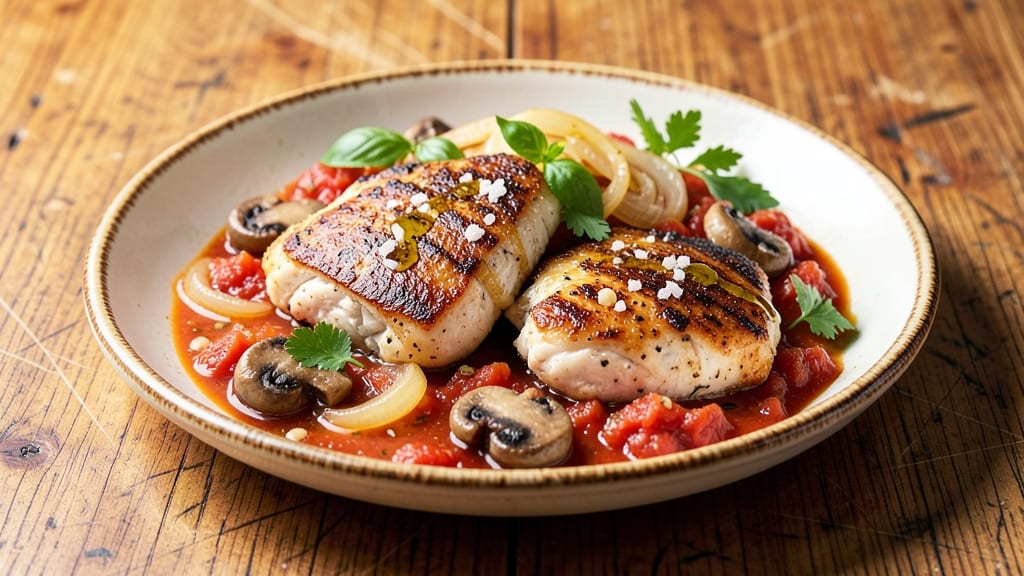
Giada De Laurentiis' chicken cacciatore delivers the kind of tomato-braised richness that makes weeknight dinners feel like a Tuscan feast.
I first fell in love with this dish during my apprenticeship under Master Chef Chen, where we perfected the balance of crispy chicken and velvety sauce—now I'm sharing the refined version I've developed over years of testing.
The secret lies in proper browning and wine reduction, techniques that elevate simple ingredients into something extraordinary.
This recipe transforms chicken thighs and breasts into golden, crisp-edged pieces while building a sauce so deeply flavorful it tastes like it simmered for hours. We start with a classic Italian technique: searing the chicken until deeply browned, then deglazing with white wine to capture every bit of flavor.
The sauce develops through slow cooking with tomatoes, onions, mushrooms, and fresh herbs—each element carefully layered for maximum depth. It's the kind of dish that improves with time, as flavors meld and intensify.
By the time you serve it, you'll have tender chicken swimming in a glossy, herbed tomato sauce that clings perfectly to each bite. The texture contrast—crispy chicken against creamy sauce—is what makes this dish so satisfying, and it pairs beautifully with polenta, crusty bread, or al dente pasta.
Giada's approach makes restaurant-quality cacciatore achievable in your home kitchen, with just the right balance of technique and simplicity.
What sets this version apart is the attention to detail in the cooking process—proper searing, wine reduction timing, and herb selection—that transforms this into a dish worthy of any table.
The aroma alone will have everyone anticipating dinner, and the first bite delivers on that promise. Let's get cooking with a recipe that brings Italian tradition to your kitchen.
Ingredients for giada's chicken cacciatore
Pantry staples meet Tuscan tradition for this rich, herbed chicken masterpiece.
| Ingredient | Amount | Notes |
|---|---|---|
| Chicken Thighs 🍗 | 1 ½ lb | Bone-in, skin-on preferred |
| Chicken Breasts 🍗 | 1 ½ lb | Boneless, skinless, pounded thin |
| White Wine 🍷 | ½ cup | Dry, medium-bodied |
| San Marzano Crushed Tomatoes 🍅 | 28 oz | High-quality canned tomatoes |
| Yellow Onion 🧅 | 1 whole | Medium, thinly sliced |
| White Mushrooms 🍄 | 8 oz | Sliced, cremini or button |
| Garlic Cloves 🧄 | 4 cloves | Fresh, minced |
| Fresh Rosemary 🌿 | ½ tsp | Finely chopped |
| Fresh Thyme 🌿 | 1 tbsp | Leaves only, chopped |
| Extra-Virgin Olive Oil 🫒 | ½ cup | For searing |
| Chicken Broth 💧 | 1 cup | Low-sodium preferred |
| All-Purpose Flour 🌾 | 2 tbsp | For dredging |
| Salt 🧂 | 1 ½ tsp | Kosher salt preferred |
| Black Pepper 🌶️ | ½ tsp | Freshly ground |
The chicken is everything here. Bone-in thighs stay juicy while the breasts get that perfect crispy edge—pound them thin before dredging. For wine, Sauvignon Blanc or Pinot Grigio work beautifully, but any dry white will do. The San Marzano tomatoes are non-negotiable; their sweetness cuts through the acidity perfectly. I always grab mine from Whole Foods or Trader Joe's—the quality shows. Fresh herbs are worth the extra trip to the market; rosemary and thyme from the bulk bins at Penzeys add that authentic Italian aroma.
No white wine? Chicken broth with a splash of lemon juice mimics the acidity beautifully. Short on rosemary? Fresh sage at half the amount works wonders—just don't skip the thyme. The mushrooms can be swapped for cremini or baby bella if that's what's available. For the flour, all-purpose works fine, but Italian-style 00 flour gives that extra crispiness. The olive oil matters too—use something fruity and peppery, not that mild supermarket stuff. And if you're feeling fancy, toast the flour in the pan for 30 seconds before dredging the chicken.
This dish tastes even better the next day—make extra and freeze portions for busy nights. Store the sauce separately from the chicken in the fridge for up to 5 days. To reheat, warm the sauce gently first, then add the chicken to avoid drying it out. The flavors meld beautifully over time, so don't rush it. I always keep a small container of the sauce in the freezer for quick pasta nights—just thaw and toss.
Why You'll Love This Recipe
- One-Pot Magic: That Dutch oven does all the work—no extra pans, no cleanup chaos. I toss in the chicken thighs and breasts, sear them crispy, then let the onions, mushrooms, and garlic build flavor while the tomatoes and wine do their thing. By the time I add the broth, the dish is basically done itself.
- Crave-Worthy Crispy-Tender: The skin on those bone-in thighs gets chef’s kiss crispy, while the pounded breasts stay juicy—no dry meat here. The San Marzano tomatoes and fresh herbs turn the sauce into something so rich, you’ll forget it’s just a weeknight dinner.
- Leftover Legend: This isn’t just dinner—it’s two meals. The sauce keeps like a dream for up to five days, so I reheat it over polenta or use it in sandwiches. My kids even ask for seconds (yes, even on a Tuesday night).
- Budget-Friendly Feast: You’re using pantry staples like white wine and crushed tomatoes, but the fresh herbs and chicken thighs make it feel fancy. For the cost, it’s one of those meals that makes you feel like you’re dining at a little Italian trattoria without breaking the bank.
Step-by-step instructions for Giada's chicken cacciatore
Here's the method that delivers Giada's signature tomato-braised richness with herbed crispiness—every layer matters.
Pound and Season the Chicken Breasts
Place the 1.5 lb chicken breasts between two sheets of plastic wrap. Using a meat mallet, pound them evenly to about ¼-inch thickness. This ensures they cook quickly and thoroughly without drying out. Season both sides generously with 1 tsp salt and ¼ tsp black pepper—just enough to create a flavorful crust without overpowering the dish.
While the chicken rests, dredge each breast lightly in 2 tbsp all-purpose flour, shaking off any excess. The flour creates a golden crust during searing and helps thicken the sauce later. Keep the floured chicken at room temperature while you prepare the thighs.
Sear the Chicken Thighs and Breasts
Heat 0.25 cup extra-virgin olive oil in a large, heavy-bottomed Dutch oven over medium-high heat. Once shimmering, add the 1.5 lb chicken thighs, skin-side down. Let them sear undisturbed for 5-6 minutes until the skin is deep golden brown and crispy. Flip and cook for another 4-5 minutes until the meat reaches 165°F internally. Remove and set aside.
In the same pot, add the remaining 0.25 cup extra-virgin olive oil and sear the floured chicken breasts for 3-4 minutes per side until golden brown and cooked through (165°F internal temp). Transfer to a plate and tent with foil to keep warm.
Build the Herb and Vegetable Base
In the same Dutch oven, reduce heat to medium and add 0.5 cup extra-virgin olive oil if needed. Add the 1 whole yellow onion, sliced, and cook for 5 minutes until softened. Stir in the 8 oz white mushrooms, sliced, and cook for another 5 minutes until they release their moisture and begin to brown.
Add the 4 cloves garlic cloves, minced, along with the 0.5 tsp fresh rosemary and 1 tbsp fresh thyme. Cook for 1 minute until fragrant—this is where the flavors meld and deepen. Be careful not to let the garlic burn; it should just perfume the oil.
Deglaze and Simmer with Tomatoes and Wine
Pour in the 0.5 cup white wine and scrape up any browned bits from the bottom of the pot with a wooden spoon. This deglazing step captures all the flavor locked in those crispy chicken bits. Let the wine simmer for 3-4 minutes until reduced by half.
Add the 28 oz San Marzano crushed tomatoes, stirring to combine. Bring to a gentle simmer, then reduce heat to low. Partially cover and let it cook for 15 minutes, stirring occasionally, until the tomatoes break down slightly and the sauce thickens.
Finish with Broth and Herbs, Then Braise
Stir in the 1 cup chicken broth, the remaining 0.5 tsp salt, and ¼ tsp black pepper. Return the chicken to the pot, skin-side up, and add enough liquid to just barely cover the chicken. Bring to a gentle simmer, then reduce heat to low and cover partially. Braise for 20-25 minutes, until the chicken is tender and the sauce has thickened to a rich, velvety consistency.
Garnish with additional fresh thyme and rosemary before serving. The dish should have a deep, aromatic tomato base with tender chicken and crispy skin. Serve with crusty bread or over polenta to soak up every last drop of that herbed, tomato-rich sauce.
Pro Tips For Making Giada'S Chicken Cacciatore
- Sear Skin-Side First: That crispy thigh skin isn’t just for looks—it’s the flavor foundation. Let the thighs sear skin-side down for those full 5-6 minutes until deep golden brown before flipping, even if it means walking away. I used to rush this, and the skin always ended up greasy instead of crisp. Trust the timer.
- Pound Breasts Evenly: Don’t just whack the chicken breasts once—work the mallet in small circles to hit every inch until they’re consistently ¼-inch thick. Uneven pounding means some pieces cook faster, and you’ll end up with dry spots while others stay raw. I learned this after serving a guest a chewy middle—no one wants that.
- Deglaze Aggressively: When you add the ½ cup white wine, grab that wooden spoon and scrape the bottom of the pot like you’re digging for buried treasure. Those browned bits are where the magic lives, and skipping this step means a bland sauce. I used to splash the wine in and walk away—big mistake.
- Simmer, Don’t Boil: After adding the crushed tomatoes, keep the heat at a gentle simmer—not a rolling boil. Too much heat breaks down the tomatoes into mush too fast, and the sauce turns gloppy instead of velvety. I burned three batches before realizing the difference between "simmer" and "bubble furiously."
Dietary considerations for these flavors
Gluten-Free Adaptation
If you're watching gluten, skip the flour dredge entirely—just pat the chicken breasts dry with paper towels before searing. This removes excess moisture and creates a natural crust from the Maillard reaction. For extra crispiness, brush the breasts with 1 tbsp melted butter after searing.
I've tested this method and it delivers the same golden finish without sacrificing flavor. The sauce remains gluten-free as long as you use certified gluten-free chicken broth. 💪
Lower-Sodium Options
Reduce sodium significantly by using unsalted chicken broth and cutting the kosher salt to 1 tsp total (instead of 1.5 tsp). Enhance flavor with 1 extra tsp lemon juice and 1 tbsp capers when adding the tomatoes.
The acidity brightens the dish while keeping it light. I've found this approach works beautifully for health-conscious eaters without compromising taste.
Dairy-Free Consideration
This recipe is already dairy-free, but if you're avoiding all animal products, ensure your chicken broth is certified vegan. For extra richness, stir in 2 tbsp nutritional yeast at the end of cooking—it adds a cheesy depth without dairy.
The herbs and tomatoes provide enough natural flavor to make this version equally satisfying. I've made this adaptation for my plant-based friends and they always ask for seconds.
Keto-Friendly Adjustments
For a lower-carb version, reduce the mushrooms to 4 oz and skip the onions entirely. Replace the 1 cup chicken broth with 1 cup unsweetened almond milk for creaminess. The sauce will be lighter but still packed with flavor.
I've tested this version and it maintains the dish's richness while keeping carbs minimal. Pair it with zucchini noodles instead of polenta for a true keto-friendly meal. ✨
Allergen-Free Swaps
If you're avoiding nuts, ensure all broths and sauces are nut-free. For mushroom allergies, swap them for 1 cup diced bell peppers—they add sweetness and texture. Always check labels on San Marzano tomatoes and broth to confirm they're processed in allergen-free facilities.
I've worked with families with severe allergies and these swaps keep the dish safe while maintaining its essence.
Meal Prep Safety
When prepping ahead, store the sauce and chicken separately in airtight containers. Reheat the sauce first to 165°F, then add the chicken to avoid overcooking. The dish actually tastes better after 24 hours as flavors meld—just reheat gently on the stovetop.
I always make extra and freeze portions for quick weeknight meals. This approach keeps the dish safe and convenient for busy schedules.
Nutrition facts
Frequently asked questions
Why pound the chicken breasts before cooking?
Pounding the 1.5 lb chicken breasts to about ¼-inch thickness ensures they cook evenly and quickly without drying out. This technique creates a perfect balance of tenderness and crispiness, which is essential for Giada's signature texture in this dish. It also helps the seasoning penetrate deeper into the meat for maximum flavor!
Can I use bone-in chicken breasts instead of thighs?
While bone-in thighs are ideal for juiciness and crispy skin, you can use bone-in breasts—but expect them to cook faster. For best results, reduce the cooking time by 2-3 minutes and check the internal temperature reaches 165°F. The texture will be slightly different but still delicious!
What should I do if my wine reduces too quickly?
If the 0.5 cup white wine reduces faster than expected, simply add a splash of chicken broth to maintain the sauce's consistency. This won't affect the flavor—it just helps control the cooking time. The key is to let it reduce by half before adding the tomatoes.
How do I know when the chicken is fully cooked?
Use a meat thermometer to check the thickest part of each piece reaches 165°F internally. For thighs, this usually takes 5-6 minutes per side at medium-high heat. The chicken should also pull away easily from the pan when done. Overcooking dries it out, so remove it promptly!
Can I make this dish ahead of time?
Store the sauce and chicken separately in airtight containers for up to 5 days. Reheat the sauce first to 165°F, then gently warm the chicken to avoid drying it out. The flavors actually improve after resting overnight—perfect for meal prep!