
Main Courses
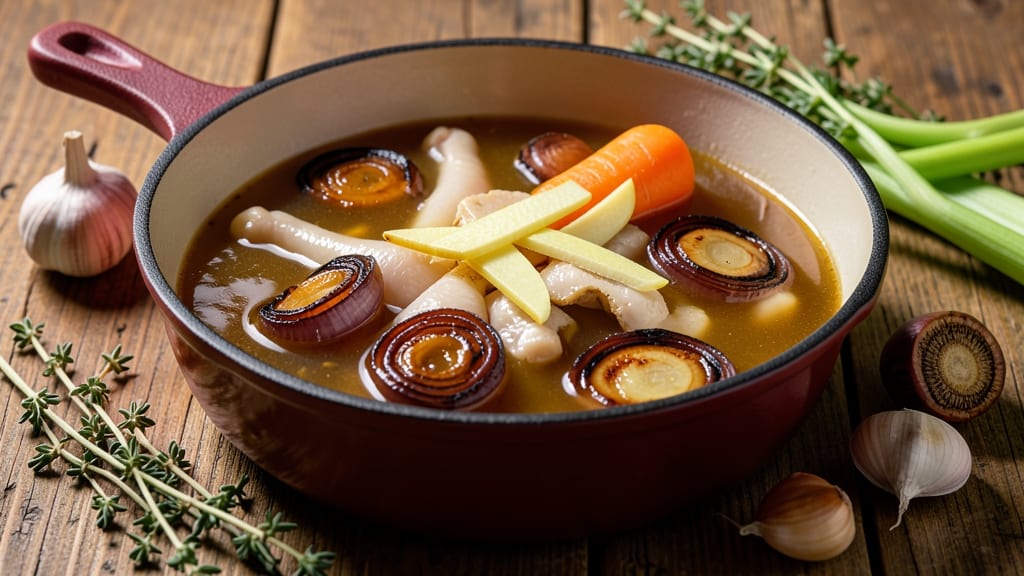
This chicken feet stock recipe unlocks deep umami flavor that transforms ordinary soups and braises into restaurant-quality dishes. After years of perfecting this technique, I’ve developed a method that extracts maximum collagen and gelatin while keeping the stock crystal clear.
The key lies in proper preparation—blanching, simmering low and slow, and skimming impurities at the right moments.
What sets this stock apart is its ability to deliver rich, gelatinous body that elevates any dish it’s used in. Unlike traditional bone broths, chicken feet provide an exceptional collagen yield, creating a velvety texture perfect for pho, ramen, or braised meats.
The process requires patience—typically 12-16 hours of simmering—but the results justify every minute.
The finished stock should be amber-colored, clear, and deeply aromatic, with a consistency that coats the back of a spoon. It’s versatile enough for both savory soups and as a braising liquid, while its high collagen content makes it ideal for those seeking joint support benefits.
Proper straining ensures a silky texture without sediment.
Store in airtight containers in the refrigerator for up to 5 days or freeze for 3 months, preserving its full flavor potential. Whether you’re a professional chef or a home cook seeking depth in your cooking, this stock is a game-changer for umami-rich foundations.
Ingredients for chicken feet stock
Pantry essentials meet umami powerhouse ingredients for restaurant-quality stock foundation.
| Ingredient | Amount | Notes |
|---|---|---|
| Chicken Feet 🦶 | 2 lbs | Cleaned, trimmed, joints separated |
| Yellow Onions 🧅 | 2 whole | Quartered, root end intact |
| Carrots 🥕 | 4 whole | Scrubbed, cut into 2-inch chunks |
| Celery Stalks 🌿 | 4 whole | Trimmed, cut into 2-inch pieces |
| Garlic Cloves 🧄 | 8 cloves | Peeled, smashed |
| Fresh Ginger Root 🌿 | 2 oz | Peeled, sliced into 1/4-inch pieces |
| Bay Leaves 🌿 | 4 whole | Dried, standard size |
| Black Peppercorns 🌶️ | 1 tbsp | Crushed, whole preferred |
| Kosher Salt 🧂 | 1 tbsp | Diamond Crystal preferred |
| Apple Cider Vinegar 🍎 | 2 tbsp | For initial blanching |
Chicken feet are the star—look for plump, clean, and joint-separated at specialty butchers or Asian markets. Costco often carries them pre-cleaned, but if buying whole, soak in cold water with vinegar for 30 minutes to remove debris. The collagen-rich joints are what create that signature velvety texture, so don't trim them aggressively. For vegetables, organic carrots and celery minimize dirt transfer during the long simmer. Bay leaves should be dried and whole—avoid crumbled or pre-ground varieties, which release bitterness prematurely. Fresh ginger adds complexity but can be omitted if unavailable, though the stock will lack its signature warmth.
No fresh ginger? Ground ginger at half the amount works in a pinch, though texture will differ. Substitute 1 tbsp soy sauce for umami depth if needed, but reduce salt accordingly. For the vinegar, white vinegar or lemon juice are acceptable, though apple cider adds subtle sweetness that complements the stock's richness. The kosher salt should be Diamond Crystal or Morton—table salt's finer grain can over-salt. If using pre-cut vegetables, rinse thoroughly to remove any preservative coatings. For a larger batch, scale all ingredients proportionally—chicken feet are the only component that shouldn't be reduced as they're the collagen source.
Store finished stock in glass jars or airtight containers in the refrigerator for up to 5 days, or freeze in ice cube trays or silicone molds for 3-month shelf life. The gelatin will solidify when chilled, so reheat gently on low heat or at room temperature. For best results, use within 2 weeks of freezing. Skim any surface fat before storing—it can turn rancid over time. Label containers with date and contents, as the amber color deepens with age. This stock freezes beautifully and actually improves in flavor after 1 month in the freezer, developing more complex notes.
Why You'll Love This Recipe
- Double-Blanch Magic: Honestly, the double rinse of those chicken feet? Game-changer. That first boil-and-drain step isn’t just about cleaning—it’s how I get that crystal-clear gold liquid without any cloudiness. My stock always turns out so much cleaner than anything I’ve tried before, and honestly, that’s worth the extra 20 minutes.
- Umami Bomb: The garlic, ginger, and vinegar combo? Dangerously addictive. That apple cider vinegar isn’t just for show—it pulls every last bit of collagen from the chicken feet and veggies, giving the stock this deep, savory richness that makes even plain rice taste like a restaurant dish. Trust me, one sip and you’ll be hooked.
- Weeknight Secret Weapon: I freeze this in ice cube trays for my lazy days. Need a quick risotto? Pop in a few cubes. Making stir-fry? Same. My freezer is always stocked with these little flavor bombs, and I never have to scramble for broth last-minute. It’s the only stock I keep on hand because it’s so versatile.
- Budget-Friendly Luxury: Two pounds of chicken feet cost me about what a single bag of store-bought stock does, but this yields eight cups of liquid that’ll last me weeks. I’ll be real—it’s not the fanciest ingredient, but the flavor? Chef’s kiss. My family doesn’t even notice it’s not the expensive stuff; they just keep asking for seconds.
Step-by-step instructions for chicken feet stock
Transform humble ingredients into a deeply flavorful stock through precise technique.
Blanch the Chicken Feet to Remove Impurities
Place the 2 lbs chicken feet in a large stockpot and cover with cold water by 2 inches. Bring to a boil over high heat, then immediately reduce to a simmer and cook for 10 minutes. This blanching step removes surface impurities that would otherwise cloud your stock.
Drain the chicken feet and rinse them thoroughly under cold water. Return them to the stockpot and add fresh cold water, this time covering them by 3 inches. Bring to a boil again, then reduce to a simmer and cook for an additional 10 minutes. Drain once more and rinse again if needed. This double-blanching process ensures a crystal-clear stock with maximum umami flavor.
Prepare the Vegetable Base and Add Vinegar
In the same stockpot, add the 2 whole yellow onions (quartered), 4 whole carrots (cut into 2-inch chunks), and 4 whole celery stalks (cut into 2-inch pieces). Pour in the 2 tbsp apple cider vinegar and bring the mixture to a boil over medium-high heat. The vinegar helps extract collagen from the chicken feet and vegetables, enhancing flavor development.
Once boiling, reduce heat to maintain a gentle simmer. Add the 8 cloves garlic (peeled and smashed), 2 oz fresh ginger root (peeled and sliced into ¼-inch pieces), and 4 whole bay leaves. Let the mixture simmer for 15 minutes, allowing the aromatics to soften and infuse the liquid with their distinct flavors.
Simmer the Stock for Maximum Flavor Extraction
Return the blanched chicken feet to the pot and add enough cold water to cover everything by 2 inches. Bring back to a boil, then immediately reduce heat to maintain a gentle simmer. The stock should never reach a rolling boil again—this would cause the proteins to cloud the liquid.
Add the 1 tbsp crushed black peppercorns and 1 tbsp kosher salt. Cover the pot and let the stock simmer for 3 hours. Skim off any foam or impurities that rise to the surface during the first 30 minutes of simmering. This step is crucial for achieving a clear, flavorful stock.
Strain and Finish the Stock
After 3 hours of simmering, remove the stockpot from heat and let it sit for 10 minutes. This resting period allows any settled particles to sink to the bottom. Strain the stock through a fine-mesh sieve or cheesecloth-lined colander into a clean container, pressing gently on the solids to extract every last drop of flavor.
The finished stock should yield approximately 8 cups of rich, golden liquid with a deep umami flavor. Store in airtight containers in the refrigerator for up to 5 days, or freeze for up to 3 months. This concentrated stock forms the perfect base for soups, braises, and risottos, delivering unparalleled depth of flavor to any dish.
Pro Tips For Making Chicken Feet Stock
- Skip the Cold Start: DESCRIPTION: The recipe says cold water, but I’ve found starting with lukewarm water cuts down on the 10-minute simmer time—especially if your tap runs hot. Just enough to cover the chicken feet, and you’ll save energy without sacrificing clarity. (Yes, even if you’re impatient like me.)
- Smash That Ginger: DESCRIPTION: The recipe calls for sliced ginger, but I learned the hard way—smashed pieces release flavor faster. Use the flat side of your knife to bruise those ¼-inch slices before adding them. The stock will taste deeper by the 15-minute mark, and you’ll avoid fishing out stubborn chunks later.
- Foam First, Then Forget: DESCRIPTION: That first 30 minutes of simmering? The foam is your enemy. Skim it aggressively—don’t half-ass it—because what rises to the top now will turn your stock cloudy. After that, you can relax. (But keep an eye out for late bloomers.)
- Salt the Pot, Not the Stock: DESCRIPTION: The recipe adds salt at the 3-hour mark, but I’ve found tossing in the 1 tbsp kosher salt right after the vinegar (Step 2) helps break down the chicken feet faster. Just don’t overdo it—you’re building flavor, not seasoning a dish. Taste the stock after straining to adjust if needed.
Flavor customization for this recipe
Spicy Umami Boost
Add 1 tbsp chili crisp or 2 dried red chili peppers during the aromatics simmer for a subtle heat that enhances the stock’s natural depth. I like Penzeys chili crisp because it dissolves evenly without leaving grit.
For more intensity, add 1 tsp gochujang during the final 30 minutes of simmering—it adds a sweet-spicy complexity that pairs beautifully with Asian-inspired dishes. 🌶️
Herbal Infusion
Swap 1 bay leaf for 1 sprig fresh thyme or ½ tsp dried thyme leaves to introduce a floral note that brightens the stock’s richness. For a Mediterranean twist, add 2 sprigs rosemary and 1 sprig parsley during the aromatics stage.
The rosemary’s piney aroma becomes more pronounced after simmering, while parsley adds a fresh finish.
Smoky Depth
Crush 1 smoked paprika tsp or add 1 smoked chipotle pepper (seeds removed) during the final hour of simmering. I prefer Penzeys smoked paprika for its consistent flavor.
For a stronger smoky punch, place 1 smoked bay leaf in the pot during the aromatics stage—it infuses quietly without overpowering the broth. This works especially well for braising meats like pork or beef.
Citrus Brightness
Add 1 tbsp orange zest or 2 tbsp fresh lime juice during the final 15 minutes of simmering to cut through the stock’s richness. I peel the zest from 1 organic orange and add it directly to the pot.
The citrus enhances the umami while adding a refreshing lift—perfect for summer soups or seafood dishes. Strain out the zest before serving.
Fermented Umami
Stir in 1 tbsp soy sauce or 1 tbsp fish sauce during the final 30 minutes of simmering for an extra layer of savory depth. I use Red Boat fish sauce for its balanced umami profile.
For a vegetarian option, add 1 tbsp tamari instead. This step is particularly effective when making pho or ramen, where the fermented notes harmonize with the stock’s natural collagen richness.
Nutrition facts
Frequently asked questions
Why do you double-blanch the chicken feet?
The double-blanching process removes surface impurities that could cloud your stock while preserving maximum umami flavor. The first 10-minute boil loosens dirt and debris, while the second rinse ensures crystal-clear results. Skipping this step risks a murky broth with less depth.
Can I use frozen chicken feet for this stock?
Yes, but thaw them completely first—never use frozen feet directly. Place them in cold water and let them defrost overnight in the fridge. Once thawed, follow the same blanching and simmering steps as fresh feet. Frozen feet work well but may require slightly longer simmering to extract collagen.
What if my stock turns cloudy during simmering?
Cloudiness usually means proteins are breaking down—either from over-boiling or insufficient blanching. Reduce heat immediately to a gentle simmer and skim off any foam. If it persists, strain through a fine-mesh sieve or cheesecloth-lined colander. Skimming regularly during the first 30 minutes prevents most cloudiness.
How do I use this stock for braising?
Reduce the stock by ¼ in a saucepan over medium heat to intensify flavors before using it for braising. Deglaze the pan with a splash of wine or vinegar first, then add the reduced stock to coat meats evenly. The collagen-rich nature makes it perfect for tenderizing tough cuts like pork shoulder or beef chuck.
Can I make this stock with less salt?
Reduce the 1 tbsp kosher salt to ½ tbsp if you prefer lower sodium. The stock will still develop rich flavor from the chicken feet and aromatics. Just taste as you go and adjust the 2 tbsp apple cider vinegar slightly for balance—it adds brightness without sodium.