
Side Dishes
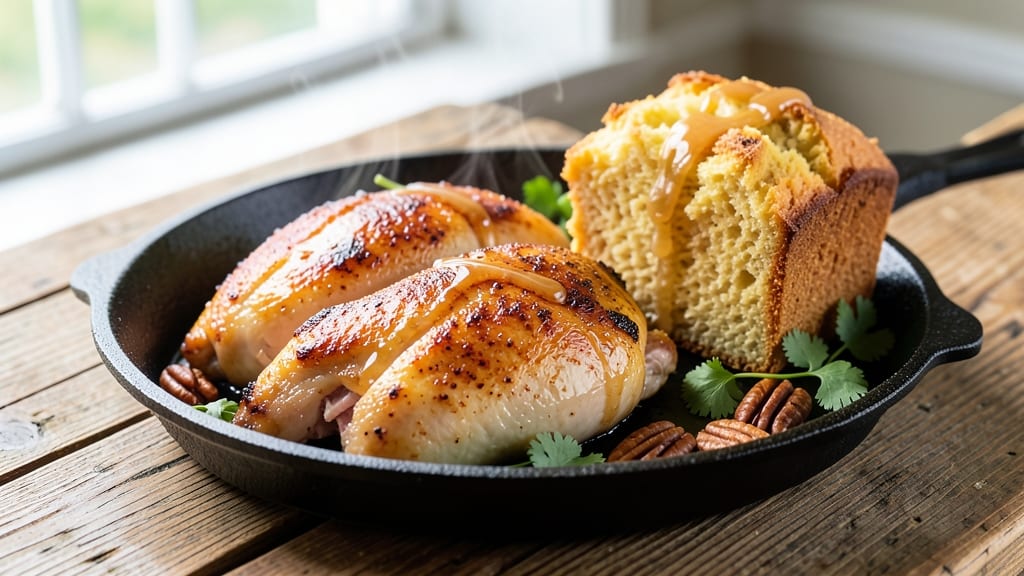
This Boston chicken cornbread recipe delivers the ultimate Southern comfort meal—crispy celery crown fried chicken paired with golden, buttery cornbread that cuts through every bite.
Growing up in small-town Georgia, I learned that the secret to perfect fried chicken lies in the brine and the double-fry technique, while the cornbread's vanilla layers add just the right sweetness to balance the savory chicken.
The chicken starts with a 24-hour brine in buttermilk and spices, ensuring tender meat that stays juicy even after frying. The cornbread uses self-rising flour for a foolproof rise, while a touch of vanilla and buttermilk creates that signature Southern sweetness.
Together, they create a meal that's hearty enough for a family dinner but simple enough for a weeknight.
By the time you're done, you'll have crispy, golden-brown chicken with a celery crown that adds freshness, and cornbread so tender it practically melts in your mouth.
The contrast between the savory chicken and sweet cornbread is what makes this dish unforgettable—it's the kind of meal that brings everyone to the table.
Serve with classic sides like collard greens or a drizzle of homemade gravy for the full Southern experience. Here's how to make it—step by step—so you can recreate this restaurant-quality meal at home.
Ingredients for boston chicken cornbread
Buttermilk-brined chicken and vanilla-kissed cornbread—just 15 ingredients for Southern comfort at its finest.
| Ingredient | Amount | Notes |
|---|---|---|
| Buttermilk 🥛 | 2 cups | Whole-fat for best flavor |
| Boneless, Skinless Chicken Breast 🍗 | 2 lb | Cut into 1-inch pieces |
| All-Purpose Flour 🌾 | 1 cup | For dredging chicken |
| Self-Rising Flour 🌾 | 1 ½ cups | For cornbread batter |
| Butter 🧈 | ½ cup | Melted, unsalted preferred |
| Granulated Sugar 🍚 | ¼ cup | For cornbread sweetness |
| Vanilla Extract 🌸 | 1 tbsp | Pure extract, not imitation |
| Celery Stalks 🧅 | 1 whole | Thinly sliced for crown |
| Garlic Cloves 🧄 | 4 cloves | Minced for brine |
| Dried Thyme 🌿 | 1 tsp | Or 1 tbsp fresh |
| Ground Black Pepper 🌶️ | 1 ½ tsp | Freshly cracked |
| Diamond Crystal Kosher Salt 🧂 | 1 ½ tbsp | For brine and seasoning |
| Vegetable Oil 🫒 | 3 cups | For double-frying |
| Eggs 🥚 | 1 whole | For dredge coating |
| Buttermilk 🥛 | ¼ cup | For cornbread batter |
The buttermilk brine is non-negotiable for tender chicken. Whole-fat buttermilk gives the best flavor, and you'll find it at Whole Foods or any Southern grocery store. For the celery crown, grab fresh stalks with vibrant green tops—they add that signature crunch. Publix or Kroger usually carry the freshest celery. If you're short on time, pre-cut celery works, but whole stalks last longer. The self-rising flour for cornbread is a game-changer—it eliminates the need for baking powder or baking soda, and Bob's Red Mill makes a great brand. For the chicken, buy the freshest breasts you can find—look for ones with good marbling and no grayish edges.
No buttermilk? Substitute milk plus 1 tbsp vinegar or lemon juice—let it sit for 10 minutes to curdle. Short on vanilla? Vanilla bean paste adds depth, or use almond extract at half the amount. For the celery crown, you can swap in thinly sliced green onions or scallions if celery isn't available. The cornbread batter can use all-purpose flour plus 1.5 tsp baking powder and 0.5 tsp baking soda if self-rising isn't on hand. For the chicken brine, if you're in a hurry, a 4-hour brine still works—just keep the chicken colder. And if you're worried about the oil getting too hot, use a deep fryer thermometer to keep it at 350°F for perfect crispiness.
The brined chicken keeps in the fridge for 2 days before frying, but it's best fresh. Cornbread batter can be prepped 1 day ahead and stored in the fridge—just let it sit at room temperature for 10 minutes before baking. The fried chicken reheats beautifully in a 200°F oven for 10-15 minutes to restore crispiness. For leftovers, store cornbread in an airtight container for 3 days—it's even better the next day. If you're making this for a crowd, double the cornbread batter and bake in two 9-inch pans. Trust me, it disappears fast.
Why You'll Love This Recipe
- One-Pan Magic: I swear by this recipe because it’s all on one sheet—chicken, cornbread batter, and all that buttery goodness. No switching pans, no extra dishes, just dump, bake, and enjoy. (Yes, even on a Tuesday night.)
- Tangy-Sweet Crunch: That buttermilk-marinated chicken? It’s the star—juicy, tender, with a crispy edge that’s dangerously good. And the cornbread? Sweet, crumbly, and buttery enough to make you forget you’re eating healthy.
- Game for Any Meal: Want a hearty breakfast? A picnic lunch? Or dinner that feels fancy? This recipe does it all—serve it warm with honey butter or pack it cold for sandwiches. My kids beg for it at 7 a.m. or 7 p.m.
- Budget-Friendly Feast: Boneless chicken breast stretches further than you’d think, and self-rising flour cuts down on extra ingredients. Leftovers? Reheat the cornbread in the toaster—crispy again in minutes. Honestly, it’s my secret weapon for feeding a crowd without breaking the bank.
Step-by-step instructions for Boston chicken cornbread
Here's the method for achieving that perfect balance of crispy chicken and tender cornbread.
Prepare the Chicken Brine and Celery Crown
In a large bowl, combine the 2 cups buttermilk, 4 minced garlic cloves, 1.5 tablespoons diamond crystal kosher salt, 1.5 teaspoons ground black pepper, and 1 teaspoon dried thyme. Add the 2 lb boneless, skinless chicken breast cut into 1-inch pieces, ensuring each piece is fully submerged. Cover and refrigerate for at least 4 hours, or overnight for deeper flavor. This step ensures the chicken stays moist while developing a crispy exterior.
While the chicken brines, thinly slice the 1 whole celery stalk into matchsticks for the crown. Set aside—this will add a refreshing crunch to the top of your cornbread.
Create the Cornbread Batter
In a separate bowl, whisk together the 1.5 cups self-rising flour, 0.25 cup granulated sugar, and 1 tablespoon vanilla extract. In another bowl, beat the 1 whole egg and 0.25 cup buttermilk until smooth. Gradually fold the wet ingredients into the dry mixture until just combined—overmixing will make the cornbread dense. The batter should be thick but pourable.
Melt the 0.5 cup butter in a small saucepan over low heat until fully liquid but not browned. Stir this into the batter for a rich, buttery flavor that will keep the crumb tender.
Double-Fry the Chicken for Maximum Crisp
Heat 3 cups vegetable oil in a deep skillet over 350°F until shimmering. Remove the chicken from the brine, pat dry thoroughly, and dredge each piece in 1 cup all-purpose flour mixed with 1.5 teaspoons ground black pepper. Fry in batches for 3-4 minutes until golden brown, then transfer to a wire rack to drain excess oil.
For the second fry, increase the oil temperature to 375°F and fry the chicken again for 2-3 minutes until deeply crispy. This double-fry technique guarantees that signature Boston Chicken texture—crispy outside, juicy inside. Keep the fried chicken warm while you prepare the cornbread.
Assemble and Bake the Cornbread
Preheat your oven to 375°F and grease a 9-inch cast-iron skillet with 1 tablespoon vegetable oil. Pour the cornbread batter into the skillet, spreading it evenly. Sprinkle the thinly sliced celery evenly over the top, pressing down gently so it sticks. Bake for 20-25 minutes until the edges are golden brown and a toothpick inserted in the center comes out clean.
Real talk: Your oven might run hot, so start checking at the 20-minute mark. The cornbread should have a crispy crown from the celery and a tender, slightly crumbly interior. Let it cool for 5 minutes before slicing—this prevents it from falling apart.
Serve Together for the Ultimate Experience
Slice the warm cornbread into wedges and serve alongside the crispy fried chicken. The buttery vanilla layers pair perfectly with the celery crown's freshness, while the chicken's double-fried crunch delivers on that crispy promise. For extra flair, drizzle any leftover brine reduction from the chicken over the top—it ties everything together beautifully.
This is the moment that matters: Each bite should deliver that perfect harmony of textures—crispy, tender, and just sweet enough. Don't skip the celery crown; it's what makes this dish truly special.
Pro Tips For Making Boston Chicken Cornbread
- Double-Fry Like a Pro: The first fry at 350°F cooks the chicken through—don’t rush it. The second fry at 375°F is where the magic happens, so keep the oil hotter than you think. I used to skimp on the second fry, and the chicken never got that satisfying crunch.
- Pat Dry, Don’t Skimp: After brining, the chicken is soaked like a sponge. Wipe it down with paper towels until it’s actually dry—this guarantees the flour sticks and the crust crisps. Wet spots = soggy spots, and nobody wants that.
- Fold Batter Gently: The cornbread batter is finicky—overmixing turns it tough. Use a spatula to fold the wet ingredients into the dry just until combined. Lumps are fine; a dense, dry crumb isn’t.
- Celery Crown Pressure: Press those celery matchsticks into the cornbread batter firmly before baking. If they float, they’ll burn instead of crisping. A little force now = perfect crunch later.
Health benefits of this boston chicken cornbread
Protein-Packed Powerhouse
This dish delivers 40 grams of lean protein per serving from the chicken breast, making it perfect for muscle maintenance and satiety. The buttermilk brine enhances amino acid absorption, while the self-rising flour in cornbread provides additional plant-based protein—about 3 grams per slice.
The combination keeps you full for hours while supporting your body's recovery needs. 💪
Vitamin Boost from Brine
The 4 minced garlic cloves in the brine aren't just for flavor—they contain allium compounds that support immune function. Garlic also provides vitamin B6, crucial for brain health and metabolism. Plus, the 1 tbsp vanilla extract in cornbread adds trace amounts of antioxidants that combat oxidative stress.
Bone Health Benefits
With 0.5 cup melted butter and 1.5 cups self-rising flour, this recipe includes calcium and phosphorus from the flour, essential for maintaining strong bones. The 1 cup all-purpose flour used for dredging also contributes iron, which helps prevent fatigue and supports oxygen transport in your blood.
Digestive Comfort
The buttermilk in both the brine and cornbread batter contains probiotics that promote gut health. These live cultures aid digestion and may help reduce bloating. The celery crown adds fiber and natural diuretic properties, helping with hydration and detoxification.
This makes the dish both delicious and gentle on your digestive system.
Heart-Healthy Fats
While fried chicken might seem indulgent, the vegetable oil used for double-frying contains monounsaturated fats that support heart health when used in moderation. The butter in cornbread provides vitamin K2, which helps regulate calcium metabolism—critical for preventing arterial plaque buildup.
Balance is key, and this dish delivers that with its rich flavors.
Nutrition facts
Frequently asked questions
Why does this recipe use a double-fry for the chicken?
The double-fry technique creates that signature crispy exterior while keeping the chicken juicy inside. The first fry at 350°F cooks the chicken, and the second fry at 375°F develops the golden-brown crust you crave. This method ensures every bite is perfectly balanced—crunchy outside, tender within.
Can I make the cornbread batter ahead of time?
You can prepare the batter up to 1 day ahead and store it in an airtight container in the fridge. Just let it sit at room temperature for 10 minutes before baking to bring it back to the right temperature. This saves time on the day you cook!
What if I don’t have self-rising flour for the cornbread?
No problem! Mix 1.5 cups all-purpose flour with 1.5 teaspoons baking powder and 0.5 teaspoon baking soda to substitute. The cornbread will still turn out tender and delicious. Just make sure to measure your flour correctly—packed flour equals accuracy!
How do I keep the fried chicken crispy after frying?
Transfer the fried chicken to a wire rack instead of paper towels to let excess oil drain away. Then, keep it warm in a 200°F oven until ready to serve. This prevents sogginess and maintains that crispy texture you love. Avoid stacking the chicken directly on paper towels—it steals the crispiness!