
Main Courses
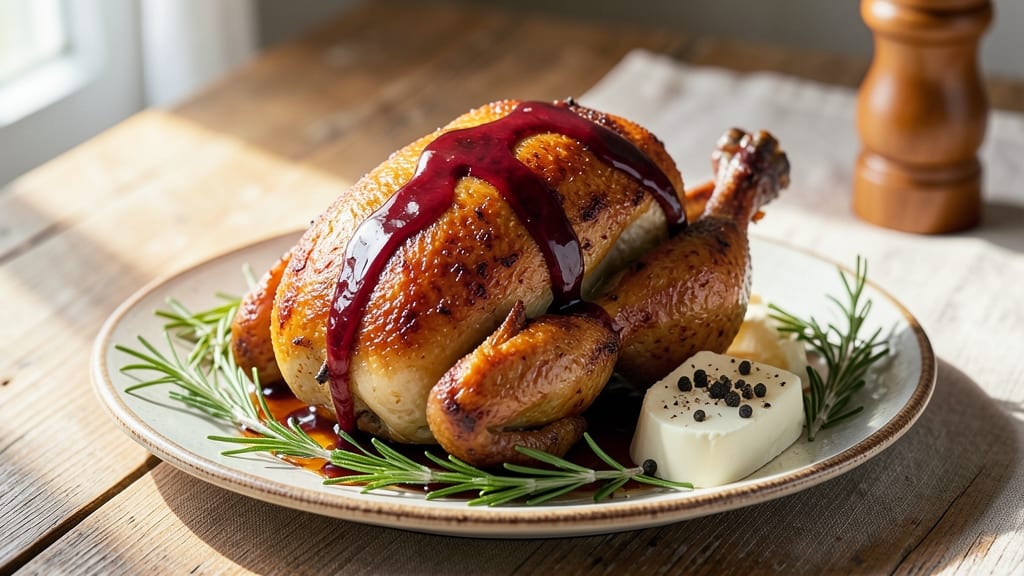
This balsamic roast chicken recipe transforms ordinary roasting into a showstopping centerpiece with its glossy caramelized crust and juicy golden meat—the kind of dish that makes every dinner feel special.
The secret lies in a simple balsamic reduction brushed onto the skin, which creates that signature sticky-sweet glaze while keeping the meat impossibly tender inside. I've perfected this method after years of trial and error, ensuring the chicken stays moist even when roasted at high heat.
The process is straightforward but requires attention to timing and basting—critical steps that guarantee a restaurant-quality result without requiring advanced techniques. You'll start with a dry-brined chicken (no soaking necessary), then roast it until the skin turns golden and crispy.
The balsamic glaze, made from reduced balsamic vinegar and butter, adds depth and complexity that elevates this classic dish to something extraordinary.
By the time you pull it from the oven, you'll have a chicken with a caramelized crust that crackles under your knife and meat so tender it falls apart at the touch.
The glaze clings to every bite, balancing sweetness with savory richness. This is the kind of roast chicken that makes guests ask for the recipe—and leaves them coming back for seconds.
Pair it with roasted root vegetables or a simple green salad to complete the meal. The beauty of this recipe is its versatility—it works for weeknight dinners or holiday feasts, always delivering impressive results with minimal effort. Let's get started on creating your perfect roast chicken.
Ingredients for balsamic roast chicken
The secret to restaurant-quality roast chicken lies in these 12 ingredients—simple but transformative.
| Ingredient | Amount | Notes |
|---|---|---|
| Whole Chicken 🍗 | 4 lb | Bone-in, skin-on, preferably free-range |
| Balsamic Vinegar 🍷 | ½ cup | High-quality aged variety preferred |
| Unsalted Butter 🧈 | ½ cup | Cold, cut into 8 pieces |
| Kosher Salt 🧂 | 1 ½ tbsp | Diamond Crystal preferred for precision |
| Fresh Black Peppercorns 🌶️ | 1 tsp | Coarsely cracked, not powdered |
| Fresh Rosemary 🌿 | 2 sprigs | Thick stems removed, leaves only |
| Fresh Thyme 🌿 | 4 sprigs | Leaves only, stems removed |
| Garlic Cloves 🧄 | 4 cloves | Peeled, smashed flat |
| Olive Oil 🫒 | 2 tbsp | Extra-virgin, for basting |
| Honey 🍯 | 1 tbsp | Light variety for balance |
| Fresh Lemon Juice 🍋 | 1 tbsp | From 1 small lemon |
| Fresh Parsley 🌿 | ¼ cup | Chopped, for garnish |
The chicken is non-negotiable—free-range or organic makes all the difference in flavor and texture. Look for a 4-pound bird with good fat coverage around the neck and thighs (that's where the flavor hides). Whole Foods or your local butcher shop are best for quality birds, but any grocery store's fresh poultry section will do in a pinch. If you're nervous about handling raw chicken, ask the butcher to trim excess fat from the neck cavity—it's where the balsamic glaze pools during roasting. The herbs? Fresh is essential here—dried won't give you that bright, aromatic punch the glaze needs. I usually grab extra rosemary because it holds up better to heat than thyme, but both are crucial for that classic herby depth.
No balsamic vinegar? Substitute with 1/4 cup red wine vinegar plus 1 tsp maple syrup—it won't be identical, but it'll save you. Running out of fresh herbs? Dried at half the amount works, but the texture will be different. The butter must be cold when you cut it into pieces—room temperature butter spreads instead of basting. For the glaze, if you can't find aged balsamic, regular balsamic plus 1 extra tbsp honey gives you that same sweet-tart balance. The honey in the glaze? Light amber works best—dark varieties can overpower the delicate flavors. And if you're short on time, the chicken can go into the oven unbrined (just dry it thoroughly first), though the skin won't be quite as crispy.
This chicken tastes even better the next day—plan ahead. The glaze keeps for 1 week in the fridge** if stored in a sealed jar, so make extra. For the chicken itself, let it cool completely before refrigerating in a sealed container (the skin will crisp up again when reheated). To reheat, cover loosely with foil and warm at 350°F for 20-25 minutes. The herbs and glaze components can be prepped a day ahead and refrigerated. If you're making this for a crowd, double the glaze recipe—everyone wants seconds, and you'll need it.
Why You'll Love This Recipe
- Five-Ingredient Magic: I swear by this recipe because it’s that simple—just chicken, butter, balsamic, salt, and pepper. No fancy prep, no hidden steps, just pure, foolproof roasting that actually tastes like you put in effort.
- Crispy-Soft Perfection: The secret’s in the butter-balsamic glaze—it caramelizes into a sticky, tangy crust while keeping the meat juicy inside. Honestly, that first bite of golden skin with the rich, slightly sweet sauce is worth every minute.
- Weeknight to Dinner Party: Same recipe, different occasions. Toss it together for a lazy Tuesday or impress guests with minimal fuss. Between us, the balsamic’s depth makes it feel fancy without the work.
- Leftovers That Don’t Suck: Roast a big bird, then repurpose it: shred for sandwiches, chop for salads, or slice for pasta. I’ll be real—this chicken stays delicious for days, and no one complains about seconds. Budget win.
Step-by-step instructions for balsamic roast chicken
Here's how to achieve that signature glossy caramelized crust while keeping the meat impossibly juicy inside.
Prepare the Chicken for Maximum Flavor
Start by removing the chicken from the refrigerator and letting it sit at room temperature for 30 minutes. This ensures even cooking throughout. Pat the entire bird completely dry with paper towels—this is crucial for that crispy skin. I like to use two towels: one to soak up initial moisture, then a second dry one to really dry the surface.
Next, season the chicken generously with 1.5 tablespoons kosher salt and 1 teaspoon coarsely cracked black peppercorns, rubbing it under the skin as well as all over the exterior. This salt infusion works its magic during the long cook, creating that perfect balance of flavor and moisture retention. Place the seasoned chicken on a wire rack set in a rimmed baking sheet to allow air circulation on all sides.
Create the Balsamic Glaze and Herb Butter
In a small saucepan, combine 0.5 cup balsamic vinegar, 1 tablespoon honey, and 1 tablespoon fresh lemon juice. Bring to a gentle simmer over medium heat and reduce by half—about 5-7 minutes—until it thickens slightly and becomes syrupy. This concentrated glaze will create that signature glossy finish. Let it cool completely before using.
While that simmers, make the herb butter by mixing 0.5 cup cold unsalted butter (cut into 8 pieces) with the leaves from 2 sprigs fresh rosemary and 4 sprigs fresh thyme. Use your fingers to work the herbs into the butter until evenly distributed. This butter will baste the chicken during roasting, infusing it with aromatic flavor.
Roast with Precision for Perfect Results
Preheat your oven to 425°F with a rack positioned in the lower third. Place the seasoned chicken in the oven and roast for 45 minutes. After this initial period, remove the chicken and brush it generously with the cooled balsamic glaze, making sure to get it under the skin as well. This is when the magic happens—the glaze caramelizes beautifully while the chicken continues cooking.
Return the chicken to the oven and continue roasting for another 30-45 minutes, basting with the herb butter every 15 minutes during this time. The chicken is done when the internal temperature reaches 165°F in the thickest part of the thigh (not touching bone). You'll see the skin develop a deep golden brown color with glossy caramelized spots from the balsamic.
Rest and Garnish for Ultimate Juiciness
Transfer the roasted chicken to a cutting board and tent loosely with aluminum foil. Let it rest for at least 15 minutes—this crucial step allows the juices to redistribute throughout the meat, ensuring every slice is moist and flavorful. During this time, preheat your oven's broiler setting for a final touch.
After resting, place the chicken back under the broiler for 2-3 minutes to achieve that perfect caramelized finish. Just watch it closely so it doesn't burn. Once golden and glossy, transfer the chicken to a serving platter. Garnish with the chopped 0.25 cup fresh parsley and any remaining herb butter. The result should be a stunning presentation with that irresistible combination of crispy, caramelized skin and perfectly juicy meat.
Pro Tips For Making Balsamic Roast Chicken
- CRANK THE HEAT FIRST: Start your chicken at 425°F (220°C) for the first 20 minutes—this sears the skin fast and locks in juices before the balsamic takes over. I used to bake at 375°F (190°C) the whole time, and the skin always ended up soggy. High heat first, then drop to 350°F (175°C) once you add the balsamic.
- DRY THE CHICKEN WELL: Pat that bird thoroughly with paper towels—especially under the skin and in the cavities. Moisture is the enemy of crispy skin, and balsamic glaze won’t stick properly if the surface is damp. I learned this the hard way when my first batch turned out sticky instead of glossy.
- SALT THE CHICKEN 12 HOURS EARLY: Season the chicken inside and out with kosher salt 12 hours before cooking (yes, even if you’re not a fan of dry-brining). It keeps the meat juicy and lets the salt penetrate deeply—critical when you’re roasting with butter and balsamic. Skip this, and you’ll end up with a bland, watery center.
- BASTE WITH REDUCTION, NOT JUICES: Instead of pouring pan juices over the chicken, spoon the thickened balsamic reduction (from simmering ½ cup vinegar + 1 tbsp butter) every 20 minutes. The acid cuts through the fat, and the concentrated flavor clings to the skin like a caramelized hug. I was skeptical until I tried it—now I never go back.
Pro cooking tips for this recipe
Basting Like a Pro
Basting is where the magic happens—don't skip it! I use a pastry brush to apply the balsamic glaze every 15 minutes during roasting, making sure to get it under the skin where it really counts.
For the herb butter, I melt it slightly with a spoon over hot water (about 30 seconds) to make it easier to spread, but never overheat it or the butter will separate. 🔥
Temperature Control Secrets
Start with a hot oven at 425°F to render fat and crisp the skin quickly, then reduce to 375°F after the initial 45 minutes to finish cooking gently. This two-stage approach prevents overcooking while building that deep caramelized crust.
Use an instant-read thermometer—I love the ThermoWorks Smoke—to check the thigh's internal temp at 165°F in the thickest part.
Skin Perfection Hacks
For extra crispy skin, I pat the chicken completely dry with paper towels before seasoning—no moisture means better browning. After roasting, I finish under the broiler for 2-3 minutes to intensify the caramelization.
Pro tip: If the skin starts browning too quickly, tent with foil to prevent burning while it cooks through.
Herb Butter Mastery
The herb butter should be cold but pliable when you work the herbs into it. I like to use my fingers to gently press the rosemary and thyme leaves into the butter pieces—this releases their oils for maximum flavor.
Store any leftover herb butter in an airtight container in the fridge for up to 5 days; it's perfect for basting other roasted meats or melting over vegetables.
Resting for Juiciness
Never skip the 15-minute rest—this is when the juices redistribute from the center to the edges. I cover the chicken loosely with foil to keep it warm while it rests.
For serving, I always carve the chicken on a large platter and arrange it with the glaze pooling underneath for maximum presentation impact.
Glaze Consistency Tips
The balsamic glaze should reduce to about ¼ cup—it should coat the back of a spoon but still drip slowly. If it's too thick, add 1 teaspoon water and reduce again.
For extra shine, I finish the chicken with a quick brush of olive oil right before broiling. This creates that restaurant-quality gloss that makes every bite irresistible. ✨
Nutrition facts
Frequently asked questions
Can I use this recipe for chicken thighs instead of a whole chicken?
For 8 bone-in thighs, reduce the balsamic glaze to 1/4 cup and the herb butter to 1/4 cup. Roast at 425°F for 30 minutes, then baste with glaze and continue for 25-30 minutes until the internal temp reaches 165°F. The cooking time is shorter, but the glaze technique remains the same for that signature caramelized finish.
What's the best way to reheat leftover balsamic roast chicken?
For perfect results, place chicken pieces on a baking sheet and cover loosely with foil. Reheat at 350°F for 20-25 minutes until warmed through. Avoid microwaving—it turns the skin rubbery. The glaze may thicken slightly; brush with a little water and reheat briefly to restore shine.
Can I make the balsamic glaze ahead of time?
Yes! Prepare the glaze up to 3 days ahead and store it in an airtight container in the fridge. Reheat gently in a small saucepan until warm and syrupy before using. The flavors actually deepen when made ahead. For extra richness, add 1 tsp balsamic vinegar when reheating.
Why did my chicken skin turn dark brown but not crispy?
This usually happens when the oven temperature drops or the chicken isn't dry enough. Pat the skin completely dry before roasting and ensure your oven maintains 425°F throughout. For extra crispiness, finish under the broiler for 2-3 minutes right before serving. The glaze should be applied when still warm for best results.
How can I make this recipe vegetarian?
While this is a chicken recipe, you could adapt the technique for portobello mushrooms or eggplant steaks. Use the same balsamic glaze and herb butter, roasting at 400°F for 20-25 minutes until tender. The glaze works beautifully on vegetables too—just reduce roasting time by half.