
Main Courses
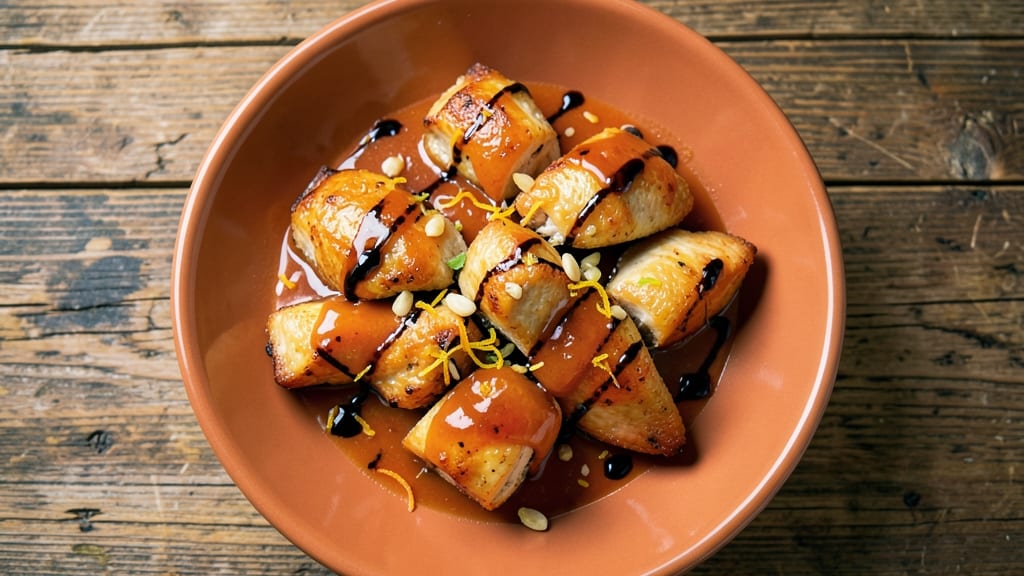
A baked orange chicken recipe with orange marmalade glaze delivers a perfect balance of sweet-tart flavors that clings to crispy, golden-brown chicken. This recipe transforms ordinary roasted chicken into a restaurant-worthy dish with minimal effort—no deep-frying required. The marmalade glaze caramelizes beautifully, creating a sticky-sauce that enhances every bite with bright citrus notes and subtle spice.
The secret lies in marinating the chicken overnight, allowing the flavors to penetrate deeply while keeping the meat juicy. A simple blend of garlic, ginger, and soy sauce forms the savory base, while the marmalade glaze adds complexity during the final bake.
The result? Chicken with a crispy skin that shatters when cut, revealing tender meat infused with citrusy sweetness.
This dish pairs beautifully with steamed jasmine rice or roasted vegetables to round out the meal. The glaze's tangy-sweet profile cuts through the richness of the chicken, making it both satisfying and refreshing.
Whether you're cooking for a family dinner or hosting guests, this recipe guarantees impressive results with minimal fuss.
Ready in just 45 minutes (plus marinating time), this baked orange chicken recipe delivers restaurant-quality flavor without the complexity. The marmalade glaze transforms ordinary chicken into something extraordinary—crispy, sticky, and packed with bright citrus flavor that lingers on your palate.
Ingredients for baked orange chicken recipe orange marmalade
Citrus-forward ingredients that transform ordinary chicken into a restaurant-worthy masterpiece with sticky-sweet glaze.
| Ingredient | Amount | Notes |
|---|---|---|
| Boneless, Skinless Chicken Thighs 🍗 | 1 ½ lb | Cut into even-sized pieces |
| Orange Marmalade 🍊 | ½ cup | High-quality, seedless preferred |
| Orange Zest 🍊 | 1 tbsp | Freshly grated orange peel |
| Fresh Garlic Cloves 🧄 | 4 cloves | Minced for marinade |
| Fresh Ginger Root 🌿 | 1 tbsp | Finely grated, aromatic |
| Soy Sauce 🥄 | 2 tbsp | Low-sodium preferred |
| Honey 🍯 | 2 tbsp | For glaze balance |
| Brown Sugar 🍚 | 2 tbsp | Packed for caramelization |
| Cornstarch 🌾 | 1 tsp | For glaze thickening |
| Vegetable Oil 🫒 | 2 tbsp | For crispy skin |
| Diamond Crystal Kosher Salt 🧂 | 1 ½ tsp | For seasoning |
| Ground Black Pepper 🌶️ | ½ tsp | Freshly cracked |
| Sesame Oil 🫒 | 1 tsp | For aroma |
| Orange Juice 🍊 | ¼ cup | Freshly squeezed |
The marmalade is non-negotiable—Craft brand or Belvedere deliver the best texture and flavor. Look for seedless varieties to avoid gritty bites. Fresh orange zest adds depth, so avoid pre-packaged zest (it loses potency fast). For ginger, Whole Foods or Asian markets offer the freshest roots. The chicken thighs should be even-sized for consistent cooking; trim excess fat for cleaner presentation. If using chicken breasts, pound them to even thickness to prevent overcooking.
No marmalade? Substitute equal parts orange juice and honey with a splash of apple cider vinegar for tang. Pre-packaged zest? Double the amount to compensate for dried-out flavor. The soy sauce can be swapped for coconut aminos if avoiding gluten. For extra crispiness, brush the chicken with avocado oil instead of vegetable oil. The glaze thickens as it cooks, so if it feels too runny after baking, mix 1 tsp cornstarch with 1 tbsp water and stir in. Sesame oil adds aroma—skip it if you prefer a more subtle profile.
Marinate the chicken overnight for maximum flavor penetration. Store marmalade in the pantry for up to 6 months, while fresh zest and ginger keep for 1 week in sealed containers. The cooked chicken reheats beautifully—350°F for 10 minutes restores crispiness. Portion leftovers into airtight containers for 4 days of fridge storage. Freeze marinated chicken (uncooked) for 3 months
Why You'll Love This Recipe
- One-Pan Magic: I swear by this for lazy nights—the thighs go in raw, marmalade glaze on top, and 30 minutes later, you’ve got sticky, golden perfection. No pots, no pans, just a sheet tray and a spatula. (Yes, even on a Tuesday night when you’re exhausted.)
- Tangy-Sweet Crave: That marmalade isn’t just garnish—it’s the star. The way the orange zest and fresh ginger cut through the richness while the caramelized glaze clings? It’s the kind of flavor that makes people ask, “What’s in this?” (I tell them, but they still won’t believe it’s easy.)
- Lunchbox Hero: Between us, this is my go-to for meal prep. Shred the leftovers, toss with rice or noodles, and you’ve got a week’s worth of lunches that don’t taste like sad takeout. My kid actually finishes these—no questions asked.
- Budget Banger: Chicken thighs are cheap, marmalade stretches far, and you’re not wasting expensive sauce. Honestly, I’ve made this for $10 and fed four people. The ginger and garlic bulk it up so it never feels cheap, just smart. (My wallet thanks me.)
Step-by-step instructions for baked orange chicken with orange marmalade glaze
Here's the method for achieving perfectly crispy chicken with a sticky-sweet glaze that balances tartness and caramel depth.
Prepare the Chicken and Marinade
Pat the 1.5 lb boneless, skinless chicken thighs completely dry with paper towels—this ensures maximum crispiness. Cut them into even-sized pieces, about 1½-inch cubes, and place them in a large bowl. In a separate small bowl, whisk together the 4 cloves minced fresh garlic cloves, 1 tbsp finely grated fresh ginger root, 2 tbsp low-sodium soy sauce, 1 tbsp freshly grated orange zest, 1.5 tsp Diamond Crystal kosher salt, and 0.5 tsp freshly cracked ground black pepper. Pour this marinade over the chicken and toss gently to coat evenly.
Cover the bowl and refrigerate for at least 30 minutes, or up to 4 hours for deeper flavor penetration. The marinade should permeate the chicken, giving it a fragrant aroma. This step is crucial—don't skip it, as the ginger and garlic need time to tenderize the meat while the salt begins to draw out moisture for that perfect crispy exterior.
Create the Orange Marmalade Glaze
In a small saucepan, combine the 0.5 cup orange marmalade, 2 tbsp honey, 2 tbsp packed brown sugar, 0.25 cup freshly squeezed orange juice, and 1 tsp cornstarch. Stir over medium heat until the mixture begins to bubble, then reduce heat to low and let it simmer for 5-7 minutes, stirring constantly with a silicone spatula. You're looking for a glaze that thickens slightly but remains pourable—it should coat the back of a spoon with a glossy sheen.
Remove from heat and stir in 1 tsp sesame oil and 2 tbsp vegetable oil. The oils will help create a glossy finish on the glaze and prevent it from drying out during baking. Set the glaze aside—it should be warm but not boiling when you're ready to use it. If it thickens too much while waiting, whisk in 1-2 teaspoons of hot water to restore the right consistency.
Bake the Chicken to Crispy Perfection
Preheat your oven to 400°F and line a large baking sheet with parchment paper or foil. Arrange the marinated chicken pieces in a single layer on the prepared sheet, leaving about ½-inch space between each piece to allow for even browning. Drizzle half of the warm glaze evenly over the chicken, reserving the rest for later. Bake for 15 minutes, then carefully flip each piece and drizzle with the remaining glaze.
Return to the oven and bake for another 10-12 minutes, until the chicken reaches an internal temperature of 165°F and the edges are deep golden brown with crispy skin. The glaze should be bubbling and caramelizing slightly, creating those beautiful sticky streaks. If the glaze starts to dry out before the chicken is fully cooked, brush on a little more or cover loosely with foil for the last 5 minutes of baking.
Rest and Serve with Glazed Elegance
Transfer the chicken to a serving platter and let it rest for 5 minutes before serving. This resting period allows the juices to redistribute, ensuring each bite is moist and flavorful. During this time, if you'd like an even glossier finish, return the baking sheet to the oven for 1-2 minutes to caramelize the glaze further—watch closely to avoid over-browning.
Serve the chicken immediately, allowing the diners to experience the contrast of crispy skin and tender meat with each bite. The orange marmalade glaze should be sticky and sweet-tart, clinging beautifully to every piece. Pair with steamed jasmine rice or a simple green salad to balance the richness of the dish. The aroma alone will have everyone reaching for seconds!
Pro Tips For Making Baked Orange Chicken Recipe Orange Marmalade
- SEAR THE THIGHS FIRST: Skip the slow bake and get those thighs golden before adding the sauce. Hit them hard in a hot pan with oil for 3-4 minutes per side—this locks in juices and makes the marmalade glaze stick like it’s supposed to. I used to bake them straight from cold, and the sauce just slid off.
- GRATE THAT GINGER FINE: No tiny specks, no big chunks—this isn’t a garnish, it’s flavor. Use the smallest holes on your grater (or pulse in a food processor) so it blends into the sauce without leaving texture. My first batch had visible ginger bits, and it felt like eating a science experiment instead of a meal.
- DON’T SKIP THE REST: Pull the chicken out of the oven when it’s just done—165°F internal—and tent it with foil for 5-10 minutes. The marmalade will thicken as it rests, and the thighs stay moist instead of drying out like sad, overcooked rubber. (Yes, even if you’re impatient like me.)
- USE LESS MARMALADE: Start with 2 tablespoons per thigh, not the whole jar. You can always add more later, but you can’t un-glaze a dry chicken. The marmalade’s sweetness balances the ginger’s kick—too much turns it into dessert. I learned this after drowning a batch and wondering why it tasted like orange candy.
Dietary considerations for baked orange chicken recipe orange marmalade
Gluten-Free Adaptations
This recipe naturally accommodates gluten-free diets by using low-sodium soy sauce (check labels for gluten-free certification) and avoiding wheat-based ingredients. For extra safety, swap soy sauce with tamari or coconut aminos—both are gluten-free and add depth without altering the flavor profile.
The marmalade glaze remains gluten-free as long as you use a pure, seedless brand without additives. 🌾
Dairy-Free Considerations
The recipe is inherently dairy-free, but if you're serving alongside creamy sides (like mashed potatoes), opt for olive oil-based mashed potatoes or a cashew cream drizzle.
The citrusy glaze pairs beautifully with dairy-free options, so you won’t miss the richness. The chicken’s crispy skin and tangy glaze carry the dish effortlessly.
Sugar-Conscious Swaps
To reduce sugar, replace brown sugar with monk fruit sweetener (use a 1:1 ratio) or erythritol—both caramelize similarly. For the glaze, reduce honey to 1 tbsp and add 1 tsp vanilla extract to enhance sweetness without added sugar.
The marmalade already provides natural sweetness, so these tweaks keep the dish balanced and flavorful.
Spice-Free Version
Skip the fresh ginger and black pepper in the marinade if you prefer mild flavors. Substitute with 1 tsp ground ginger (for warmth) and omit pepper entirely.
The orange marmalade’s natural brightness and honey’s sweetness will still shine through—just without the kick. This makes it kid-friendly while keeping the dish elegant.
Allergen-Friendly Notes
For nut allergies, ensure your marmalade is nut-free (some brands add almonds). If sesame is a concern, omit the sesame oil and boost the vegetable oil to 3 tbsp for crispiness. Always double-check labels on store-bought ingredients like marmalade and soy sauce to avoid hidden allergens. Safety first!
Nutrition facts
Frequently asked questions
Why does this recipe use marmalade instead of orange juice?
Marmalade adds depth and texture that plain orange juice can't match. Its natural pectin creates a thicker, caramelized glaze that clings beautifully to the chicken, while the preserved citrus peel adds subtle complexity. The result is a glossy, sticky-sauce that's far more flavorful than a simple citrus reduction.
Can I use chicken breasts instead of thighs?
Yes, but with adjustments! Pound breasts to ½-inch thickness to ensure even cooking. Reduce baking time to 12-15 minutes total (they cook faster than thighs) and check internal temp at 160°F. The skin won't be as crispy without the fat cap, but the glaze will still shine.
How do I fix if the glaze turns out too runny?
Simmer the glaze longer (up to 10 extra minutes) to thicken naturally. If it's still too thin, mix 1 tsp cornstarch with 1 tbsp cold water, stir into the glaze, and cook for 1-2 minutes until it reaches the right consistency. For serving, drizzle extra glaze over the chicken to compensate.
What's the best way to reheat leftovers?
Place chicken on a baking sheet and reheat at 350°F for 8-10 minutes to restore crispiness. For extra shine, brush with a little extra glaze warmed in the microwave (30 seconds) before serving. Avoid microwaving—it makes the skin soggy.
Can I make this recipe ahead of time?
Marinate the chicken up to 2 days ahead and store in the fridge. For the glaze, make it fresh day-of, but you can prepare all ingredients (except oil) up to 3 days ahead. Assemble and bake when ready—just reduce oven time by 2-3 minutes if starting cold.