
Main Courses
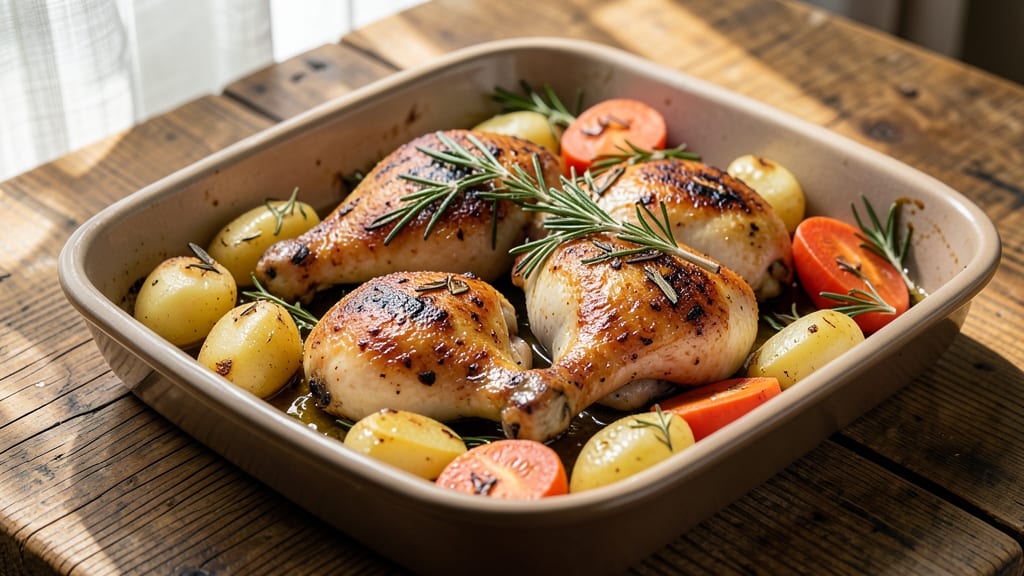
This baked chicken thighs with roasted veggies recipe delivers restaurant-quality results with crispy golden skin and tender meat, paired with caramelized vegetables that bring depth to every bite.
The secret lies in a simple herb-infused marinade and high-heat roasting that transforms ordinary ingredients into a showstopping meal—perfect for weeknights or special occasions.
The method is designed for effortless execution: bone-in chicken thighs develop rich flavor and crisp skin when baked at 425°F, while root vegetables like carrots, potatoes, and parsnips roast until tender and caramelized.
No fancy techniques required—just a sheet pan, a little time, and the right seasoning blend to elevate everything.
What you’ll achieve is a dish that’s juicy yet crispy, with vegetables so tender they melt in your mouth while maintaining their natural sweetness. The aromas alone—herbs, caramelizing sugar in the veggies, and the savory crust on the chicken—will have everyone at the table asking for seconds.
Serve family-style straight from the pan for a rustic touch, or plate with fresh herbs for a refined presentation. This recipe scales effortlessly, making it ideal for feeding a crowd or prepping ahead for meal prep. Let’s get cooking!
Ingredients for baked chicken thighs with roasted veggies
Herb-infused marinade, bone-in thighs, and caramelized roots create a restaurant-quality sheet pan meal.
| Ingredient | Amount | Notes |
|---|---|---|
| Bone-In Chicken Thighs 🍗 | 4 whole | Skin-on, 6-8 oz each, trimmed |
| Carrots 🥕 | 1 ½ lb | Whole, scrubbed, cut into 2-inch chunks |
| Baby Potatoes 🥔 | 1 ½ lb | Halved, skin-on, unpeeled |
| Parsnips 🥕 | 1 lb | Peeled, cut into 1-inch pieces |
| Extra-Virgin Olive Oil 🫒 | ½ cup | For tossing and basting |
| Fresh Rosemary 🌿 | ¼ cup | Chopped, stems removed |
| Fresh Thyme 🌿 | ¼ cup | Leaves only, stems removed |
| Garlic Cloves 🧄 | 6 cloves | Smashed, skin-on for flavor |
| Diamond Crystal Kosher Salt 🧂 | 2 tbsp | Plus extra for seasoning |
| Freshly Ground Black Pepper 🌶️ | 1 tbsp | Coarse grind for texture |
| Honey 🍯 | 2 tbsp | For caramelizing veggies |
| Fresh Parsley 🌿 | 0.15 cup | Chopped, for garnish (optional) |
The chicken thighs are the foundation—bone-in delivers unmatched flavor and crisp skin when baked at high heat. Look for thighs with visible fat marbling at Whole Foods or your local butcher for optimal texture. If using frozen, thaw overnight in the fridge. The root vegetables—carrots, potatoes, and parsnips—should be firm and free of soft spots. Organic produce from the grocery store's fresh section works best, but conventional is fine if scrubbed thoroughly. Pre-cut veggies from the salad bar save time but lack the caramelized depth of whole roots.
No fresh rosemary? Dried works at one-third the amount, but fresh delivers that piney aroma that elevates everything. Substitute thyme with oregano or marjoram if needed, though thyme's earthy notes pair perfectly with the chicken. For honey, maple syrup is a 1:1 substitute, though it adds a distinct caramelized sweetness. The garlic can be roasted whole for a milder flavor—simply wrap the whole cloves in foil with the veggies. If you're short on time, pre-trimmed chicken thighs from Costco or Trader Joe's save 15 minutes of prep work.
This dish reheats beautifully—425°F for 10-12 minutes restores crispiness. Store leftovers in airtight containers for 4-5 days in the fridge, or freeze for 3 months. For meal prep, portion the chicken and veggies separately to maintain texture. The herbs can be prepped ahead and stored in the fridge for 3 days wrapped in damp paper towels. Double the recipe for a crowd—just use two sheet pans and adjust baking time accordingly.
Why You'll Love This Recipe
- One-Pan Magic: I swear by this for nights when I’d rather not wash a million dishes—just toss the chicken thighs, baby potatoes, carrots, and parsnips on a sheet pan with olive oil and herbs, then walk away. The veggies caramelize while the chicken gets juicy, and the cleanup? One spatula, done.
- Craving-Worthy Crisp: That golden crust on the bone-in thighs? It’s the real star. The thighs stay moist inside while the skin gets addictively crispy, and the parsnips add this sweet, nutty depth that makes the whole plate sing. Honestly, I’ve caught myself sneaking bites straight from the pan.
- Weeknight to Potluck: Between us, this is my go-to for everything—dinner with the kids, a last-minute potluck, or even a lazy Sunday. The flavors hold up for days, and the leftovers reheat like a dream. Plus, the baby potatoes and carrots make it feel fancy without the fuss.
- Budget-Friendly Feast: Bone-in thighs are cheaper than breasts, and veggies like parsnips and carrots stretch a meal for less. I’ll be real: this feeds four for under $15, and it’s the kind of dish where everyone asks for seconds. No sad leftovers here—just happy, full stomachs.
Step-by-step instructions for herb-infused crisp chicken with caramelized roots
This method delivers restaurant-quality results with minimal effort—juicy chicken and perfectly caramelized vegetables.
Prep and Season the Chicken Thighs
Pat the 4 whole bone-in chicken thighs completely dry with paper towels—this is critical for achieving crisp skin. Season both sides generously with 1 tablespoon of the diamond crystal kosher salt and all 1 tablespoon of freshly ground black pepper, pressing the seasoning into the meat so it adheres. The salt will draw out moisture, which evaporates during roasting, leaving behind that coveted crispy exterior.
Place the seasoned thighs on a wire rack set over a rimmed baking sheet. This rack elevates the chicken, allowing hot air to circulate underneath and crisp the skin evenly. Let them sit at room temperature for 20-30 minutes before roasting—this ensures even cooking from edge to center.
Toss and Pre-Roast the Vegetables
In a large bowl, combine the 1.5 lb carrots, 1.5 lb baby potatoes, and 1 lb parsnips with 0.25 cup chopped fresh rosemary, 0.25 cup fresh thyme leaves, 6 smashed garlic cloves, 2 tablespoons honey, and 0.25 cup extra-virgin olive oil. Toss vigorously with your hands until every vegetable piece is evenly coated. Spread the vegetables in a single layer on a separate rimmed baking sheet, ensuring they don't overlap—this prevents steaming and promotes caramelization.
Roast the vegetables in a preheated 425°F oven for 15 minutes before adding the chicken. This jump-start gives them a head start on caramelization while you prepare the chicken. You'll notice the edges beginning to brown and the honey starting to glaze—this is your signal that they're ready for the chicken to join.
Roast the Chicken Thighs
Carefully transfer the baking sheet with vegetables to the lower oven rack, then place the chicken thighs on the middle rack. Roast at 425°F for 25 minutes, then reduce the heat to 375°F. The initial high heat crisps the skin, while the lower temperature ensures the chicken cooks through without drying out. After 25 minutes, flip the thighs skin-side up and continue roasting for another 20-25 minutes, until the internal temperature reaches 165°F when measured at the thickest part of the thigh.
Here's the thing—don't be tempted to open the oven door early. Every time you peek, you release heat and steam, which can turn that crisp skin soggy. Trust the thermometer and the visual cues: the skin should be deep golden brown, almost mahogany, and the juices should run clear when you pierce the thickest part with a knife.
Finish and Rest
Once the chicken reaches 165°F, transfer the thighs to a cutting board and tent loosely with aluminum foil. Let them rest for 10 minutes—this allows the juices to redistribute, ensuring each bite is moist and flavorful. During this time, return the vegetables to the oven for 5-10 minutes if they need additional caramelization. They should be tender with deep brown edges and a glossy sheen from the honey.
Garnish the finished dish with 0.15 cup chopped fresh parsley just before serving. The parsley adds a bright contrast to the rich, caramelized vegetables and crispy chicken skin. Serve immediately, with the chicken thighs sliced at the joint if desired, and the vegetables spooned around or on top.
Pro Tips For Making Baked Chicken Thighs With Roasted Veggies
- DON’T CROWD THE PAN: The first 20 minutes are about browning, not steaming. If your chicken thighs and veggies are packed in like sardines, you’ll end up with soggy skin and uneven cooking. Spread them out in a single layer—even if it means two batches—so the oil can work its magic and the edges crisp up properly.
- SALT THE POTATOES FIRST: I used to toss everything in the pan at once, but here’s what changed my game: Salt the baby potatoes (and parsnips) 30 minutes before roasting. The salt draws out moisture, which means they crisp up instead of turning mushy. Just pat them dry afterward—this isn’t a salt bath, just a head start.
- USE A MEAT THERMOMETER: Bone-in thighs are forgiving, but they’re not foolproof. The moment the thickest part hits 165°F (170°F if you’re paranoid about juiciness), pull them out. I learned this the hard way—overcooked thighs dry out fast, and no amount of olive oil will save them. The veggies can stay in longer, but the chicken? Timing is everything.
- ROAST CARROTS HALF-IN: Cutting carrots into thick batons (about 1-inch chunks) is lazy and leads to uneven cooking. Instead, slice them lengthwise into ¼-inch planks, then cut those into 2-inch lengths. This gives them more surface area to caramelize without turning to mush. (Yes, it takes 2 minutes extra—trust me, it’s worth it.)
Common mistakes when making this recipe
Skipping the Rest
One of the biggest mistakes is not letting the chicken rest after roasting. When you cut into the thighs immediately, all the juices rush out, leaving you with dry, flavorless meat.
Always transfer the chicken to a cutting board and tent it loosely with foil for 10 minutes—this simple step makes a world of difference. 💡
Overcrowding the Pan
If your vegetables overlap on the baking sheet, they’ll steam instead of caramelize. Spread them in a single layer with space between each piece for even browning. I’ve seen home cooks cram everything onto one sheet pan to save time, but this leads to soggy veggies and uneven cooking.
Use two pans if needed—your goal is crispy skin on the chicken and tender, caramelized roots.
Not Drying the Chicken
Moisture is the enemy of crispy skin. If you skip patting the chicken thighs dry before seasoning, the skin won’t crisp properly. Use paper towels to wipe away every drop of moisture—this is non-negotiable for that golden, shatterable crust. Trust me, the difference is night and day. 🍗
Opening the Oven Too Soon
Every time you open the oven door, you release heat and steam, which can turn that crisp skin soggy. Resist the urge to check on the chicken too early—use a meat thermometer to monitor the internal temperature.
The skin should be deep golden brown and the juices clear when pierced. Patience here is key to perfect results.
Using Cold Chicken
Pulling chicken straight from the fridge and roasting it without letting it come to room temperature can lead to uneven cooking. Let the thighs sit at room temperature for 20-30 minutes before roasting.
This ensures even heat penetration and a juicier final product. It’s a small step that makes a big difference in texture.
Overlooking the Honey Glaze
The honey in the vegetable toss isn’t just for sweetness—it helps caramelize the edges for extra depth of flavor. If you skip it or use too little, your veggies will lack that glossy, tender finish.
Toss the vegetables thoroughly with the honey and olive oil to ensure every piece gets coated. The result is a dish that’s both sweet and savory, with a perfect balance of flavors.
Nutrition facts
Frequently asked questions
Why use bone-in chicken thighs instead of boneless?
Bone-in thighs stay juicier and develop richer flavor during roasting. The bone acts as a natural insulator, keeping the meat moist while the skin crisps beautifully. Plus, they're more budget-friendly than boneless cuts while delivering superior texture. For best results, look for thighs with visible fat marbling.
Can I substitute the root vegetables with something else?
Swap carrots, potatoes, and parsnips for butternut squash, sweet potatoes, or Brussels sprouts. For extra flavor, add chopped onions or bell peppers to the vegetable mix. Just ensure your veggies are cut evenly so they cook at the same rate as the chicken.
How do I get extra crispy chicken skin?
Pat the thighs completely dry with paper towels before seasoning, and let them sit at room temperature for 20-30 minutes before roasting. The high heat (425°F) is key—don't reduce it too early. For maximum crispiness, flip the thighs skin-side up after 25 minutes and resist opening the oven door until they're done.
Can I make this recipe ahead of time?
Yes! Roast the chicken and vegetables completely, then store in airtight containers for 4-5 days in the fridge. Reheat at 425°F for 10-12 minutes to restore crispiness. For meal prep, portion the chicken and veggies separately—they reheat better when not mixed. The herbs can be prepped ahead and stored in the fridge for 3 days wrapped in damp paper towels.
What's the best way to serve this dish?
Serve family-style straight from the pan for a rustic touch, or plate with fresh herbs for a refined presentation. Pair with a simple green salad or crusty bread to soak up the juices. For extra flair, drizzle with a lemon-herb sauce or sprinkle with toasted pine nuts. The caramelized veggies and crispy chicken make this dish hearty enough to stand alone.