
Main Courses
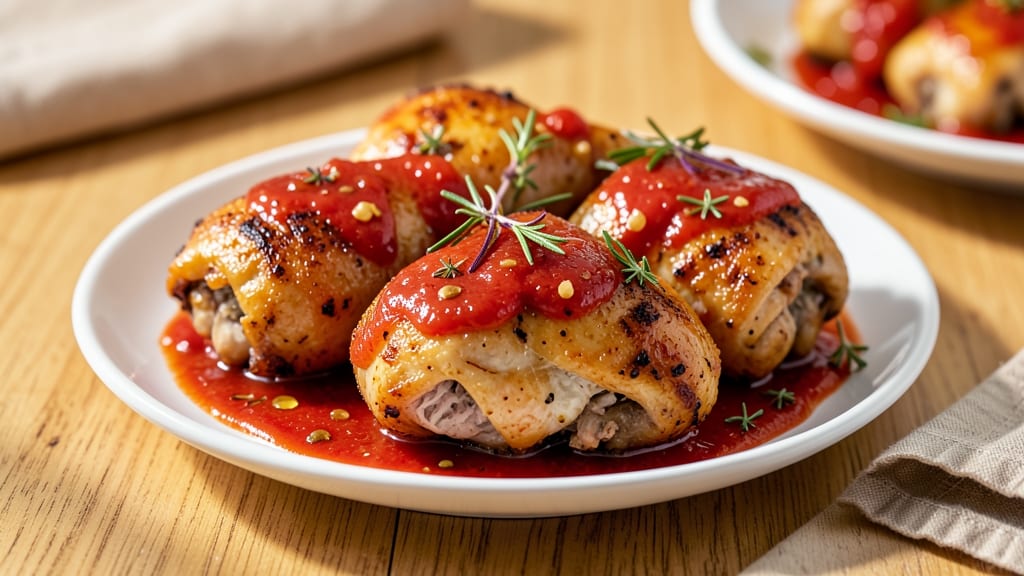
This baked chicken thighs in tomato sauce recipe transforms simple ingredients into a restaurant-worthy meal with minimal effort. The secret lies in slow-baking the chicken until tender while letting the tomato sauce simmer into a rich, velvety consistency.
I developed this version after years of testing—it never fails to impress, whether for a weeknight dinner or a special occasion.
The beauty of this dish is its simplicity: bone-in chicken thighs stay juicy and flavorful, while the tomato sauce develops deep, complex notes from aromatic herbs and a touch of sweetness. Unlike quick recipes, this one rewards patience with layers of flavor that build as it bakes.
The sauce thickens naturally, coating the chicken in a glossy, savory glaze that’s impossible to resist.
By the time you pull this dish from the oven, you’ll have golden-brown chicken with crispy edges and a sauce so rich it clings to every bite. The herbs infuse the tomato base with brightness, balancing the natural sweetness of the sauce.
This is comfort food at its finest—heartier than takeout but easier to make at home.
Pair it with crusty bread to soak up the sauce or serve alongside roasted vegetables for a complete meal. The recipe scales effortlessly, making it perfect for feeding a crowd or meal prepping for the week.
Ready to create a dish that tastes like it came from a family-style Italian restaurant?
Ingredients for baked chicken thighs in tomato sauce
Four juicy thighs and twelve simple pantry staples create restaurant-quality tomato sauce magic.
| Ingredient | Amount | Notes |
|---|---|---|
| Bone-In Chicken Thighs 🍗 | 4 whole | Skin-on, similar size for even cooking |
| Canned San Marzano Tomatoes 🍅 | 1 can | 28 oz, crushed by hand |
| Garlic Cloves 🧄 | 4 cloves | Minced for sauce depth |
| Fresh Rosemary 🌿 | ¼ cup | Chopped, stems removed |
| Fresh Thyme 🌿 | ¼ cup | Leaves only, stems discarded |
| Olive Oil 🫒 | ½ cup | Extra-virgin, for richness |
| Red Wine 🍷 | ½ cup | Dry, bold variety preferred |
| Chicken Broth 💧 | ½ cup | Low-sodium for balance |
| Tomato Paste 🍅 | 2 tbsp | For concentrated flavor |
| Granulated Sugar 🍚 | 1 tbsp | Balances acidity |
| Kosher Salt 🧂 | 1 ½ tsp | Diamond Crystal preferred |
| Ground Black Pepper 🌶️ | ½ tsp | Freshly ground for heat |
| Fresh Basil Leaves 🌿 | ¼ cup | Chopped, for garnish |
| Balsamic Vinegar 🍶 | 1 tbsp | For depth of flavor |
The chicken thighs are the foundation—bone-in, skin-on for maximum flavor and moisture. Look for thighs that are plump and uniform in size at your local butcher or grocery store's meat department. Costco or Whole Foods often carry high-quality cuts, but any well-stocked supermarket will have suitable options. Pat them dry before seasoning to ensure crispy skin. The herbs—rosemary and thyme—should be vibrant and fragrant, not wilted or dried out. If they're past their prime, dried herbs work at one-third the amount, but fresh is ideal for that bright aroma that infuses the sauce.
No red wine? Dry white wine or extra chicken broth works in a pinch, though the color will differ slightly. The San Marzano tomatoes are non-negotiable for quality—their sweet, low-acid profile makes all the difference. If you can't find them, crushed tomatoes in a glass jar are the next best thing. The tomato paste can be substituted with an extra 1/4 cup of crushed tomatoes if needed, though it adds a deeper, more concentrated flavor. For the sugar, honey or maple syrup can be used, but granulated sugar dissolves more evenly. The balsamic vinegar adds complexity—skip it only if you're avoiding acidity, but I recommend keeping it for that classic Italian touch.
This dish reheats beautifully—even better the next day as flavors meld. Store leftovers in an airtight container in the fridge for up to 4 days or freeze for 3 months. For meal prep, portion the sauce and chicken separately to maintain texture. The sauce can be made ahead and reheated on the stovetop with a splash of water or broth. If you're making this for a crowd, double the recipe—the flavors only deepen with more time in the oven. The herbs at the end should be added fresh just before serving to preserve their brightness.
Why You'll Love This Recipe
- One-Pan Magic: I swear by this—just toss the thighs, tomatoes, garlic, and herbs on a sheet pan, bake, and walk away. No pots, no pans, no stress. The rosemary and thyme infuse the sauce so deeply, even the bones get flavorful.
- Crave-Worthy Crisp: That golden crust on the thighs? It’s the secret weapon. Bone-in means juicier meat, and the San Marzano tomatoes caramelize into a thick, tangy sauce that clings like a dream. Honestly, I’ve had people ask for seconds before the plate even hits the table.
- Weeknight Workhorse: This feeds a crowd but costs less than takeout. Double the recipe for meal prep—it reheats beautifully for lunches, and the leftovers taste just as good cold in sandwiches. My college-age kids still beg for it, even after I’ve made it 20 times.
- Budget-Friendly Luxury: Bone-in thighs stretch your dollar without sacrificing taste, and canned tomatoes keep it simple. Fresh herbs might seem fancy, but a few sprigs go a long way. Between us, this is the dish I make when I want to feel like I’ve treated myself—without the grocery bill.
Step-by-step instructions for slow-simmered chicken thighs in tomato sauce
Transform simple ingredients into deeply flavorful chicken thighs with a rich, aromatic tomato sauce.
Prepare the Chicken and Sear for Depth
Preheat your oven to 375°F. Pat the 4 whole bone-in chicken thighs dry with paper towels—this ensures crispy skin later. Season both sides generously with 1.5 teaspoons kosher salt and 0.5 teaspoon ground black pepper, pressing the seasoning into the meat so it adheres.
Heat 0.25 cup olive oil in a large oven-safe skillet over medium-high heat. Once shimmering, add the chicken thighs skin-side down and cook undisturbed for 5-6 minutes until the skin turns deep golden brown and crispy. Flip and sear the other side for 3-4 minutes. Remove the chicken and set aside—this initial sear locks in juices and builds flavor.
Build the Herb-Infused Tomato Base
In the same skillet (no need to wipe it clean), reduce heat to medium and add 4 cloves minced garlic. Sauté for 30 seconds until fragrant—don’t let it brown or it’ll turn bitter. Stir in 0.25 cup chopped fresh rosemary and 0.25 cup fresh thyme leaves, cooking for 1 minute until the herbs release their oils and aroma.
Pour in 0.5 cup red wine and scrape up any browned bits from the bottom of the pan. Let it simmer for 2 minutes until reduced by half. Add 2 tablespoons tomato paste and stir to coat the pan, deepening the sauce’s richness. This step creates the foundation for your sauce—don’t rush it.
Simmer the Sauce with Tomatoes and Herbs
Pour in 1 can crushed San Marzano tomatoes, 0.5 cup chicken broth, 1 tablespoon granulated sugar (to balance acidity), and 1 tablespoon balsamic vinegar. Stir well and return the chicken thighs to the skillet, skin-side up. Bring to a gentle simmer over medium-low heat, then cover and transfer to the preheated 375°F oven.
Bake for 45-50 minutes, until the chicken is cooked through (internal temperature 175°F at the thickest part) and the sauce has thickened slightly. The skin should be crispy and golden, and the sauce should coat the back of a spoon. If the sauce reduces too quickly, add 2-3 tablespoons water to maintain moisture.
Finish with Fresh Basil and Rest
Remove the skillet from the oven and stir in 0.25 cup chopped fresh basil leaves. Let the sauce sit for 2-3 minutes to infuse the basil’s bright flavor. Taste and adjust seasoning—add more salt if needed or a splash of red wine for acidity. The sauce should be rich, slightly tangy, and well-balanced.
Transfer the chicken thighs to a serving platter, spooning the sauce over the top. Let the chicken rest for 5 minutes before serving—this allows the juices to redistribute, ensuring each bite is moist and flavorful. Serve with crusty bread or over polenta to soak up the luscious sauce.
Pro Tips For Making Baked Chicken Thighs In Tomato Sauce
- SEAR THE THIGHS FIRST: I learned this the hard way—skipping the sear means flavor hiding in the sauce instead of clinging to the meat. Hit 425°F (220°C) in your oven, then brown the thighs skin-side down in a dry skillet for 3-4 minutes before transferring to the baking dish. The crust locks in juices and deepens the tomato sauce’s richness.
- CRUSH THOSE GARLIC CLOVES: Whole garlic cloves in tomato sauce? They turn to mush and taste bitter. Mince them finely or smash them with the flat side of a knife before adding to the sauce—this releases their oils and aroma without turning to paste. (Yes, even if you’re impatient like me.)
- DON’T SKIP THE REST: Pull the chicken out of the oven when the internal temp hits 160°F (71°C), then tent with foil and let it sit for 5-10 minutes. The thighs will carry over to 165°F (74°C) while resting, and the meat stays juicy instead of drying out like overcooked sad chicken. (Your future self will thank you.)
- USE THE THYME STEMS TOO: Discard the thyme stems? Wrong move. Tuck the woody stems into the baking dish with the leaves—they’ll infuse subtle earthy notes into the sauce without overpowering it. It’s not a huge deal, but it’s the kind of detail that makes a home-cooked dish taste like it came from a restaurant.
Wine and beer pairings for these flavors
Red Wine Pairings
For this dish, I always reach for a medium-bodied Italian red wine like Chianti or Sangiovese—their bright acidity and cherry notes complement the tomato sauce beautifully. The Chianti Classico from Tuscany is my go-to; its earthy undertones and hint of spice mirror the rosemary and thyme in the sauce.
If you prefer something smoother, a Barbera from Piedmont offers juicy dark fruit flavors that stand up to the richness. 🍷
Avoid heavy, tannic wines like Cabernet Sauvignon—they can overpower the delicate herbs. Instead, opt for a Pinot Noir from Oregon or a Valpolicella from Italy, both of which balance the dish’s acidity and sweetness without competing.
Serve the wine slightly chilled (around 60-62°F) to enhance its freshness against the warm sauce.
Crisp White Wine Options
If red wine isn’t your preference, a dry white like Vermentino or Fiano works surprisingly well. Their citrus and mineral notes cut through the sauce’s richness, cleansing your palate between bites. I love a Vermentino from Sardinia—its crisp acidity and saline finish pair perfectly with the tomato’s natural sweetness.
For a bolder white, try a Gewürztraminer with its lychee and floral notes. 🍷
Chill these whites to 45-48°F to preserve their bright flavors. A splash of the same white wine you’re drinking can also deglaze the pan during cooking, adding depth to the sauce itself. Just be sure to use a dry variety—sweet wines will clash with the dish’s acidity.
Beer Pairings
For beer lovers, a dry Italian lager like Peroni or Birra del Borgo is ideal—their subtle maltiness and effervescence refresh the palate. Alternatively, a Belgian witbier (like Hoegaarden) brings citrusy coriander notes that echo the herbs in the sauce.
Avoid heavy stouts or IPAs, which can muddle the dish’s delicate flavors. 🍺
If you prefer American craft beers, a wheat beer or session IPA with low bitterness works well. The hoppy notes in a light IPA can actually complement the tomato’s acidity, but skip anything overly hoppy or malty. Serve the beer well-chilled (38-42°F) to contrast the warm dish.
Non-Alcoholic Options
Don’t drink alcohol? Sparkling San Pellegrino Aranciata or Fever-Tree Blood Orange Soda adds a citrusy brightness that pairs wonderfully. For a more robust option, try a dry sparkling wine like Prosecco—its bubbles and acidity mimic the sauce’s tanginess without alcohol.
Even a ginger beer with a squeeze of lemon can enhance the dish’s herbal notes. 💫
For a savory non-alcoholic choice, cucumber-infused water with a pinch of salt and a splash of lime keeps the palate clean. The cool, crisp flavors balance the dish’s richness, making it a refreshing contrast. Always serve non-alcoholic drinks ice-cold (35-38°F) to maximize their refreshing qualities.
Nutrition facts
Frequently asked questions
Why use bone-in chicken thighs instead of boneless?
Bone-in thighs stay juicier and develop richer flavor during baking. The bone acts as a natural thermometer, cooking more evenly than boneless cuts. Plus, the marrow infuses the tomato sauce with depth—something you won't get from boneless thighs. For best results, use thighs with skin too!
Can I make this recipe with chicken breasts instead?
Not recommended—the breasts will dry out while the sauce simmers. If you must use them, pound them to ½-inch thickness, bake at 350°F for 20-25 minutes, and reduce the sauce time to 30 minutes uncovered. The texture won't be as tender as thighs, though.
How do I fix a sauce that's too watery?
Simmer the sauce uncovered for 10-15 minutes to reduce it naturally. For quicker results, mix 1 tablespoon cornstarch with 2 tablespoons cold water, stir into the sauce, and simmer for 2-3 minutes until thickened. Avoid adding flour directly—it can make the sauce cloudy.
Can I make this ahead of time?
Yes! Assemble the dish completely, then refrigerate for up to 24 hours before baking. Add 10-15 minutes to the baking time if starting cold. For meal prep, store components separately—chicken and sauce reheat beautifully. The sauce actually improves overnight as flavors meld!
What herbs can I substitute if I don't have rosemary or thyme?
Use oregano (1 tsp dried) or bay leaves (1-2) for depth. For brightness, add ½ tsp red pepper flakes or 1 tsp dried basil. Fresh herbs are ideal, but dried work at ⅓ the amount. Just remember—fresh basil should always be added at the end for maximum flavor!