
Soups & Stews
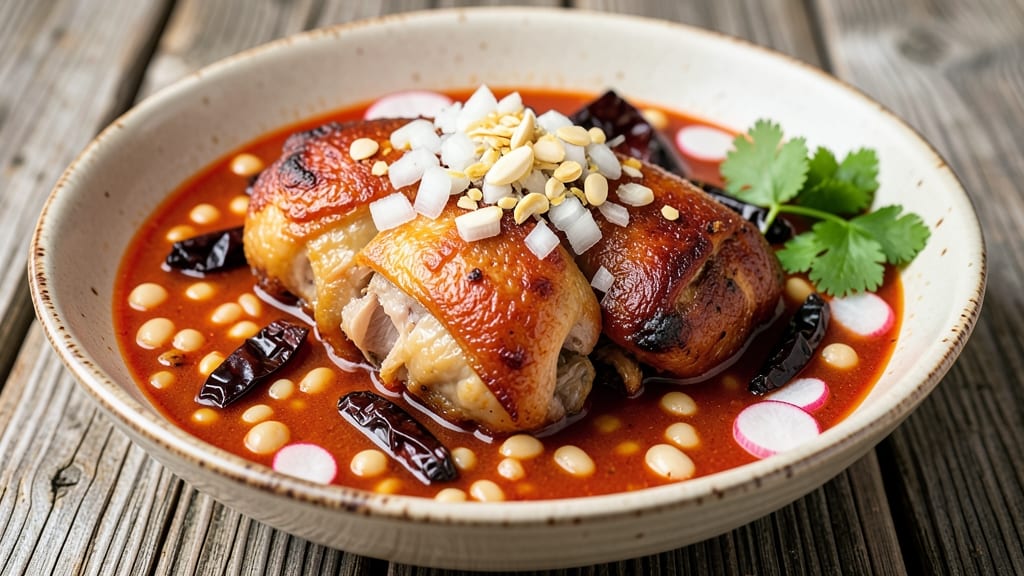
This authentic red chicken pozole recipe delivers the smoky, chili-spiced soul of Mexican tradition in one comforting pot. The secret lies in slow-cooked chicken, dried ancho and guajillo chiles that infuse deep earthy heat, and hominy that soaks up every layer of flavor.
I’ve perfected this version after years of testing—it’s the kind of dish that transforms a simple gathering into a celebration.
The process begins with rendering chicken fat for natural richness, then simmering the chiles into a velvety red broth. Traditional techniques like toasting spices and adjusting consistency ensure the perfect balance of smoky, tangy, and slightly sweet notes.
Every bite delivers tender chicken, al dente hominy, and a broth so flavorful it disappears fast.
What makes this pozole truly special is how it comes together—layered with fresh toppings like shredded cabbage, radishes, lime, and cilantro that add crunch and brightness. It’s the kind of dish that tastes even better the next day, as flavors meld and deepen.
Perfect for feeding a crowd or savoring in smaller bowls.
Whether you’re serving it at a fiesta or a weeknight dinner, this pozole delivers restaurant-quality depth with a method that’s approachable yet deeply rooted in tradition. Let’s get cooking—your taste buds will thank you.
Ingredients for authentic red chicken pozole
Six pounds of chicken, smoky chiles, and hominy—this is the soul of pozole in one pot.
| Ingredient | Amount | Notes |
|---|---|---|
| Chicken Thighs, Bone-In 🍗 | 3 lb | Skin-on for extra flavor |
| Dried Ancho Chiles 🌶️ | 4 whole | Stems and seeds removed |
| Dried Guajillo Chiles 🌶️ | 4 whole | Stems and seeds removed |
| White Onions 🧅 | 2 whole | Yellow or red works too |
| Garlic Cloves 🧄 | 6 cloves | Peeled and lightly crushed |
| Fresh Tomatillos 🍅 | 8 whole | Husk removed, rinsed |
| Hominy, Canned 🌽 | 2 cans | 15 oz each, white or yellow |
| Chicken Broth 💧 | 4 cups | Homemade or low-sodium |
| Cumin Seeds 🌿 | 1 tbsp | Toasted for depth |
| Mexican Oregano 🍃 | 1 tbsp | Dried, not Italian oregano |
| Bay Leaves 🌿 | 2 whole | Fresh or dried |
| Salt 🧂 | 1 ½ tsp | Diamond Crystal preferred |
| Black Peppercorns 🌶️ | ½ tsp | Freshly cracked |
| Lime 🍋 | 1 whole | For serving, juiced |
| Fresh Cilantro 🌿 | ½ cup | Chopped, for garnish |
| White Cabbage 🥬 | 2 cups | Shredded, for topping |
| Radishes 🥕 | 1 cup | Thinly sliced, for crunch |
| Avocado Oil 🫒 | 2 tbsp | For rendering chicken skin |
The chiles are non-negotiable here. Ancho and guajillo give that signature depth—skip the pre-ground powders, they lack the complexity. Local Latin markets usually carry them whole, but if you're at a mainstream grocery store, look for the dried section near the spices. Toast the chiles lightly in a dry skillet until fragrant (about 30 seconds per side)—this brings out their natural oils. The chicken? Thighs with skin are key—the fat renders down for richness, and bone-in keeps it juicy. If you can't find bone-in, skin-on works, but you'll lose some flavor. For the hominy, white or yellow both work, but white has a slightly sweeter taste that pairs beautifully with the chiles.
No ancho chiles? Mulato chiles at double the amount will give you a similar color, though the flavor will shift slightly toward earthier notes. Running short on tomatillos? Green tomatoes at half the amount work in a pinch, but they'll change the tanginess. The cumin seeds should be toasted in a dry pan until fragrant—about 30 seconds—before grinding. If you're using whole cumin seeds, a coffee grinder works perfectly. For the oregano, Mexican oregano is a game-changer, but if you only have Italian, use half the amount. The cabbage and radishes can be prepped ahead—they'll keep in the fridge for 3-4 days wrapped in a damp towel to stay crisp.
This pozole tastes even better the next day, so make a double batch if you can. Store in the fridge for up to 5 days—the flavors deepen as it sits. For freezing, portion into airtight containers, leaving room at the top since it expands. Thaw overnight in the fridge and reheat gently on the stove. The lime and cilantro should be added fresh when serving—don't mix them in ahead of time, or they'll turn the broth bitter. If you're feeding a crowd, prep all the toppings in advance and set them out in bowls for everyone to customize their own bowls.
Why You'll Love This Recipe
- One-Pot Wonder: I swear by this recipe because it’s literally one pot—no chopping boards, no extra pans. Toss in the bone-in thighs, simmer with those smoky ancho and guajillo chiles, and let the onions and garlic melt into the broth. My kitchen stays cleaner, and my back thanks me.
- Deep Umami Magic: That combo of dried chiles and bone-in chicken? Chef’s kiss. The ancho gives this pozole its signature depth—slightly sweet, smoky, with just a hint of heat—while the guajillo adds that tangy richness. Honestly, the first time I tasted it, I immediately doubled the recipe.
- Leftovers That Shine: Between us, this dish begs to be made ahead. The flavors actually get better the next day as the broth soaks up all the smoky goodness. I freeze portions for lazy Sundays, and it reheats like a dream—no dry chicken here, just tender, flavor-packed bites every time.
- Budget-Friendly Crowd-Pleaser: Bone-in thighs and dried chiles stretch this recipe into a full meal without breaking the bank. I’ve fed six people for under $15, and everyone leaves happy. Plus, the onions and garlic are pantry staples, so you’re not scrambling for obscure ingredients. Reliable, satisfying, and wallet-friendly.
Step-by-step instructions for authentic red chicken pozole
Here's how to build that deep, smoky flavor from scratch—no shortcuts, just tradition.
Render Chicken Skin and Toast Spices
Pat the 3 lb chicken thighs, bone-in dry with paper towels—this is non-negotiable for crispy skin. Heat 2 tbsp avocado oil in a heavy Dutch oven over medium-high heat. Add the chicken skin-side down and let it render undisturbed for 10 minutes until the skin turns deep golden brown and crispy. Flip the thighs and cook another 5 minutes until golden on all sides.
While the chicken renders, toast the 1 tbsp cumin seeds in a dry skillet over medium heat for 1-2 minutes until fragrant. Immediately transfer them to a spice grinder and pulse until finely ground. This step unlocks the cumin's full earthy depth—don't skip it. Set aside for now.
Char and Rehydrate the Chiles
Working quickly, char the 4 whole dried ancho chiles and 4 whole dried guajillo chiles directly over a gas flame or under a broiler for 30-45 seconds per side until blackened in spots. Place them in a bowl with 1 cup hot water from the kettle and let them soak while you prep the aromatics. The water should cover them completely—this softens the skins and releases their smoky essence.
After 10 minutes, drain the chiles and transfer them to a blender with the 6 cloves garlic cloves, 1 tbsp Mexican oregano, and 2 whole bay leaves. Blend until smooth, scraping down the sides as needed. This is your pozole's flavor foundation—save a few tablespoons for garnish if you're feeling fancy, but most of it goes back into the pot.
Build the Broth and Simmer the Chicken
Return the Dutch oven with the chicken to medium heat and add 2 whole white onions, quartered, and 8 whole fresh tomatillos, husked and rinsed. Cook for 5 minutes until the onions soften slightly. Pour in the blended chile mixture and stir to combine. Add 4 cups chicken broth, 1.5 tsp salt, and 0.5 tsp black peppercorns, then bring to a gentle boil. Reduce heat to low and simmer uncovered for 45 minutes, skimming any foam that rises to the surface.
After 45 minutes, carefully remove the chicken thighs and let them rest on a cutting board for 10 minutes. The broth should now be deep red, with a rich aroma that hits you like a warm hug. If it's too thin, simmer uncovered for another 10-15 minutes to reduce slightly—this concentrates the flavors. Return the chicken to the pot and cook for another 15 minutes to infuse the meat with the broth's essence.
Add Hominy and Finish Cooking
Drain and rinse the 2 cans hominy under cold water to remove excess sodium. Add them to the pot along with the ground cumin seeds and simmer for 20-25 minutes until the hominy is tender but still holds its shape. The broth should now coat the back of a spoon—if it's too thick, add ½ cup hot water to loosen it. Taste and adjust seasoning; you might need a pinch more salt to balance the chiles.
Remove the chicken from the broth and let it cool slightly before shredding it into bite-sized pieces with two forks. Return the shredded chicken to the pot and keep it warm on low heat. The hominy should be al dente, not mushy—this is key for the perfect texture. Skim any excess fat from the surface before serving.
Serve with Traditional Toppings
Ladle the pozole into bowls and let everyone customize their own. Top each serving with shredded white cabbage, thinly sliced radishes, and chopped fresh cilantro. Serve with wedges of lime on the side—squeezing a little over each bite brightens the dish. For extra crunch, toast tortilla strips in a dry skillet until golden and sprinkle them on top. The contrast of textures and temperatures makes this dish unforgettable.
Here's the thing—pozole tastes even better the next day as the flavors meld. Double the batch if you can, because leftovers are a given. And trust me, the first bite of that smoky, spiced broth with tender chicken and hominy is worth every minute of effort.
Pro Tips For Making Authentic Red Chicken Pozole
- Toast Chiles Properly: I learned this the hard way—dry-toasting ancho and guajillo chiles in a skillet until they smell like smoky campfire, not burnt toast. If they’re just warm and not darkening, you’re missing that deep, earthy flavor that’s the soul of red pozole.
- Brown Chicken Fat First: Skip the rush to add broth—let those bone-in chicken thighs sizzle in their own fat over medium-high heat until the skin’s crispy and the meat releases juices. This builds flavor faster than simmering in water, and the fat keeps the broth rich.
- Strain the Broth Twice: After simmering the chicken and chiles, strain the broth through a fine-mesh sieve twice—once to catch big bits, then again through a cheesecloth if you’re feeling fancy. The second strain guarantees a silky texture, not a mouthful of pulp.
- Simmer Low and Long: Pozole needs time—at least 1.5 hours of gentle simmering (low enough to see tiny bubbles, not a rolling boil). Rushing this step turns the broth flat; patience turns it into something complex, with layers of chile and onion sweetness.
Pro cooking tips for perfect results
Fat Rendering Magic
This isn't just about cooking the chicken—it's about building flavor from the skin. Rendering the fat at medium-high heat for 10 minutes until deep golden brown creates a rich, crispy crust that infuses the broth with depth.
I use avocado oil because it has a high smoke point and neutral flavor, but you can also use lard if you're feeling traditional. The key is patience—don't rush this step, or the skin won't crisp properly. 🌡️
After the skin is golden, flip the thighs and cook for another 5 minutes to ensure even browning. This step is non-negotiable for authentic flavor. The rendered fat will give your pozole a luxurious mouthfeel and a depth of flavor that can't be replicated with store-bought broth.
Trust me, your taste buds will notice the difference.
Chile Char and Toast
Char your ancho and guajillo chiles directly over a gas flame or under the broiler for 30-45 seconds per side until they're blackened in spots. This step is crucial—it brings out the smoky, earthy flavors of the chiles.
Place them in a bowl with 1 cup hot water to soften while you prep the aromatics. The water should cover them completely to help release their flavors. 🌶️
After 10 minutes, drain the chiles and blend them with garlic, Mexican oregano, and bay leaves. This blend is the heart of your pozole's flavor profile. Save a few tablespoons for garnish if you're feeling fancy, but most of it goes back into the pot.
The blend should be smooth, so scrape down the sides of the blender as needed. This step is where the magic happens—don't skip it!
Simmering for Depth
Simmer the broth uncovered for 45 minutes to allow the flavors to meld and deepen. Skim any foam that rises to the surface to keep the broth clear. If the broth is too thin after 45 minutes, simmer it uncovered for another 10-15 minutes to reduce it slightly.
This step concentrates the flavors and ensures a rich, velvety texture. 🔥
After removing the chicken, return it to the pot for another 15 minutes to infuse the meat with the broth's essence. This step is key for tender, flavorful chicken that falls apart easily.
The broth should now be deep red and aromatic, with a rich aroma that hits you like a warm hug. Taste and adjust the seasoning if needed—you might need a pinch more salt to balance the chiles.
Hominy Texture
The hominy should be tender but still hold its shape after simmering for 20-25 minutes. If it's too thick, add ½ cup hot water to loosen it. The broth should coat the back of a spoon, but not be gluey.
This step is crucial for achieving the perfect texture—hominy that's too mushy will make your pozole feel heavy and unbalanced. 🌽
Remove the chicken from the broth and let it cool slightly before shredding it into bite-sized pieces with two forks. Return the shredded chicken to the pot and keep it warm on low heat.
Skim any excess fat from the surface before serving to keep the broth clean and clear. The contrast between the tender chicken, al dente hominy, and rich broth is what makes this dish truly special.
Nutrition facts
Frequently asked questions
Can I substitute chicken thighs with chicken breasts?
While you can use chicken breasts, they won't give the same rich flavor or tender texture. Chicken thighs with skin and bone are traditional for their fat content, which renders down to create the pozole's signature depth. If you must use breasts, choose bone-in pieces and cook them longer to prevent drying out. For best results, marinate them in lime juice and spices before cooking.
What if I can't find ancho or guajillo chiles?
For ancho chiles, try mulato chiles—they provide a similar deep red color and earthy flavor. If you can't find guajillo, use pasilla chiles for a slightly sweeter profile. Always toast and blend them whole for maximum flavor. As a last resort, use 1 tbsp chili powder mixed with ½ tsp smoked paprika, but expect less complexity.
How do I know when the hominy is perfectly cooked?
The hominy should be tender but still hold its shape—think "al dente." Test by pressing a piece with a fork: it should give slightly but not fall apart. Overcooking turns it mushy, which makes the pozole heavy. If you're unsure, start checking after 20 minutes of simmering. The broth should coat the back of a spoon but remain spoonable.
Can I make pozole in a slow cooker instead of a Dutch oven?
Follow the same steps for rendering chicken skin and toasting spices, then transfer everything to your slow cooker. Cook on low for 6-8 hours or high for 3-4 hours, skimming foam occasionally. The slow cooker method works well for busy days, but keep an eye on the broth—it may need more reduction time to reach the right consistency.
What's the best way to reheat pozole?
Reheat pozole gently on the stove over low-medium heat until warmed through. Avoid microwaving as it can make the broth watery. If the broth thickens too much while reheating, add ¼ cup hot water or broth to restore consistency. Pozole actually tastes better the next day as flavors meld—this is why it's perfect for meal prep!