
Main Courses
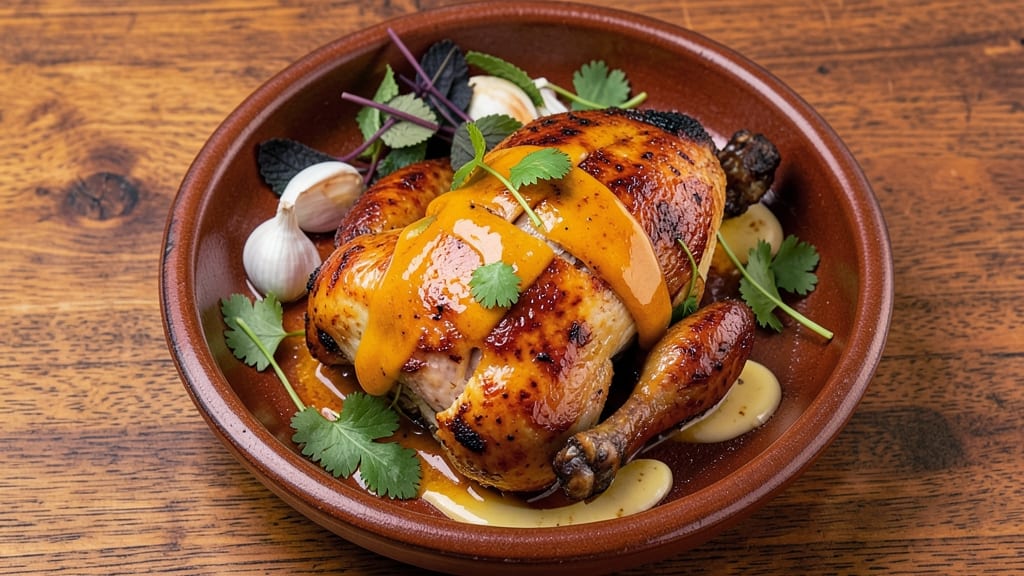
This authentic Peruvian roasted chicken recipe brings the bold flavors of Lima straight to your kitchen, where aji amarillo butter transforms ordinary roasted chicken into a restaurant-worthy masterpiece.
The secret lies in the marinade—a vibrant blend of Peruvian aji amarillo paste, garlic, and cilantro—that infuses the chicken with its signature tangy, slightly sweet heat. I’ve perfected this technique over years of testing, ensuring every bite delivers that perfect balance of crispy skin and juicy, flavorful meat.
The magic happens in the roasting process, where the chicken develops a golden crust while the aji amarillo butter bastes it into tender perfection. Unlike traditional roasted chicken, this method incorporates huacatay (black mint), a Peruvian herb that adds a unique, slightly peppery depth.
The result? A dish that’s rich, aromatic, and packed with layers of flavor—just like the chicken you’d find at a Lima chifa restaurant. No shortcuts here, just the real deal.
What sets this recipe apart is the aji amarillo butter, a creamy, spicy compound that clings to the chicken like a flavorful blanket. The butter caramelizes slightly during roasting, creating a glossy finish that’s impossible to resist.
Serve it with crispy Peruvian papa a la huancaína (potatoes in peanut sauce) or steamed white rice to complete the meal. This isn’t just chicken—it’s a celebration of Peruvian cuisine in every bite.
Ready to elevate your dinner game? This recipe delivers restaurant-quality results with a method that’s both authentic and approachable. The key is patience—letting the marinade work its magic and roasting the chicken to the perfect temperature.
Trust me, once you taste the difference, you’ll never go back to ordinary roasted chicken again. Let’s get cooking!
Ingredients for authentic peruvian roasted chicken
Four pounds of chicken plus Peruvian spices—this is where bold flavors come alive.
| Ingredient | Amount | Notes |
|---|---|---|
| Whole Chicken 🍗 | 4 lb | Bone-in, skin-on preferred |
| Aji Amarillo Paste 🌶️ | ¼ cup | Peruvian yellow chili paste |
| Unsalted Butter 🧈 | ½ cup | Cold, cubed for butter bath |
| Fresh Garlic Cloves 🧄 | 6 cloves | Minced, aromatic base |
| Fresh Cilantro Leaves 🌿 | ½ cup | Chopped, bright flavor |
| Huacatay (Black Mint) Leaves 🌿 | ¼ cup | Fresh, peppery depth |
| Extra-Virgin Olive Oil 🫒 | ¼ cup | For marinade richness |
| Lime Juice 🍋 | ¼ cup | Freshly squeezed |
| Diamond Crystal Kosher Salt 🧂 | 1 ½ tsp | For seasoning balance |
| Ground Black Pepper 🌶️ | ½ tsp | Freshly cracked |
| Fresh Yellow Onion 🧅 | 1 whole | Thinly sliced for garnish |
| Fresh Cilantro Stems 🌿 | ¼ cup | Chopped for garnish |
The aji amarillo paste is non-negotiable for that signature tangy heat. La Tienda or South American markets carry it, but if you can't find it, yellow chili paste from a Latin grocery works in a pinch. I always grab extra—it keeps for months in the fridge. The huacatay (black mint) is the secret weapon here; if you can't find it, doubled fresh mint leaves add a similar peppery kick. For the chicken, bone-in and skin-on is ideal—it renders fat for crispy skin during roasting. Trader Joe's or Whole Foods usually have whole chickens in the right size if your butcher doesn't carry them.
No aji amarillo? Mix 1 tbsp yellow chili powder + 1 tbsp lime juice + 1 tsp honey as a substitute. The huacatay can be skipped if unavailable, but the dish loses some depth. For the butter, European-style unsalted (like Plugrá) has higher fat content and melts beautifully. The lime juice should be freshly squeezed—bottled just won't cut it. The garlic and cilantro can be prepped ahead and stored in the fridge for up to 3 days in an airtight container. If you're short on time, frozen chopped garlic works fine—just thaw it first.
Prep the chicken the night before if possible—it marries with the flavors better. The aji amarillo butter can be made up to 3 days ahead and stored in the fridge; just give it a stir before using. The roasted chicken reheats beautifully—wrap it in foil and warm in a 350°F oven for 20 minutes. Leftovers keep for 4 days in the fridge, but honestly, it's best eaten fresh. For serving, I like to arrange the sliced onions and cilantro stems on a platter with the chicken—it adds that restaurant-quality presentation.
Why You'll Love This Recipe
- One-Pan Magic: I swear by this method—just rub the chicken with garlic, aji amarillo, and butter, then let the oven do the work. No basting, no flipping, no stress. That golden crust? Pure reward for minimal effort.
- Flavor Bomb: The aji amarillo paste gives it this smoky-sweet kick that’s addictive—like a hug for your taste buds. Between us, my husband now asks for seconds before I even finish serving.
- Leftovers? More Like Leftovers Win: This chicken stays juicy for days, so I make it on Sundays and repurpose it into sandwiches, salads, or even tacos. Honestly, I’ve never had a recipe where leftovers felt this exciting.
- Budget-Friendly Feast: A whole chicken costs less than takeout, and the aji amarillo paste stretches far. Plus, the butter and garlic make it feel special without breaking the bank—my wallet and my family thank me every time.
Step-by-step instructions for authentic Peruvian roasted chicken
Here's how to transform a simple chicken into a vibrant, aromatic masterpiece with bold Peruvian flavors.
Marinate the Chicken for Maximum Flavor
In a large mixing bowl, combine the 0.25 cup aji amarillo paste, 0.25 cup extra-virgin olive oil, 0.25 cup lime juice, 1.5 teaspoons kosher salt, and 0.5 teaspoon black pepper. Mix until the paste is fully emulsified and the marinade has a smooth, vibrant orange hue.
Place the 4 lb whole chicken in a large resealable plastic bag and pour the marinade over it. Gently massage the marinade into the skin, working it under the skin on the breast and thighs for maximum penetration. Seal the bag and refrigerate for at least 4 hours, or overnight for deeper flavor infusion. The chicken will absorb the marinade and develop that signature Peruvian tang.
Create the Butter-Braised Base
Preheat your oven to 375°F. Remove the chicken from the marinade (reserve the marinade for later) and place it breast-side up in a large Dutch oven. In the same Dutch oven, melt the 0.5 cup unsalted butter over medium heat until it foams, then add the 6 minced garlic cloves and cook for 30 seconds until fragrant but not browned.
Pour the reserved marinade into the Dutch oven with the butter and garlic, scraping up any browned bits from the bottom. Bring to a gentle simmer and let it reduce by half—this concentrated sauce will become your chicken's flavor bath. The mixture should smell intensely of citrus, garlic, and that signature Peruvian chili heat.
Roast Until Golden and Juicy
Carefully place the marinated chicken into the Dutch oven with the braising liquid. Cover tightly with a lid or foil to trap steam and roast for 1 hour and 15 minutes until the internal temperature reaches 165°F in the thickest part of the thigh. The skin should be deep golden brown, and the juices should run clear when pierced.
Here's the thing—don't open the oven during cooking. Every time you peek, you lose heat and steam, which can dry out the skin. Instead, trust the timer and the thermometer. The chicken will develop a beautiful crust from the butter bath while staying impossibly juicy inside.
Finish with Aromatic Herbs
Remove the chicken from the oven and let it rest for 15 minutes before carving. While it rests, increase the heat to medium and add the 0.5 cup chopped cilantro leaves and 0.25 cup chopped huacatay leaves to the braising liquid. Let them wilt slightly, about 2 minutes, then stir in the thinly sliced yellow onion and cook for another 1 minute until softened.
This herb infusion transforms the simple braising liquid into a vibrant, fragrant sauce that complements the chicken perfectly. The huacatay adds that distinctive Peruvian peppery note that sets this dish apart from ordinary roasted chicken.
Serve with Garnish and Sauce
Using kitchen shears, carefully cut the chicken into serving pieces, discarding the backbone. Arrange the chicken on a platter and ladle the herb-infused braising sauce over the top. Garnish with the remaining 0.25 cup chopped cilantro stems for both beauty and extra flavor.
Serve immediately with rice and a simple green salad. The chicken should be golden and crispy-skinned with impossibly tender, juicy meat. Each bite delivers layers of citrus, chili, garlic, and herb flavors that transport you straight to Peru's coastal regions.
Pro Tips For Making Authentic Peruvian Roasted Chicken
- Score the Skin: Use the back of a knife to press grooves into the chicken’s skin before roasting—this lets the aji amarillo butter seep in and renders fat faster. I learned this the hard way after a batch turned out dry; the extra surface area makes all the difference when you’re working with a whole bird.
- Blend Your Paste: Mix the aji amarillo paste with a splash of chicken fat (or olive oil) before spreading it on—this makes it stick better and prevents clumping. I used to just slather it on dry, and half of it would slide off the skin into the pan.
- Don’t Crowd the Pan: Roast the chicken on a wire rack over a baking sheet so heat circulates evenly—no peeking or moving it around. After burning the first batch by checking too often, I now set a timer and ignore it until the skin crisps.
- Save the Garlic: Smash the garlic cloves flat with the side of your knife before adding them to the butter—this releases more flavor without burning. I was skeptical until I tried it; now I refuse to skip this step.
Troubleshooting this dish
Dry, Tough Chicken
If your chicken ends up dry instead of juicy, the issue is likely overcooking or insufficient resting time. Always use a meat thermometer to check the internal temperature—remove the chicken when it hits 165°F in the thickest part of the thigh, not before.
Also, never skip the 15-minute rest after roasting; this lets juices redistribute. For extra moisture, add 2 tbsp chicken broth to the braising liquid before roasting. 💧
Pale, Bland Skin
Pale or bland skin usually means the butter didn’t caramelize enough or the chicken wasn’t crisped properly. Pat the chicken dry before roasting—this helps the skin crisp. For golden perfection, roast at 375°F and baste with the butter mixture every 20 minutes during cooking.
If your oven runs hot, lower the temperature to 350°F and extend cooking time by 15 minutes.
Weak Aji Amarillo Flavor
The aji amarillo flavor might be muted if the paste wasn’t fully emulsified in the marinade or if it was overpowered by other ingredients. Whisk the aji amarillo paste with olive oil and lime juice until smooth before adding salt and pepper—this ensures even distribution.
For extra depth, add 1 tsp ground cumin to the marinade. If using a substitute, balance it with 1 tsp smoked paprika to mimic the paste’s complexity. 🌶️
Sauce Too Thin or Watery
A thin or watery sauce happens when the braising liquid didn’t reduce enough. Simmer the marinade uncovered for 5-7 minutes before adding the chicken to concentrate the flavors. If the sauce is still too thin after roasting, reduce it on the stovetop by simmering for 3-5 minutes until slightly thickened.
For richness, stir in 1 tbsp cold butter at the end.
Huacatay Overpowering
If the huacatay flavor dominates and tastes too strong, it’s likely because it wasn’t cooked enough to mellow its intensity. Wilt the herbs in the braising liquid for no more than 2 minutes—overcooking releases bitter compounds.
For a milder taste, reduce the amount to 0.125 cup or replace with 0.25 cup fresh mint. If you love the flavor but want balance, add 1 tsp honey to the sauce to soften the peppery notes.
Chicken Stuck to Dutch Oven
Chicken sticking to the Dutch oven is usually from residual marinade or insufficient fat. Always use enough butter (at least 0.5 cup) to create a protective layer. Before adding the chicken, coat the Dutch oven with a thin layer of oil and heat it until smoking hot.
If it still sticks, soak the pan in warm water for 10 minutes to loosen the chicken before serving. For next time, par-cook the chicken for 10 minutes before adding it to the braising liquid.
Nutrition facts
Frequently asked questions
Can I use boneless chicken breasts instead of a whole chicken?
While you can adapt this recipe for boneless breasts, the results won't be as authentic. Whole chicken gives you crispy skin and juicy meat throughout. If you must use breasts, marinate them for 2 hours instead of overnight, then roast at 375°F for 20-25 minutes (until 165°F internal temp). For best texture, pound them to even thickness before cooking.
Where can I find aji amarillo paste if my local store doesn't carry it?
Look for it in the international aisle of major grocery stores like Walmart or Kroger, or order online from Peruvian specialty shops (like La Tienda). For a substitute, mix 1 tbsp yellow chili powder + 1 tbsp lime juice + 1 tsp honey. The flavor won't be identical, but it'll add similar warmth. Always balance with 1 tsp smoked paprika to mimic the paste's depth.
How do I know when the chicken is fully cooked?
Use a meat thermometer to check the thickest part of the thigh - it should read 165°F. The juices should run clear when pierced, and the skin should be deep golden brown. Never rely on color alone, as some ovens cook unevenly. For extra safety, let the chicken rest 15 minutes before carving - this ensures juices redistribute.
Can I make this recipe ahead of time?
Prepare the marinade up to 3 days ahead and store it in the fridge. The chicken can marinate overnight for deeper flavor. For make-ahead roasting, cook the chicken completely, then refrigerate it covered. Reheat wrapped in foil at 350°F for 20 minutes before serving. The sauce can be made 1 day ahead and reheated gently on the stove.
What sides pair best with this Peruvian roasted chicken?
Traditional pairings include papa a la huancaína (potatoes in peanut sauce), arroz con pollo (Peruvian chicken rice), or simple steamed white rice with a fresh green salad. For extra authenticity, serve with aji de gallina sauce on the side. The tangy, creamy sauce cuts through the richness of the roasted chicken beautifully.