Main Courses
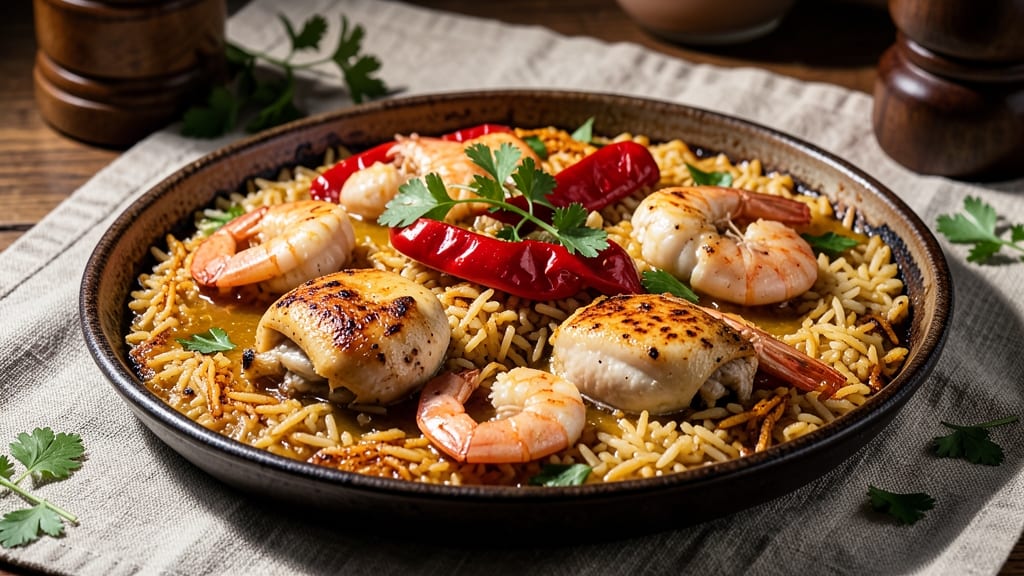
This authentic chicken and shrimp paella recipe brings the vibrant flavors of Spain to your kitchen with saffron-infused rice and perfectly balanced seafood. The secret lies in the slow-cooked broth, where saffron threads release their golden hue and delicate aroma, transforming simple rice into a fragrant, flavorful base.
Every bite delivers tender chicken, sweet shrimp, and crispy socarrat—the prized caramelized crust at the bottom that paella purists crave.
What sets this recipe apart is the traditional technique of cooking everything in a wide, shallow pan, allowing the rice to develop its signature texture while the seafood and chicken cook in the same aromatic broth.
The dish is completed with fresh herbs, roasted peppers, and a side of alioli for dipping, creating a meal that’s as visually stunning as it is delicious. This is paella as it should be—authentic, robust, and full of Mediterranean soul.
The result is a restaurant-quality paella that’s rich in flavor yet light enough to enjoy as a main course. The saffron-infused rice absorbs the essence of the broth, while the shrimp turns pink and the chicken stays juicy.
The crispy socarrat adds a satisfying crunch that elevates every forkful. Serve it family-style with crusty bread and a crisp white wine to complete the experience.
Perfect for special occasions or weekend gatherings, this paella is designed to impress without compromising authenticity. The key is patience—letting the flavors meld and the rice develop its signature texture.
Once you master this technique, you’ll never settle for anything less than the real deal. Let’s get started on creating your own Spanish masterpiece.
Ingredients for authentic chicken and shrimp paella
Six servings of saffron-kissed rice, tender chicken, and sweet shrimp—this paella delivers restaurant-quality Spanish soul.
| Ingredient | Amount | Notes |
|---|---|---|
| Bomba Rice 🍚 | 2 cups | Short-grain, ideal for paella |
| Saffron Threads 🌼 | ¼ tsp | High-quality, whole threads |
| Chicken Thighs 🍗 | 1 ½ lb | Bone-in, skin-on preferred |
| Large Shrimp 🦐 | 1 ½ lb | Peeled, deveined, tails on |
| Chicken Broth 💧 | 4 cups | Homemade or high-quality |
| Red Bell Peppers 🍅 | 1 whole | Roasted, sliced into strips |
| Green Bell Peppers 🍅 | 1 whole | Roasted, sliced into strips |
| Yellow Onion 🧅 | 1 whole | Diced, medium size |
| Garlic Cloves 🧄 | 6 cloves | Fresh, minced finely |
| Tomatoes 🍅 | 1 lb | Ripe, diced (or 1 can crushed) |
| Olive Oil 🫒 | ½ cup | Extra-virgin, for frying |
| Fresh Parsley 🌿 | ¼ cup | Chopped, for garnish |
| Lemon Wedges 🍋 | 2 whole | For serving |
| Salt 🧂 | 1 ½ tsp | Kosher or sea salt |
| Ground Black Pepper 🌶️ | ½ tsp | Freshly ground |
| Smoked Paprika 🌶️ | 1 tsp | For color and depth |
| Bay Leaves 🍃 | 2 whole | Fresh if possible |
Saffron is non-negotiable here—Penzeys or Spanish specialty stores carry the best threads. Bomba rice is the gold standard (find it at Latin markets or online), but Arborio works in a pinch. The chicken thighs should have skin for crispy edges—bone-in, skin-on is traditional. Shrimp? Wild-caught, 51-60 count stays juicy. Roast your peppers and onions first—they add smoky depth without overpowering. If you're short on time, jarred roasted peppers (drained well) work fine, but fresh is better.
No saffron? Turmeric at half the amount mimics the color (though not the flavor). Shrimp too expensive? Mussels or clams add briny depth. For the broth, low-sodium chicken stock is key—add salt later. The tomatoes? San Marzano canned are ideal, but fresh diced works too. Fresh herbs like parsley and thyme (not in the list but worth adding) brighten the dish. If you're making this ahead, cook the rice just until tender—it firms up when reheated, letting you develop that coveted socarrat later.
Saffron loses potency fast, so store it in an airtight container in a cool, dark place. The shrimp should be used within 2 days of purchase—freeze extras for later. This paella tastes even better the next day, so double the recipe if you're feeding a crowd. Reheat gently with a splash of broth to restore moisture. The leftovers? Perfect for paella fried rice—just crisp it up in a pan with a little olive oil.
Why You'll Love This Recipe
- One-Pot Magic: I swear by this recipe—just one deep pan, a few ingredients, and you’re done. No chopping boards full of mess, no multiple pots to wash. The Bomba rice soaks up the broth perfectly while the chicken and shrimp cook right in the same space.
- Saffron’s Golden Kiss: That first pinch of saffron threads? It’s the secret weapon. The broth turns a rich amber, and the rice gets this delicate, floral aroma that makes every bite feel like a little celebration. (Yes, even on a Tuesday night.)
- Crowd-Pleaser Flex: This works for date nights, family dinners, or feeding a houseful of guests. Double the shrimp for fancier occasions, or swap in chorizo if you’re feeling bold. My in-laws think it’s restaurant-quality, and they’ve seen my burnt toast.
- Leftovers That Don’t Suck: Paella tastes even better the next day—honestly. The rice holds up, the flavors deepen, and you can reheat it gently with a splash of broth. I meal prep this all the time; it’s my go-to for busy weeks when I need something hearty but not heavy.
Step-by-step instructions for authentic chicken and shrimp paella
Let's create a paella that captures the true essence of Spanish coastal cooking.
Prepare the Saffron Infusion and Roast the Vegetables
First, steep the 0.25 teaspoon saffron threads in ½ cup hot chicken broth for 10 minutes to release their vibrant color and aroma. This is the soul of paella—don't skip this step. While the saffron infuses, preheat your oven to 400°F.
Cut the 1 whole red bell pepper and 1 whole green bell pepper into strips, and dice the 1 whole yellow onion into medium pieces. Toss them with 2 tablespoons olive oil, 1 teaspoon salt, and ½ teaspoon black pepper. Spread them on a baking sheet and roast for 20-25 minutes until tender and slightly charred. This roasting adds deep, smoky sweetness that balances the seafood flavors.
Sear the Chicken and Shrimp
Heat 2 tablespoons olive oil in a large paella pan or deep skillet over medium-high heat. Pat the 1.5 pounds chicken thighs dry and season generously with ½ teaspoon salt and ¼ teaspoon black pepper. Sear the chicken for 5-6 minutes per side until golden brown and cooked through. Remove and set aside.
In the same pan, add 1 tablespoon olive oil and heat over medium heat. Add the 1.5 pounds large shrimp, seasoned with ½ teaspoon salt and ¼ teaspoon black pepper, and cook for 2-3 minutes per side until pink and opaque. Remove shrimp and set aside with the chicken.
Sauté the Aromatics and Build the Base
In the same pan, add 1 tablespoon olive oil and sauté the 6 cloves minced garlic for 30 seconds until fragrant. Add the roasted peppers and onions, along with the 1 pound diced tomatoes, 1 teaspoon smoked paprika, and 2 whole bay leaves. Cook for 5 minutes until the tomatoes break down and the mixture thickens slightly.
Stir in the 2 cups Bomba rice, coating each grain evenly with the vegetable mixture. Pour in the 4 cups chicken broth (including the saffron-infused portion) and bring to a gentle boil. The rice should absorb the liquid immediately—this is the socarrat foundation.
Cook the Rice and Layer the Proteins
Reduce heat to low and let the rice simmer uncovered for 15 minutes, stirring gently once or twice to distribute the liquid evenly. After 15 minutes, arrange the seared chicken thighs and shrimp evenly over the rice. The residual heat will gently cook the proteins without overpowering the rice.
Continue cooking for another 10-12 minutes until the rice is tender but still slightly firm in the center. The top should form a crispy, golden layer called socarrat—this is the hallmark of authentic paella. If the rice seems dry before the top crisps, add ¼ cup hot broth to maintain moisture.
Rest and Serve with Fresh Garnishes
Once the rice is cooked and the top has developed a crispy crust, remove the pan from heat and let it rest for 5 minutes. This resting period allows the flavors to meld and the rice to absorb any remaining juices.
Garnish with the ¼ cup chopped fresh parsley and serve immediately with the 2 lemon wedges on the side. The lemon brightens the rich, savory flavors of the paella. For an authentic touch, serve family-style directly from the paella pan so everyone can share the experience.
Pro Tips For Making Authentic Chicken And Shrimp Paella
- TOAST THE SHRIMP FIRST: I learned this the hard way—raw shrimp in paella turns rubbery. Pat them dry, then sear in olive oil over high heat for 30 seconds per side until just opaque. They’ll stay tender while absorbing the broth’s flavors instead of turning to mush.
- SAFFRON SOAKS BETTER: Crush those threads with the side of your knife first, then steep in warm broth (not boiling) for 10 minutes. I used to just toss them in cold—now the color’s deeper and the aroma hits you the second you lift the lid.
- CHICKEN THIGHS NEED REST: Pull the chicken out of the broth 2-3 minutes early—it’ll finish cooking in the residual heat. Tent with foil and let sit 5 minutes. Overcooked thighs make soggy paella; rested thighs stay juicy and pull away cleanly.
- BOMBA RICE: LESS LIQUID: This rice absorbs like a sponge—use the ratio on the package, then add another ¼ cup broth per cup of rice. I used to follow generic paella ratios and ended up with gluey rice. Now it’s perfectly al dente every time.
Essential equipment for great authentic chicken and shrimp paella
Paella Pan Essentials
A traditional paella pan (16- to 20-inch diameter) is non-negotiable for authentic socarrat—the crispy bottom layer that defines paella. I swear by Lodge’s pre-seasoned carbon steel paella pan—it distributes heat evenly and develops a natural non-stick finish over time.
For budget options, a heavy-duty stainless steel paella pan (like Mauviel) works, but avoid non-stick coatings—they ruin the crust. If you’re short on space, a large, shallow cast-iron skillet (12-inch diameter) can work in a pinch, but expect less dramatic socarrat. 🔥
Heat Source Matters
Paella requires gentle, even heat—never high flames. A gas stove is ideal for precise temperature control, but if you’re using electric, opt for a flat-bottomed burner to prevent hot spots.
I’ve had success with a wood-fired paella setup (like a Tejas-style burner) for outdoor cooking, but it’s overkill for home kitchens. Avoid induction cooktops unless your pan is induction-compatible, or you’ll risk uneven cooking and a gummy texture.
Saffron Infuser Tool
A saffron infuser (a small mesh bag or tea ball) keeps threads intact while steeping, preventing them from floating freely and losing potency. I use a fine-mesh metal strainer or a silicon saffron infuser (available on Amazon) for easy removal.
Never crush saffron—its delicate threads dissolve in liquid, releasing their terpenes and crocin (the compounds that give paella its golden hue and aroma). A mortar and pestle can also work if you’re feeling fancy, but it’s unnecessary for this dish. 🌼
Wooden Spoon and Rice Scoop
A long-handled wooden spoon (like Oxo’s Good Grips) is perfect for stirring paella without scratching the pan. For serving, a slotted rice scoop (or a large metal spatula) helps transfer rice without breaking the socarrat.
Avoid metal utensils during cooking—they can scratch the pan’s seasoning and react with acidic ingredients like tomatoes. If you don’t have a scoop, a large metal ladle works, but be gentle to preserve the crust.
Broth Thermometer
Monitoring broth temperature ensures even cooking and prevents mushy rice. A digital instant-read thermometer (like ThermoWorks Thermapen) lets you check the broth’s temp without opening the pan. Aim for 195–205°F during the rice’s cooking phase—this range balances moisture and heat for perfect texture.
If your broth boils too vigorously, reduce heat immediately to avoid burning the rice. A stovetop thermometer (like Ozeri Touchless) is a great budget alternative. 🌡️
Garnish and Serve Tools
Fresh parsley and lemon wedges elevate paella’s presentation. Use sharp kitchen shears to chop parsley quickly, and a mandoline (set to 1mm thickness) for even lemon slices. For serving, a large ceramic platter keeps paella warm and showcases its vibrant colors.
If serving family-style, a wooden serving board adds rustic charm. Don’t forget a small bowl for alioli—a garlic mayo dip that’s a must with paella. A pastry brush helps spread alioli neatly on the side.
Nutrition facts
Frequently asked questions
Can I substitute Bomba rice with another type?
While Bomba rice is ideal for its starchy texture that absorbs broth perfectly, you can use Arborio rice (common for risotto) or short-grain white rice in a pinch. Avoid long-grain varieties like basmati—they won’t develop the same creamy consistency or crispy bottom (socarrat). For best results, rinse your substitute rice thoroughly before cooking to remove excess starch.
How do I get that perfect crispy socarrat layer?
The socarrat forms when the rice caramelizes at the bottom. Start with a dry pan (no extra oil) and cook the rice on medium-high heat for the last 5-7 minutes uncovered. If your pan isn’t hot enough, the rice will steam instead of crisp. For extra insurance, place the pan on the back burner during the final phase to concentrate heat.
Can I make paella ahead of time?
Paella tastes even better the next day! Cook the rice until it’s 80% done (still slightly firm), then let it cool completely. Store in an airtight container in the fridge for up to 2 days. To finish, reheat gently with 2 tablespoons broth per cup of rice, then crisp the bottom on high heat for 3-4 minutes before serving. The flavors meld beautifully overnight.
What if my paella turns out too dry or mushy?
Too dry? You likely cooked it too long or used too much heat. Next time, add 2-3 tablespoons hot broth during cooking and reduce heat immediately if the rice starts sticking. Mushy rice usually means insufficient heat or stirring too often. Use a wooden spoon to gently press down on the rice (not stir) to help form the socarrat, and keep the heat consistent at medium-low.
Is alioli really necessary with paella?
While not traditional, alioli (garlic mayo) adds a delicious contrast to paella’s rich flavors. For an authentic touch, serve with lemon wedges instead—squeeze fresh lemon over each serving to brighten the dish. If you prefer something more substantial, a side of roasted garlic soup or marinated olives complements the meal beautifully while keeping it true to Spanish roots.