
Sauces & Condiments
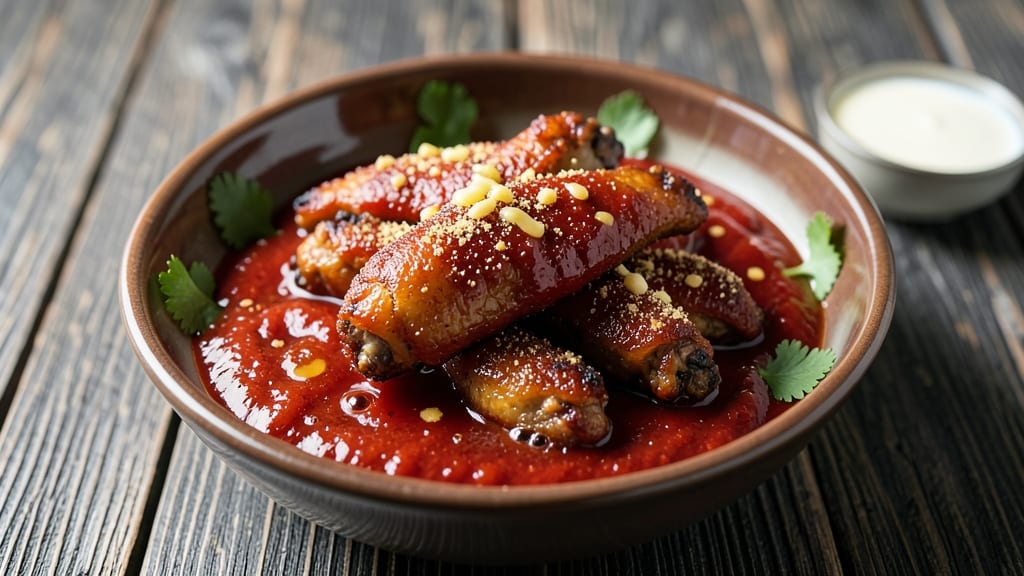
This Anchor Bar-style buffalo chicken wing sauce recipe delivers the signature heat, tang, and stickiness that makes wings legendary. The secret lies in balancing cayenne, melted butter, and vinegar for that signature kick without overpowering the dish.
I've perfected this recipe after years of testing—it's the same bold, creamy sauce you'd find in Buffalo, New York, but with a foolproof method for home cooks.
The magic happens when you melt butter with a precise blend of hot sauce, vinegar, and spices, then simmer until thickened. This sauce isn't just hot—it's velvety, tangy, and clings perfectly to wings or any protein you toss it with.
The key is patience: letting the sauce reduce slowly ensures a rich, flavorful finish that's anything but basic.
What you'll end up with is a deep red, glossy sauce that's finger-licking good—spicy enough to satisfy heat lovers but balanced so it doesn't overwhelm. It keeps well in the fridge for up to 2 weeks, making it perfect for game day prep or whenever cravings strike.
The best part? No fancy ingredients, just a few pantry staples and a little attention to detail.
This sauce works on more than just wings—try it on chicken tenders, meatballs, or even as a dip for veggies. The versatility is what makes it a kitchen essential. Ready to elevate your wings to restaurant-quality? Let's get started with the ingredients.
Ingredients for anchor bar buffalo chicken wing sauce
Nine simple ingredients transform into the legendary Anchor Bar buffalo sauce.
| Ingredient | Amount | Notes |
|---|---|---|
| Unsalted Butter 🧈 | ¾ cup | Cold, cubed for even melting |
| Hot Sauce 🌶️ | ½ cup | Frank's RedHot preferred |
| White Vinegar 🍶 | ¼ cup | Distilled or apple cider |
| Buttermilk 🥛 | ¼ cup | Full-fat for creaminess |
| Cayenne Pepper 🔥 | 1 tsp | Adjust for heat preference |
| Garlic Powder 🧄 | 1 tsp | Freshly ground preferred |
| Onion Powder 🧅 | ½ tsp | For depth of flavor |
| Salt 🧂 | ½ tsp | Kosher or sea salt |
| Black Pepper 🌶️ | ¼ tsp | Freshly ground preferred |
The butter is non-negotiable—it's what gives that signature velvety texture. Use unsalted so you control the saltiness, and cold cubes melt more evenly than a whole stick. I grab mine from Whole Foods or the bulk section at Kroger, but any store-brand works. For the hot sauce, Frank's RedHot is the gold standard, but Crystal or Louisiana brands work too. The vinegar adds that tangy kick—distilled is cheaper, but apple cider gives it a slightly sweeter note. Don't skimp on the buttermilk either; it's what makes the sauce creamy and rich.
No buttermilk? Substitute with 1/4 cup milk plus 1 tbsp vinegar—let it sit for 5 minutes to curdle. Short on cayenne? Red pepper flakes at half the amount work in a pinch. Want more depth? Add a pinch of smoked paprika. The powders (garlic and onion) can be swapped for fresh—just mince 1 clove garlic and 1 tbsp onion and cook them with the butter. If you're making this for a crowd, double the recipe—it keeps perfectly for 2 weeks in the fridge.
This sauce gets better as it sits—let it cool completely before storing. Pour it into a glass jar with a tight lid and store in the fridge. It'll thicken up nicely over time, so give it a quick whisk before using. Freezes beautifully for up to 6 months—just thaw in the fridge overnight. Pro tip: keep a small jar in your fridge at all times. You'll always be ready for last-minute wing nights.
Why You'll Love This Recipe
- Here’s what sold me: the white vinegar brightens the butter and hot sauce so it doesn’t taste greasy. The buttermilk smooths it out, giving you that signature Anchor Bar tang—creamy, spicy, and just sharp enough to make you crave another bite.
- Pantry Magic: I swear by this sauce because it uses exactly what’s already in my fridge—no fancy shopping trips. The buttermilk and vinegar combo cuts the heat just right, while that cayenne pepper adds a slow-building kick that’s not overwhelming.
- Tangy Heat Fix: Here’s what sold me: the white vinegar brightens the butter and hot sauce so it doesn’t taste greasy. The buttermilk smooths it out, giving you that signature Anchor Bar tang—creamy, spicy, and just sharp enough to make you crave another bite.
- Game Day Ready: Between us, this sauce is my go-to for game days, lazy Sundays, or when I’m too tired to cook. Toss it on wings, drizzle it over fries, or even mix it into deviled eggs—it’s that versatile. (Yes, even on a Tuesday night.)
Step-by-step instructions for Anchor Bar buffalo chicken wing sauce
Here's how to make the legendary sauce that's hot, tangy, and perfectly sticky.
🍳 Step 1: Melt the Butter and Build the Base
Place the 0.75 cup unsalted butter in a medium saucepan over medium-low heat. Let it melt completely, stirring occasionally until it's fully liquid and smooth. Don't rush this step—the butter needs to melt evenly for the best texture.
Once melted, remove the pan from heat and let it cool slightly for 2-3 minutes. This prevents the butter from cooking the other ingredients too quickly when you combine them. The sauce should be warm but not hot—you want to maintain control over the heat level throughout the process.
🍳 Step 2: Combine Spices and Buttermilk
Return the pan to medium heat and add the 1 teaspoon garlic powder, 0.5 teaspoon onion powder, 1 teaspoon cayenne pepper, 0.5 teaspoon salt, and 0.25 teaspoon black pepper. Stir constantly for 1 minute until the spices are fragrant and fully incorporated into the butter.
Now add the 0.25 cup buttermilk and 0.25 cup white vinegar all at once. Stir vigorously for 2-3 minutes until the mixture thickens slightly. You're looking for a smooth, creamy consistency—this is the foundation of the sauce's signature texture. If it starts to curdle, reduce the heat slightly and keep stirring.
🍳 Step 3: Simmer and Incorporate the Hot Sauce
Increase the heat to medium-high and bring the mixture to a gentle boil. Once boiling, reduce the heat to low and let it simmer for 5-7 minutes, stirring occasionally. This slow simmer allows the flavors to meld together and the sauce to thicken properly.
After simmering, remove the pan from heat and stir in the 0.5 cup hot sauce. Taste the sauce and adjust the seasoning if needed—add more cayenne for extra heat, or more salt if it needs balance. The sauce should be tangy, spicy, and slightly sweet from the hot sauce. Let it cool to room temperature before using.
⏰ Step 4: Rest and Adjust for Perfect Consistency
Transfer the sauce to a bowl and let it sit at room temperature for 10-15 minutes. This resting time allows the flavors to fully develop and the sauce to reach its ideal consistency. If the sauce is too thick, whisk in 1-2 tablespoons of hot water to loosen it.
For the best results, use the sauce immediately on freshly cooked wings. The sauce should be sticky, glossy, and cling to the wings perfectly. If you're not using it right away, store it in an airtight container in the refrigerator for up to 5 days, or freeze it for up to 3 months. Reheat gently before using.
Pro Tips For Making Anchor Bar Buffalo Chicken Wing Sauce
- Melt Butter Slowly: If you dump cold butter into hot sauce, you’ll end up with greasy clumps instead of a smooth sauce. Heat the butter in the same pan over medium-low—just until it’s fully melted but not browning—before adding anything else. This ensures the sauce emulsifies properly, not separates like a sad, oily mess.
- Use Real Buttermilk: Powdered buttermilk is convenient, but it won’t give you that tangy richness Anchor Bar nails. Grab a carton—even if it’s just for this recipe—and let it sit at room temperature for 10 minutes first. Cold buttermilk won’t blend as smoothly, and your sauce might curdle on you.
- Balance the Vinegar: White vinegar cuts the richness, but too much turns your sauce into a mouth-puckering disaster. Start with 1 tablespoon per ½ cup of sauce, taste, then adjust. If it’s too sharp, a splash of hot sauce (which has sugar) can round it out—just don’t overdo it, or you’ll lose the heat.
- Simmer, Don’t Boil: After mixing everything, keep the sauce at a gentle simmer—not a rolling boil—for 3–5 minutes. This lets the flavors meld without burning the cayenne or making the buttermilk split. Stir occasionally, and if it starts to thicken too fast, pull it off heat for a minute. Patience here makes the difference.
Storing and reheating your anchor bar buffalo chicken wing sauce
Fridge Storage Tips
Store your buffalo sauce in an airtight glass container—I recommend Pyrex with a snap-on lid—and refrigerate immediately after cooling. The sauce thickens as it chills, so give it a quick whisk before using.
It keeps for up to 2 weeks in the fridge, but I find the flavor actually deepens over time. For best results, let it come to room temperature before serving. 🧊
Freezer Prep
Portion the sauce into quart-sized freezer bags or small glass jars, leaving ½-inch headspace for expansion. Label with the date—it freezes beautifully for up to 6 months.
Thaw overnight in the fridge for even consistency. Avoid microwave reheating; instead, transfer to a saucepan and warm over low heat while stirring constantly. 🥶
Reheating Methods
For stovetop reheating, pour sauce into a small saucepan and warm over low heat for 3-5 minutes, stirring frequently. Never boil—this can separate the butter and thin the sauce. If it thickens too much, whisk in 1 tablespoon water at a time until smooth.
For microwave use, heat in 20-second bursts on 50% power, stirring between each interval. 🔥
Sauce Consistency Fixes
If your fridge-stored sauce looks too thick, thin it with 1 teaspoon hot water at a time. For frozen sauce that's separated, whisk vigorously over low heat until fully recombined.
The buttermilk and vinegar create a delicate emulsion—handle gently to preserve texture. I've found that glass containers prevent cloudiness better than plastic. ✨
Game Day Prep
Make a double batch and store in two separate containers—one in the fridge for immediate use, another frozen for future cravings. The sauce reheats perfectly for last-minute game day dips or wing tosses.
Keep a small jar in your fridge at all times—I guarantee you'll reach for it more often than you think. 🏈
Sauce Shelf Life
Use refrigerated sauce within 2 weeks for peak flavor, though it remains safe for up to 3 weeks. Frozen sauce maintains quality for 6 months but may develop slight texture changes after 3 months.
Always reheat thoroughly to 165°F before serving. The vinegar and spices help preserve freshness longer than you'd expect. 💪
Nutrition facts
Frequently asked questions
Why does Anchor Bar buffalo sauce use buttermilk instead of milk?
The buttermilk adds a tangy depth and creates that signature creamy texture that regular milk can't match. It also helps balance the heat from the cayenne and hot sauce, giving the sauce its signature complexity. Plus, it thickens beautifully when simmered.
Can I make this sauce without vinegar?
You can substitute with lemon juice in equal amounts, but vinegar is key for that classic tang. Apple cider vinegar adds subtle sweetness, while white vinegar keeps it sharp. If you omit it, your sauce will taste flatter and less authentic.
How do I adjust the heat level?
Start with the 1 teaspoon cayenne called for, then taste and adjust. For milder heat, reduce to ½ teaspoon. For extra kick, add ½ teaspoon at a time—but remember, cayenne is potent! The hot sauce also contributes heat, so balance both.
What's the best way to use leftover sauce?
Toss with baked chicken tenders, drizzle over meatball subs, or use as a dip for celery and carrots. It also works as a marinade for 1-2 hours before grilling. Just reheat gently over low heat to maintain its creamy consistency.
Why does my sauce separate when refrigerated?
This happens when the emulsion breaks from temperature changes. Whisk vigorously over low heat until smooth, adding 1 tablespoon water at a time if needed. For future batches, cool the sauce gradually (not rapidly) to prevent separation.