
Salads
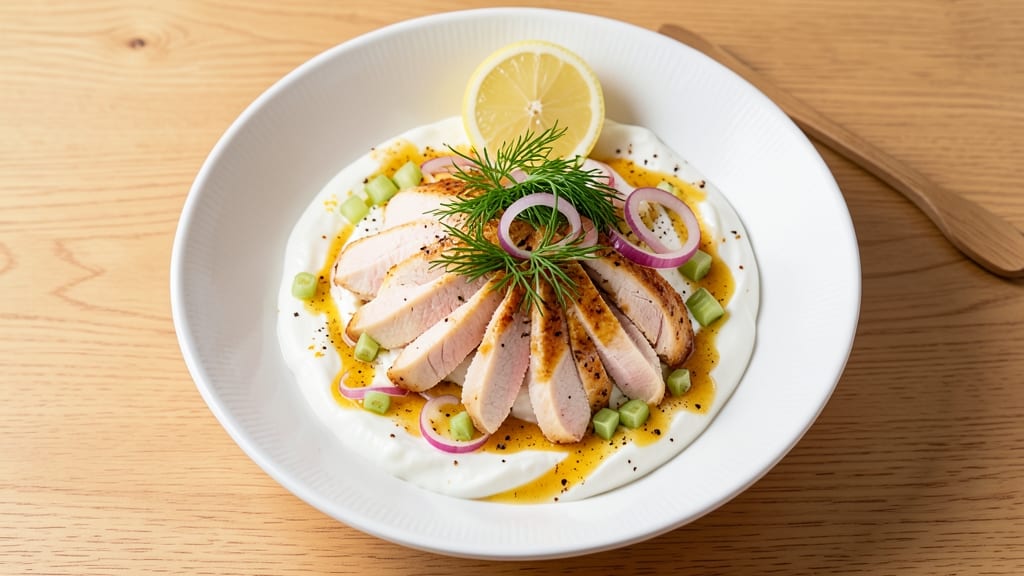
This America's Test Kitchen chicken salad recipe delivers perfect texture without a single drop of mayo—just creamy, tangy Greek yogurt and bright lemon. The secret lies in finely chopped celery and red onion, which release moisture and bind the salad naturally while adding crisp freshness.
I've tested this recipe dozens of times to eliminate the need for mayo while keeping that signature creamy, tender bite.
The magic happens in the chicken preparation—poaching the breasts yields juicy, tender meat that shreds beautifully, while the yogurt-lemon dressing keeps the salad light yet satisfying.
Every ingredient plays a role: crisp celery and red onion provide texture, lemon zest adds brightness, and a touch of Dijon mustard deepens the flavor without overpowering. This version stays fresh for days in the fridge, making it ideal for meal prep.
What you'll end up with is a chicken salad that's creamy without being heavy, perfectly balanced between tender chicken and crisp vegetables, and brightened by zesty lemon. The texture is what sets this apart—no dry, mushy bits or slimy mayo clumps.
It's the kind of salad that disappears faster than you can say "perfectly cooked chicken."
Serve on crusty bread for sandwiches, over mixed greens for a lighter option, or with crackers for an elegant appetizer. The recipe scales easily for parties, and the flavors only improve after sitting overnight. Let's make this chicken salad—it's worth every bite.
Ingredients for america's test kitchen chicken salad
Nine simple ingredients transform poached chicken into creamy, tangy perfection without mayo.
| Ingredient | Amount | Notes |
|---|---|---|
| Boneless, Skinless Chicken Breast 🍗 | 1 ½ lb | Poached for tenderness |
| Plain Greek Yogurt 🥛 | ¾ cup | Full-fat for creaminess |
| Fresh Lemon Juice 🍋 | 2 tbsp | Freshly squeezed preferred |
| Dijon Mustard 🌶️ | 1 tbsp | For depth of flavor |
| Celery Stalks 🧅 | 2 cups | Finely chopped for texture |
| Red Onion 🧅 | ¼ cup | Finely chopped for freshness |
| Lemon Zest 🍋 | 1 tbsp | Brightens the flavor |
| Salt 🧂 | ¾ tsp | Kosher or sea salt |
| Black Pepper 🌶️ | ½ tsp | Freshly ground preferred |
| Fresh Dill 🌿 | 1 tbsp | Chopped for freshness |
| Extra-Virgin Olive Oil 🫒 | 1 tbsp | For drizzling |
The chicken is everything here—boneless, skinless breasts poach perfectly for tender, shreddable texture. Most grocery stores carry these, but look for organic or free-range if you want extra juiciness. The Greek yogurt should be full-fat (trust me on this) for that signature creamy texture. I grab mine from Whole Foods or the refrigerated section at Trader Joe's—both have great options. Celery and red onion are non-negotiable for texture and moisture, so don't skip them. The celery should be crisp and the onion vibrant red, not wilted or dry.
No Greek yogurt? Sour cream or vegan yogurt works in a pinch, though the flavor won't be identical. Fresh lemon juice is key—bottled just won't cut it. For the celery and onion, baby carrots or bell peppers can add crunch if you're feeling adventurous, but stick to the classics for authenticity. The Dijon mustard adds depth without overpowering, so don't substitute with regular yellow mustard. Fresh dill is ideal, but dried dill at one-third the amount gets you close. The olive oil is just for finishing—use a fruity, extra-virgin variety for the best flavor.
This salad keeps beautifully for 4-5 days in the fridge, with flavors actually improving overnight. Store it in an airtight container with a layer of plastic wrap pressed directly on the surface to prevent drying. I always make a double batch—one for lunches and one to share. The yogurt-based dressing means it won't get slimy like mayo-based versions. For serving, I drizzle with extra olive oil and a sprinkle of fresh dill right before eating to keep everything vibrant.
Why You'll Love This Recipe
- No-Fuss Protein Boost: I swear by this for when I’m too tired to overthink dinner—just shred the chicken, mix in the Greek yogurt, and let the lemon and Dijon do the magic. No chopping, no fuss, and you’ve got a meal that feels like a hug in bowl form.
- Creamy Without the Guilt: That Greek yogurt base is where it shines—rich but light, tangy but not heavy. The lemon brightens it up so much, I often double the juice just to be sure. It’s the kind of creamy that doesn’t leave you sluggish afterward.
- Lunchbox Hero: Between us, this is my go-to for meal prep. Pack it in wraps for work, slather it on crackers for a snack, or serve it cold with crackers when friends drop by. The celery adds that satisfying crunch, and it holds up for days without getting soggy.
- Budget-Friendly Flex: Chicken breast is affordable, and this recipe stretches it further than you’d think. I make a big batch on Sundays, and it lasts me through the week—no sad, wilted salads here. Plus, the yogurt and mustard are pantry staples that won’t break the bank.
Step-by-step instructions for america's Test Kitchen chicken salad
Here's how to achieve the perfect balance of tender chicken, bright flavors, and creamy texture without mayo.
Poach the Chicken Breast for Maximum Tenderness
Place the 1.5 lb boneless, skinless chicken breast in a large pot and cover with cold water. Add 1 tbsp of the extra-virgin olive oil and bring to a gentle simmer over medium heat. The water should bubble lightly but not boil vigorously—this ensures tender chicken without drying it out.
Once simmering, reduce heat to maintain a gentle bubble and cook for 12-15 minutes, or until an instant-read thermometer inserted into the thickest part registers 165°F. The chicken should be completely opaque and fork-tender. Remove from water and let cool for 10 minutes before handling—this prevents the chicken from becoming rubbery when chopped.
Shred and Chop the Chicken Thoroughly
Using two forks, shred the cooled chicken breast into bite-sized pieces. For even texture, pull the meat apart against the grain. Transfer the shredded chicken to a mixing bowl and set aside. The goal is to achieve a consistent texture that will blend perfectly with the other ingredients.
While the chicken cools, finely chop the 2 cups of celery stalks and 0.25 cup of red onion. I like to use a food processor for this step—it creates a uniform texture that prevents any crunchy bits in the final salad. Pulse until finely minced but not paste-like, about 3-4 pulses total.
Create the Creamy Yogurt Base
In a separate bowl, combine the 0.75 cup plain Greek yogurt, 2 tbsp fresh lemon juice, 1 tbsp Dijon mustard, 1 tbsp lemon zest, 0.75 tsp salt, and 0.5 tsp black pepper. Whisk vigorously until smooth and fully incorporated. The lemon juice and zest will brighten the yogurt, while the mustard adds depth that complements the chicken beautifully.
This yogurt mixture is the heart of your salad—it provides that creamy texture without the heaviness of mayo. The acidity from the lemon juice also helps prevent the chicken from becoming dry as it sits.
Combine All Ingredients for Perfect Texture
Add the shredded chicken, chopped celery, and red onion to the yogurt mixture. Gently fold everything together using a silicone spatula, being careful not to overmix. The goal is to distribute the ingredients evenly while maintaining some texture in the salad. You should see small flecks of celery and onion throughout.
Stir in the 1 tbsp chopped fresh dill and drizzle with the remaining 1 tbsp extra-virgin olive oil. The dill adds a fresh herbal note that cuts through the richness of the chicken and yogurt. Taste and adjust seasoning if needed—you might want to add a pinch more salt or lemon juice to balance the flavors.
Chill and Serve for Optimal Flavor
Cover the chicken salad and refrigerate for at least 30 minutes before serving. This chilling time allows the flavors to meld together perfectly. The salad will thicken slightly as it cools, which is ideal for spreading on sandwiches or serving as a dip.
When ready to serve, give the salad one final gentle stir. The perfect chicken salad should be creamy but not wet, with tender chicken pieces and a bright, refreshing flavor profile. Serve on crusty bread, in lettuce wraps, or alongside fresh vegetables for a complete meal.
Pro Tips For Making America'S Test Kitchen Chicken Salad
- USE A MEAT THERMOMETER: I learned this the hard way—chicken salad falls apart when the chicken’s overcooked. Pull it at 160°F (not 165°F, which dries it out). The second the thermometer hits that temp, yank it off the heat and let it rest under foil for 5 minutes. Trust me, your salad won’t turn into rubber.
- SALT THE CHICKEN BEFORE COOKING: This isn’t just seasoning—it’s moisture insurance. Sprinkle 1 tsp kosher salt (or ½ tsp table salt) all over the raw chicken breasts and let them sit for 10 minutes before cooking. The salt breaks down proteins, keeping the meat juicy when you shred it. (Yes, even if you’re impatient like me.)
- SHRED WHEN IT’S STILL HOT: The recipe says to shred the chicken after cooling, but I skip that step now. While the chicken is still warm (but fully cooked), grab two forks and pull it apart—it’s easier, and the strands stay longer. Just toss it with the dressing immediately after shredding to lock in the texture.
- DRAIN THE YOGURT: Plain Greek yogurt is thick, and thick yogurt makes soggy salad. After mixing the dressing (yogurt + lemon + mustard), press it through a fine-mesh sieve or strain it for 10 minutes. You’ll end up with a smoother, creamier texture that clings to the chicken instead of pooling at the bottom. (Your future self will thank you.)
Pro cooking tips for this dish
Poach Like a Pro
For perfectly tender chicken, poach the breasts in cold water—never hot—to prevent cooking on the outside before the inside is done. I use a large, deep pot with just enough water to cover the chicken by 1 inch, plus 1 tbsp olive oil to keep the meat moist.
The key is gentle simmering: once boiling, reduce to medium-low heat and maintain a barely bubbling surface. Overcooking turns chicken dry, so use an instant-read thermometer and pull it at 165°F—no guessing! 🌡️
After poaching, let the chicken cool 10 minutes before shredding—this step is non-negotiable. Hot chicken shreds into rubbery strands, while cooled chicken falls apart beautifully. I like to double-wrap the cooked breasts in plastic wrap and chill for 15 minutes before handling to speed up cooling.
Texture Control Secrets
The food processor is my secret weapon for chopping celery and onion—it creates an even, fine texture that blends seamlessly with the yogurt. Pulse 3-4 times for a pasty but not mushy consistency. For extra moisture, add 1-2 tsp water if the mixture feels dry after combining.
The goal is creamy but not soupy—think of it like a thick, spreadable dip rather than a loose salad. 🥗
When folding in the chicken, use a silicone spatula to gently combine everything. Overmixing breaks down the chicken fibers, making the salad mushy. Instead, fold just until combined, leaving visible flecks of celery and onion for texture.
The salad will thicken as it chills, so don’t worry if it looks loose right after mixing.
Flavor Balance Tips
Taste your yogurt base before adding chicken—it should be bright, tangy, and slightly thick. If it tastes bland, add ½ tsp more Dijon mustard or 1 tsp lemon juice. The mustard adds depth, while the lemon keeps the salad from tasting heavy.
I like to zest the lemon first, then juice it—this gives the salad maximum brightness without bitterness. 🍋
Fresh dill is non-negotiable for flavor, but if you’re short on time, dried dill works in a pinch—use ⅓ the amount (so 1 tsp dried instead of 1 tbsp fresh).
For extra zing, finish with a spritz of fresh lemon juice right before serving. The acidity cuts through the richness of the yogurt and chicken, keeping every bite fresh-tasting.
Make-Ahead Mastery
This salad improves overnight—the flavors meld beautifully when chilled. Store it in an airtight container with plastic wrap pressed directly on the surface to prevent drying. I like to divide it into portions (like single-serving jars) so I can grab and go.
The salad keeps for 4-5 days in the fridge, though I rarely let it last that long! 📅
If the salad thickens too much after chilling, stir in 1-2 tsp water or lemon juice to loosen it up. For extra creaminess, add 1-2 tbsp sour cream when serving.
And here’s a pro tip: Drizzle with olive oil right before eating—it adds richness and prevents the salad from sticking to the container. Trust me, this small step makes a big difference in texture and flavor.
Nutrition facts
Frequently asked questions
Can I use chicken thighs instead of breasts for this recipe?
Yes, but you'll need to adjust the cooking time. Chicken thighs stay juicier than breasts, so poach them for 15-18 minutes until they reach 165°F internally. The texture will be slightly richer, which pairs beautifully with the yogurt dressing. Just be sure to trim any excess fat first to keep the salad light and balanced.
How do I prevent the chicken salad from getting soggy?
The key is proper storage and timing. Always use an airtight container with plastic wrap pressed directly on the surface to lock in moisture. For serving, assemble sandwiches or plates just before eating to maintain crispness. If the salad thickens after chilling, stir in 1-2 tsp lemon juice or water to restore texture. Avoid adding dressing until the last minute.
Can I make this recipe dairy-free?
Replace the Greek yogurt with unsweetened coconut yogurt or a dairy-free yogurt like Silk's almond version. For extra creaminess, stir in 1 tbsp cashew butter or add 1-2 tbsp aquafaba (chickpea brine) to help bind the ingredients. The flavor will be lighter but still delicious, with a subtle nutty undertone from the coconut.
What's the best way to reheat leftover chicken salad?
This salad isn't designed for reheating as it loses its ideal texture when warmed. Instead, serve it cold or at room temperature. If you must reheat a small portion, gently warm it in the microwave for 10-15 seconds on low power (30% setting) and stir immediately. For best results, make fresh portions daily or store components separately—cook chicken and chop veggies ahead, then assemble when ready to eat.
How can I add more protein to this recipe?
For extra protein, fold in ½ cup cooked quinoa or ¼ cup crumbled bacon (cooked until crispy). You could also add ½ cup chickpeas (drained and rinsed) for plant-based protein. Just be mindful of texture—add these ingredients after the salad has chilled to prevent excess moisture. The quinoa adds a nice chewy element, while bacon brings smoky depth that pairs perfectly with the lemon-yogurt base.