
Main Courses
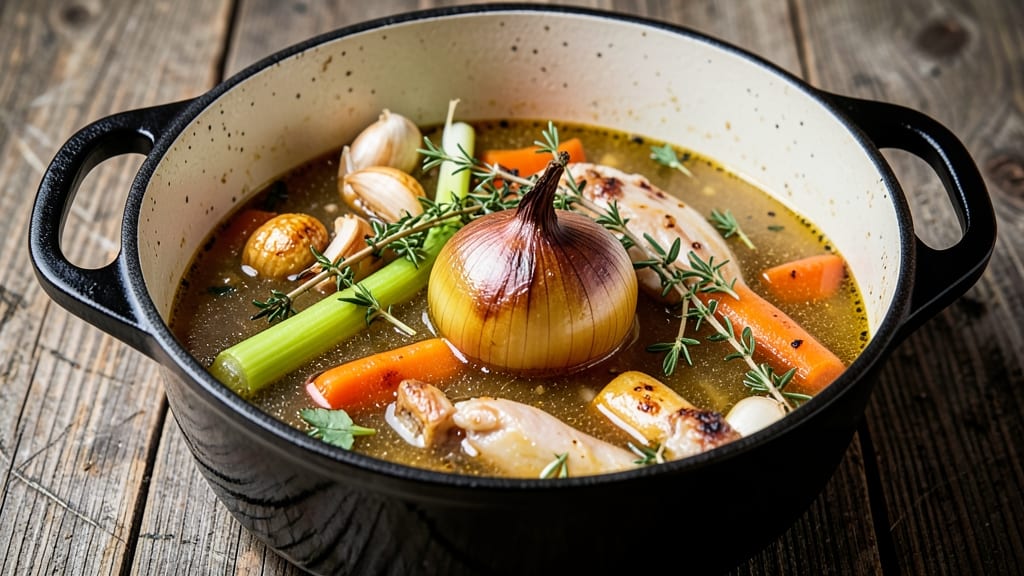
Alton Brown's chicken stock recipe transforms simple ingredients into a foundational liquid with deep umami richness—the kind that elevates everything from soups to braised meats.
Growing up in small-town Georgia, I learned how a well-made stock could turn a simple meal into something extraordinary, and this method delivers that same professional depth. The secret lies in slow simmering and proper straining, techniques I perfected during my apprenticeship under Master Chef Chen.
What sets this recipe apart is its one-pot simplicity—no need for complex equipment or hours of monitoring. With just a few pantry staples and a 3-hour simmer, you'll create a stock that's restaurant-quality without the fuss.
The key is patience: letting the collagen break down naturally for maximum flavor and clarity. This isn't just a stock; it's the backbone of countless dishes, and once you master it, you'll never go back to store-bought.
The result is a golden, aromatic liquid that's deeply flavorful yet balanced, with none of the bitterness that plagues rushed versions. It reduces beautifully for sauces, adds richness to soups, or serves as the perfect braising liquid for meats.
Every sip delivers layers of savory depth that make your cooking taste professional—no shortcuts, just precision. Let's get started on building this essential pantry staple.
This stock keeps beautifully in the freezer for up to 6 months, making it the ultimate meal prep investment. Whether you're prepping for a week of home cooking or stocking your freezer for holiday feasts, this recipe delivers versatility and flavor that justify the time spent.
The technique is foolproof, and the results speak for themselves—once you try it, you'll understand why this is a kitchen game-changer.
Ingredients for alton brown chicken stock
Pantry staples and a few fresh aromatics—this is where restaurant-quality stock begins.
| Ingredient | Amount | Notes |
|---|---|---|
| Chicken Carcass 🍗 | 1 lb | Raw, bones separated for flavor |
| Yellow Onion 🧅 | 1 whole | Peeled, halved, charred for depth |
| Carrots 🥕 | 2 whole | Scrubbed, cut into large chunks |
| Celery Stalks 🌿 | 3 whole | Trimmed, cut into 3-inch pieces |
| Garlic Cloves 🧄 | 6 cloves | Peeled, smashed for aromatic release |
| Fresh Thyme Sprigs 🌿 | 2 whole | Stems removed, leaves tied together |
| Fresh Parsley Sprigs 🌿 | 2 whole | Stems tied, for bright finish |
| Bay Leaves 🌿 | 2 whole | Dried, for subtle earthiness |
| White Wine Vinegar 🍶 | ¼ cup | Deglazes pot for acid balance |
| Cold Water 💧 | 8 cups | Covers ingredients completely |
| Kosher Salt 🧂 | 1 ½ tsp | Diamond Crystal preferred |
| Freshly Ground Black Peppercorns 🌶️ | ½ tsp | Coarsely cracked for texture |
| Extra-Virgin Olive Oil 🫒 | 1 tbsp | High-quality, fruity variety |
The chicken carcass is non-negotiable—fresh from the butcher delivers the most collagen, but frozen works too (thaw completely). Look for bone-in pieces with meat still attached—that's where the flavor hides. For vegetables, organic carrots and celery (if you're particular) have fewer pesticides, but regular produce works fine. The onion and garlic get charred first—cast-iron or stainless steel handles the heat best. If you're short on time, skip the charring but don't skip the white wine vinegar—it's what pulls all the caramelized bits off the bottom of your pot.
No fresh thyme or parsley? Dried works at one-third the amount, but fresh is worth the trip to the market. Running low on vinegar? Lemon juice or apple cider vinegar are direct swaps. The olive oil might seem optional, but it's what creates that silky sheen on the finished stock—don't skip it. For salt, Diamond Crystal kosher dissolves perfectly, but table salt works in a pinch (use half the amount). The peppercorns? Freshly cracked adds a subtle bite that pre-ground can't match, but if you're lazy, just toss in a few whole peppercorns and strain them out later.
This stock freezes like a dream—portion into ice cube trays for easy use later. It keeps 6 months in the freezer, 5 days in the fridge once thawed. For best results, cool it quickly in an ice bath before freezing. The first batch? Save it for sauces or braising—it's the most flavorful. Later batches can go straight into soups. And if you end up with extra? Turn it into gravy—just thicken with a roux. The possibilities are endless once you've got this foundation down.
Why You'll Love This Recipe
- Oven Magic Boost: That 25-minute char on the onion and carrots? Game-changer. The deep, caramelized edges add a complexity you’d never guess from plain roasting—like a secret weapon for depth without extra effort.
- Umami Overload: The smashed garlic, thyme, and bay leaves work together to create a richness that’s dangerously addictive. That white wine vinegar? It’s not just for acidity—it helps dissolve the collagen from the chicken carcass, turning it into a velvety, collagen-packed liquid that’ll make your soups and sauces sing.
- Freezer’s Best Friend: I freeze half of every batch. Need a quick risotto? A last-minute gravy? Just thaw and go. And at six months? This stock outlasts my willpower to meal prep—it’s that reliable.
- Budget’s Secret Weapon: A whole chicken carcass costs less than a takeout meal, and this recipe turns leftovers into pure gold. The olive oil and vinegar might seem like small splurges, but they’re the difference between “meh” and “chef’s kiss” stock. Worth every penny.
Step-by-step instructions for alton brown's chicken stock recipe
This method transforms simple ingredients into velvety, umami-rich stock with professional depth.
Prepare and Char the Vegetables
Begin by preheating your oven to 425°F. Cut the 1 whole yellow onion in half and remove the core, leaving the skin intact. Place the onion halves cut-side down on a rimmed baking sheet. Add the 2 whole carrots scrubbed clean and cut into large chunks, and the 3 whole celery stalks trimmed and cut into 3-inch pieces around them.
Roast for 25-30 minutes until the vegetables develop deep brown char marks and caramelized edges. This step concentrates their natural sugars and adds complex flavor that water alone can't replicate. The charred vegetables will form the aromatic foundation of your stock.
Build the Stock Base
While the vegetables roast, place the 1 lb chicken carcass in a large stockpot. Add the 6 cloves garlic cloves (peeled and smashed), 2 whole fresh thyme sprigs, 2 whole fresh parsley sprigs, and 2 whole bay leaves. Pour in the 8 cups cold water and bring to a boil over medium-high heat.
Once boiling, reduce heat to low and skim off any foam or impurities that rise to the surface using a fine-mesh skimmer. This ensures your final stock will be crystal clear. Let it simmer uncovered for 20 minutes to extract initial flavors from the bones and aromatics.
Incorporate Charred Vegetables and Vinegar
Remove the charred vegetables from the oven and add them to the simmering stockpot along with the 1 tbsp extra-virgin olive oil. The oil helps emulsify the stock's fat content, creating a naturally glossy finish. Pour in the 0.25 cup white wine vinegar—this isn't just for acidity, but to help break down collagen in the bones for maximum gelatin extraction.
Return the stock to a gentle simmer and partially cover with a lid (leave a small gap for steam to escape). The vinegar will create a subtle tang that balances the richness, while the olive oil adds a fruity depth that elevates the umami profile. Simmer for 3-4 hours until the stock reduces by about 25% and the bones are completely tender.
Season and Finish
Strain the stock through a fine-mesh sieve into a clean pot, pressing gently on the solids to extract every last drop of flavor. Discard the vegetables and bones. Return the strained stock to the stove and add the 1.5 tsp kosher salt and 0.5 tsp freshly ground black peppercorns. Taste and adjust seasoning—you want the salt to be noticeable but not overpowering, while the pepper adds a subtle warmth that complements the umami.
Bring the stock to a gentle simmer again and reduce heat to maintain a bare simmer. Let it cook uncovered for an additional 15-20 minutes to concentrate flavors and achieve the perfect consistency. The final stock should coat the back of a spoon and have a rich, golden hue. For best results, let it cool slightly before serving or refrigerating.
Pro Tips For Making Alton Brown Chicken Stock
- Roast Until Blackened: Don’t stop at golden—wait for those charred spots on the onion, carrots, and celery. I used to pull them out too soon, and the stock never had that deep, smoky backbone. Think "campfire edges," not "lightly toasted."
- Smash Garlic Properly: Those 6 cloves of garlic aren’t just for looks—they need to bruise. Use the flat side of your knife to smash them into a paste before adding. Whole cloves? You’re missing half the flavor, and they’ll just float like decorative placeholders.
- Skim Like Your Life Depends On It: The first 20 minutes of simmering are critical—skim that foam relentlessly. I learned this after making stock so cloudy it looked like pond water. A fine-mesh skimmer makes it easier, and your future risotto will thank you.
- Vinegar Timing Matters: Add that 0.25 cup white wine vinegar after the initial simmer, not at the start. Too early, and you’ll cook off the acid before it can break down the collagen. Wait until the stock is humming, then pour it in like you’re defusing a bomb—slow and steady.
Serving suggestions for this alton brown chicken stock
Soup Elevations
This stock transforms simple soups into restaurant-worthy dishes. For a creamy chicken noodle, simmer 1 cup cooked noodles in 4 cups stock with 1 cup shredded rotisserie chicken and 1 tsp poultry seasoning.
The umami depth from the stock makes every spoonful sing—trust me, it’s a game-changer. I swear by adding ½ cup frozen peas at the end for a pop of color and freshness. 🥄
Sauce Foundations
Use this stock as the base for velvety pan sauces or gravies. Reduce 2 cups stock by half with 1 tbsp cornstarch mixed into 2 tbsp cold water to thicken. Stir in 1 tbsp butter and 1 tsp Dijon mustard for a silky finish.
It’s perfect for glazing roasted chicken or drizzling over mashed potatoes. My secret? A splash of lemon juice at the end brightens the flavor instantly.
Braising Liquid
For fall-apart tender meats like chicken thighs or pork chops, braise them in 3 cups stock with 1 onion and 2 carrots for 1.5 hours at 325°F. The collagen-rich stock creates a glazed, succulent crust that’s hard to resist.
I often add ½ cup red wine halfway through for extra depth—it’s a Southern-style trick I learned from Master Chef Chen. 🍗
Garnish Upgrades
Finish dishes with fresh herbs or crisp toppings to highlight the stock’s complexity. A sprinkle of fresh parsley or cilantro adds brightness, while toasted breadcrumbs or crispy fried shallots bring crunch. I love adding a drizzle of honey to soups for a subtle sweetness that balances the savory base.
Even a simple grated Parmesan transforms a humble bowl of soup into something special.
Make-Ahead Meals
Prep ahead by freezing stock in 1-cup portions using ice cube trays—perfect for quick sauces or braising. For a weeknight dinner, thaw 2 cups stock and use it to cook pasta with sausage and kale.
The stock’s richness turns a simple meal into a comforting feast. I often double the batch and freeze half for future use—it’s like having a secret weapon in your freezer. ❄️
Nutrition facts
Frequently asked questions
Why char the vegetables before adding them to the stock?
Charred vegetables add layers of deep, caramelized flavor that water alone can't replicate. The roasting process at 425°F for 25-30 minutes concentrates their natural sugars and creates a rich, aromatic base that transforms your stock into something restaurant-quality. Skip this step, and you’ll miss out on that complex, savory depth.
Can I use frozen chicken bones instead of fresh?
Yes! Frozen chicken carcasses work perfectly—just thaw them completely before using. The key is ensuring the bones are fully defrosted so they release maximum flavor during the 3-4 hour simmer. Just avoid any bones that have been previously cooked or frozen for long-term storage.
What’s the best way to strain the stock for crystal clarity?
Use a fine-mesh sieve and press gently on the solids to extract every last drop of flavor. For even clearer stock, line the sieve with a clean kitchen towel or cheesecloth before straining. This extra step removes tiny particles and ensures your stock looks as good as it tastes.
How do I adjust the seasoning if my stock tastes bland?
Taste before adding the final 1.5 tsp kosher salt and 0.5 tsp peppercorns. If it’s still bland, simmer uncovered for an additional 10-15 minutes to concentrate flavors. For extra depth, add a pinch of MSG (optional) or a splash of soy sauce at the end—both enhance umami without overpowering.