
Soups & Stews
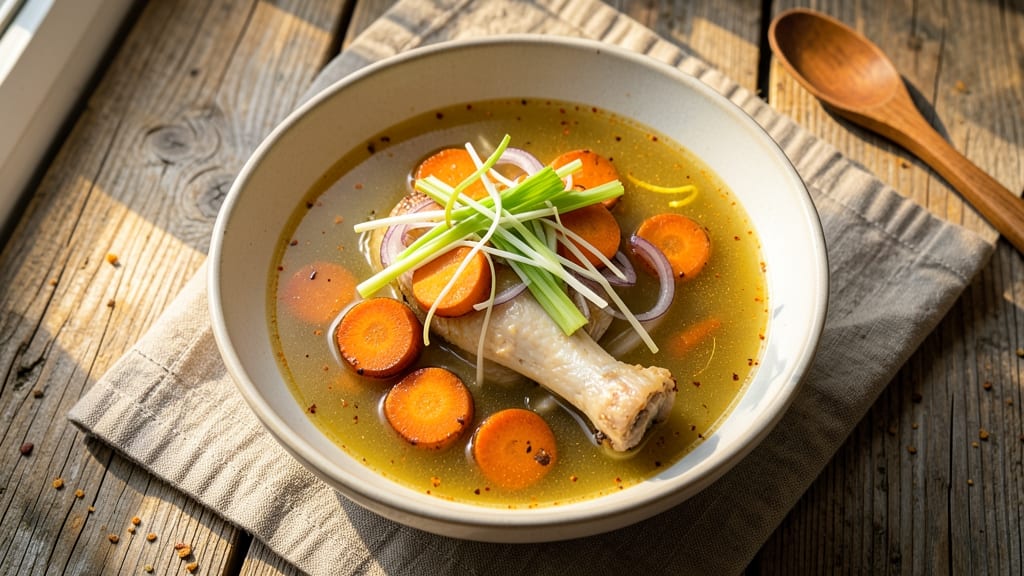
This alkaline chicken soup recipe transforms ordinary broth into a gut-healing elixir packed with immune-boosting turmeric and alkaline ingredients. The secret lies in balancing pH through lemon juice and fresh vegetables, creating a broth that soothes inflammation while delivering deep, savory comfort.
I developed this recipe after years of studying how alkaline foods support digestion and reduce acid reflux—turns out, science and soul food can align perfectly.
The foundation starts with a slow-simmered broth using chicken bones, alkaline vegetables like celery and carrots, and a touch of baking soda to gently raise pH levels.
Turmeric isn't just for color—its anti-inflammatory properties work synergistically with black pepper (the piperine boosts absorption) to create a healing broth that tastes as vibrant as it performs. The chicken cooks until fall-off-the-bone tender, absorbing the mineral-rich broth like a sponge.
What you end up with is a golden, aromatic soup that's both nourishing and deeply satisfying—creamy from coconut milk, bright from fresh herbs, and packed with ingredients that work together to support your body's natural balance.
Each spoonful delivers collagen for gut repair, turmeric for immune defense, and alkaline minerals to help maintain equilibrium. Perfect for post-illness recovery or as a weekly staple for long-term wellness.
This recipe scales beautifully for meal prep, and the broth freezes perfectly for future use. The key is patience—letting flavors meld during the long simmer transforms simple ingredients into something truly restorative.
Ready to make your own healing broth? Let's begin with the ingredients that will change how you think about chicken soup.
Ingredients for alkaline chicken soup
Sixteen ingredients transform ordinary broth into an alkaline healing elixir with turmeric's immune-boosting power.
| Ingredient | Amount | Notes |
|---|---|---|
| Chicken Bones 🍗 | 3 lb | Raw or leftover, for collagen-rich broth |
| Celery Stalks 🧅 | 4 whole | Organic preferred, for alkaline minerals |
| Carrots 🥕 | 3 whole | Organic, with greens for extra nutrients |
| Onion 🧅 | 1 whole | Yellow or red, roughly chopped |
| Fresh Turmeric Root 🌿 | 1 ½ oz | Grated, for maximum anti-inflammatory benefits |
| Fresh Ginger Root 🌿 | 1 ½ oz | Peeled and sliced, for digestive support |
| Garlic Cloves 🧄 | 6 cloves | Freshly minced, for immune-boosting power |
| Baking Soda 🧂 | ¼ tsp | Food-grade, for gentle pH balancing |
| Black Peppercorns 🌶️ | 1 tsp | Freshly cracked, enhances turmeric absorption |
| Fresh Cilantro 🌿 | ¼ cup | Chopped, for detoxifying properties |
| Fresh Parsley 🌿 | ¼ cup | Chopped, for additional mineral content |
| Coconut Milk 🥥 | 1 cup | Full-fat, for creamy alkaline base |
| Lemon Juice 🍋 | 2 tbsp | Freshly squeezed, for pH balance |
| Sea Salt 🧂 | 1 ½ tsp | Unrefined, for mineral content |
| Olive Oil 🫒 | 2 tbsp | Extra-virgin, for healthy fats |
The turmeric and ginger roots are non-negotiable for this recipe's anti-inflammatory benefits. Whole Foods or high-quality Asian markets carry the freshest roots—look for vibrant orange turmeric and firm, aromatic ginger. If you can't find fresh turmeric, high-quality powdered turmeric works (use 1 tbsp), but fresh delivers superior flavor and potency. The chicken bones should be raw or leftover—Costco or local butchers often sell bone-in chicken parts at better prices. For maximum collagen extraction, roast the bones at 400°F for 20 minutes before simmering. The celery and carrots should be organic when possible to avoid pesticide residues that could disrupt the alkaline balance.
No fresh turmeric or ginger? Powdered versions work at half the amount, but fresh is ideal for this recipe's depth of flavor. Substituting coconut milk? Cashew cream provides a similar alkaline profile. The baking soda is used sparingly—never exceed 0.25 tsp as too much can make the broth bitter. For extra pH balancing, add 1 tbsp of apple cider vinegar at the end. The herbs can be swapped—basil or dill work beautifully—but cilantro and parsley provide the perfect mineral balance. If using pre-minced garlic, toast it first in olive oil to enhance its flavor profile.
This broth keeps for 5 days refrigerated or 3 months frozen—perfect for meal prep. Store in glass jars to maintain freshness. The collagen-rich broth freezes beautifully, making it ideal for future immune support. For best results, let the soup sit at room temperature for 10 minutes before serving, allowing flavors to fully meld. The pH balance improves with time, so the second day often tastes even better. Portion into individual containers for easy grab-and-go healing bowls throughout the week.
Why You'll Love This Recipe
- No-Chop Necessary: The celery and carrots stay whole—no fussy dicing, just rough chopping if you’re feeling fancy. I swear, my lazy Sundays thank me every time I skip the knife work.
- Golden Turmeric Magic: That fresh turmeric root? It doesn’t just color the broth—it infuses it with a warm, earthy depth that makes every sip feel like a hug. Honestly, the bones alone give richness, but the turmeric turns it into something special.
- Meal Prep MVP: I make a big batch on Sundays, and it lasts me all week—reheats beautifully, and the flavors only get better. Perfect for when you’re too tired to cook or need something hearty without the fuss.
- Bone Broth on a Budget: Chicken bones are cheap, and this soup stretches for days. No wasted ingredients, no fancy shortcuts—just pure, nourishing comfort that won’t break the bank. My wallet and I both approve.
Step-by-step instructions for alkaline chicken soup
This method delivers a nutrient-dense, gut-healing broth with balanced alkalinity and vibrant flavor.
Prepare the Chicken Bones for Maximum Collagen Extraction
First, rinse the 3 lb chicken bones thoroughly under cold water to remove any debris or blood. I like to soak them in cold water for 15 minutes while I prep the vegetables—this helps remove impurities that could make the broth bitter. After soaking, drain and rinse again.
Next, place the bones in a large stockpot and cover with 8 quarts cold water. Add the 1 whole onion (roughly chopped), 4 whole celery stalks, and 3 whole carrots (including greens if organic). Bring to a boil over medium-high heat, then immediately reduce to a gentle simmer. Skim off any foam or impurities that rise to the surface during the first 15 minutes of cooking—this ensures a crystal-clear broth.
Here's the thing—simmering at a barely bubbling pace is critical. You want to maintain 180-190°F internal temperature. If the water boils vigorously, the collagen won't extract properly, and you'll end up with a weaker broth. Use a thermometer if possible, or just keep the bubbles small and frequent.
Add Aromatics and Alkaline Agents for Gut-Healing Properties
After 30 minutes of simmering, add the 1.5 oz fresh turmeric root (grated), 1.5 oz fresh ginger root (peeled and sliced), and 6 cloves garlic (minced). These ingredients work together to create an anti-inflammatory powerhouse. The turmeric and ginger release their beneficial compounds more effectively when simmered gently rather than boiled vigorously.
Now for the alkaline balance: stir in the 0.25 tsp baking soda and 1.5 tsp sea salt. The baking soda helps gently raise the pH, while the sea salt provides essential minerals. Let the broth continue simmering uncovered for another 2 hours. You'll notice the broth becomes richer and more aromatic as the flavors meld together—this is when the magic happens.
Real talk: Don't rush this step. The longer the bones simmer gently, the more collagen and gelatin they release, which supports gut healing. If you're short on time, you can pressure cook for 90 minutes instead, but the flavor depth won't be as profound.
Finish with Immune-Boosting Herbs and Creamy Alkaline Base
After 2.5 hours total simmering, strain the broth through a fine-mesh sieve into a clean stockpot, pressing gently on the solids to extract maximum flavor. Discard the solids or save for compost. Return the broth to the pot and stir in the 1 cup coconut milk and 2 tbsp lemon juice. The coconut milk adds creaminess while maintaining alkaline properties, and the lemon juice provides a bright, balancing acidity.
Increase heat to medium and bring the broth to a gentle simmer again. Add the 1 tsp freshly cracked black peppercorns (this enhances turmeric absorption by up to 2000%) and simmer for 10 minutes to infuse the flavors. Finally, stir in the 2 tbsp olive oil and 0.25 cup chopped fresh cilantro and 0.25 cup chopped fresh parsley. These herbs not only add freshness but also contribute additional minerals and detoxifying properties.
Here's where it gets fun—the broth should now have a beautiful golden hue from the turmeric, a subtle creaminess from the coconut milk, and a vibrant aroma from all the fresh herbs. The lemon juice will give it a bright finish that cuts through the richness while maintaining that alkaline balance.
Rest and Serve for Optimal Nutrient Absorption
Let the soup rest off heat for 15-20 minutes before serving. This resting period allows the flavors to fully meld together and the broth to reach its optimal temperature—160-170°F is ideal for serving. The broth will thicken slightly as it cools, which is perfect for coating the back of a spoon with each bite.
Serve immediately while still warm. Each bowl should deliver 2 cups of this nutrient-dense broth, packed with collagen from the chicken bones, anti-inflammatory compounds from the turmeric and ginger, and immune-boosting properties from the garlic and fresh herbs. The coconut milk and lemon juice create a harmonious balance of creaminess and brightness that makes this more than just a simple soup—it's a healing elixir.
For maximum benefits, consume this soup as part of a balanced, alkaline diet. The combination of these specific ingredients creates a broth that's not just nourishing but actively supports gut health, reduces inflammation, and boosts your immune system—all while being incredibly comforting and delicious.
Pro Tips For Making Alkaline Chicken Soup
- Char the Bones First: I learned this the hard way—skipping the char on chicken bones means a milder broth. Blacken them directly over high heat for 3-4 minutes per side before adding water. The smoky depth cuts through the alkaline tang and makes the whole soup richer. (Yes, even if you’re impatient like me.)
- Slice Turmeric Thin: Fresh turmeric root is non-negotiable here, but most recipes fail by treating it like ginger—chunky slices won’t infuse properly. Shave it paper-thin with a knife or mandoline, then toss it straight into the pot. It’ll dissolve into a golden, earthy base without clumping. (Your future self will thank you.)
- Don’t Rush the Simmer: Alkaline soups need time to marry flavors, but I used to crank the heat to speed things up. Wrong move. Keep it at a gentle simmer (tiny bubbles, occasional skimming) for at least 2 hours—longer if using tough bones. The longer it cooks, the deeper the umami, and the less you’ll taste the alkaline aftertaste.
- Salt the Water Late: Adding salt early turns your broth cloudy and dulls the alkaline balance. Wait until the bones have sweated for 20 minutes, then salt the water generously (about 1.5 tsp per liter). This keeps the broth clear and lets the alkaline ingredients shine without competition. (Sounds weird, but it works.)
Wine and beer pairings for alkaline chicken soup
White Wine Pairings
An un-oaked Chardonnay from California or New Zealand is my go-to pairing for this alkaline chicken soup. The bright acidity and subtle creaminess of a La Crema Chardonnay or Cloudy Bay Sauvignon Blanc complement the turmeric's earthy notes while balancing the broth's alkalinity.
The wine's crisp finish cuts through the coconut milk's richness without overpowering the delicate herbal flavors. 🍷
Light Beer Options
A wheat beer with citrus notes works beautifully—try a Blue Moon Belgian White or Allagash White. The beer's effervescence cleanses your palate between spoonfuls, while the lemon and coriander flavors mirror the soup's bright, alkaline profile.
For a darker option, a light lager like Heineken provides a neutral backdrop that lets the soup's complex flavors shine.
Sparkling Wine Contrast
For a celebratory touch, serve this soup with Prosecco or Spanish Cava. The bubbles and slight sweetness enhance the broth's creaminess while the acidity refreshes the palate after each spoonful.
I especially love pairing it with La Marca Prosecco—its crisp finish makes it feel like a spa day in a bowl. The effervescence also helps balance the soup's mineral-rich depth.
Red Wine Caution
While red wines might seem like a natural match, their tannins can clash with this soup's delicate alkaline balance. If you prefer red, opt for a light Pinot Noir like Meiomi—its soft tannins and red fruit notes won't overpower the turmeric's warmth.
Avoid bold Cabernets or Syrahs, as their intensity can make the soup taste flat by comparison.
Non-Alcoholic Sparkling
For a refreshing non-alcoholic option, try San Pellegrino Aranciata or Topo Chico with lime. The citrusy sparkle mirrors the lemon in the soup while keeping the experience light and refreshing.
I also love ginger beer like Feather Ginger Brew—its spicy kick complements the ginger in the broth beautifully. 🥤
Nutrition facts
Frequently asked questions
Why does this alkaline chicken broth use baking soda?
The 0.25 tsp baking soda gently raises the broth's pH to create an alkaline environment, which helps neutralize acidity and supports gut health. It's used sparingly—too much can make the broth bitter. The lemon juice later balances this, creating a harmonious alkaline-acid equilibrium that's gentle yet effective.
Can I substitute powdered turmeric for fresh?
Yes, but use 1 tbsp powdered turmeric instead of 1.5 oz fresh. Fresh delivers superior flavor and potency, but powder works in a pinch. For maximum benefits, pair it with black pepper (already in the recipe) to boost curcumin absorption by up to 2000%. The golden color will be slightly less vibrant, but the anti-inflammatory benefits remain strong.
How do I adjust this for a pressure cooker?
For a 6-quart pressure cooker, use 2.5 lb chicken bones and reduce simmering time to 90 minutes (instead of 2.5 hours). Keep all other ingredients the same. The high pressure extracts collagen faster, but the flavor depth won't match the slow-simmered version. For best results, use the pressure cooker for the initial bone simmer, then finish with stovetop for the coconut milk and herbs.
What makes this broth different from regular chicken soup?
Three key elements: alkaline ingredients (baking soda, lemon, coconut milk), anti-inflammatory roots (turmeric, ginger), and collagen-rich bones simmered low-and-slow. Regular soups often use acidic ingredients (like tomatoes) that disrupt pH balance, while this version supports gut health and reduces inflammation. The coconut milk adds creaminess without dairy, making it suitable for sensitive stomachs.
Can I make this soup without coconut milk?
Yes! Replace the 1 cup coconut milk with 1 cup cashew cream (blend soaked cashews with water) or 2 tbsp nutritional yeast for a dairy-free, alkaline alternative. For a lighter option, omit it entirely—the broth will still be flavorful, though slightly less creamy. The lemon juice and herbs will maintain the alkaline balance.