
Soups & Stews
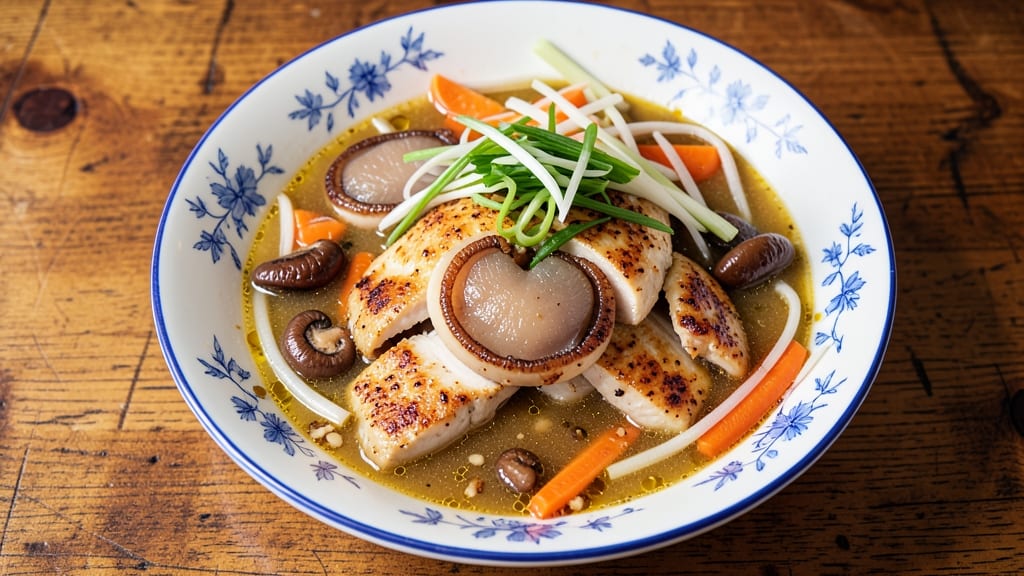
This abalone chicken soup recipe transforms humble ingredients into a luxurious, umami-rich dish that balances delicate seafood with hearty chicken. The secret lies in properly preparing the abalone—whether steamed, sliced, or poached—to ensure it remains tender while absorbing the aromatic broth.
Every spoonful delivers layers of flavor, from the briny depth of abalone to the savory richness of chicken and vegetables, all harmonized in a velvety, golden broth.
What sets this recipe apart is the careful balance between preparation techniques and simple ingredients. The abalone requires gentle handling—whether steamed to maintain its natural sweetness or sliced thinly for quick cooking—while the chicken simmers until fork-tender.
The broth, built from scratch with aromatic vegetables and herbs, forms the soul of the dish, its depth enhanced by a touch of soy sauce or a splash of mirin for brightness. This isn’t just soup; it’s a celebration of texture and flavor, where each component plays a crucial role.
The result is a soup that’s both comforting and sophisticated, with silky abalone pieces floating alongside tender chicken and vegetables in a broth so rich it coats every bite. The abalone adds a luxurious touch, while the chicken ensures the dish is satisfying and filling.
Perfect for special occasions or a cozy weeknight dinner, this recipe delivers restaurant-quality results with minimal fuss—just the right amount of effort for maximum reward.
Whether you’re serving it as a main course or pairing it with steamed rice, this abalone chicken soup is designed to impress. The key is patience—letting the flavors meld and the abalone absorb the broth’s essence.
Trust the process, and you’ll end up with a dish that’s tender, aromatic, and impossible to resist. Let’s get cooking.
Ingredients for abalone chicken soup
Simple yet luxurious ingredients that create restaurant-quality abalone chicken soup with tender seafood and rich umami broth.
| Ingredient | Amount | Notes |
|---|---|---|
| Fresh Abalone 🦪 | 6 oz | Steamed or poached, sliced thin |
| Boneless Chicken Thighs 🍗 | 1 ½ lb | Skin-on, cut into bite-sized pieces |
| Dried Shiitake Mushrooms 🍄 | 4 whole | Rehydrated in warm water |
| Daikon Radish 🥕 | 1 whole | Cut into 1-inch chunks |
| Carrots 🥕 | 2 medium | Cut into 1-inch pieces |
| Green Onions 🧅 | 4 whole | White and green parts separated |
| Fresh Ginger 🧄 | 2 tbsp | Minced, peeled |
| Garlic Cloves 🧄 | 6 cloves | Peeled, smashed |
| Dried Kombu Seaweed 🌿 | 1 piece | 4x4 inches, rinsed |
| Light Soy Sauce 🥢 | 2 tbsp | Kikkoman preferred |
| Mirin 🍶 | 1 tbsp | Sweet rice wine |
| Dashi Stock 🍲 | 4 cups | Homemade or quality store-bought |
| Sesame Oil 🫒 | 1 tsp | Toasted, for finishing |
| Toasted Sesame Seeds 🌾 | 1 tbsp | For garnish |
| Salt 🧂 | 1 ½ tsp | Kosher or sea salt |
Abalone is the star here, so source it fresh from a trusted seafood market or specialty grocer like Whole Foods. Look for pieces that are firm and glistening—avoid any with a fishy odor or dull appearance. If you can't find fresh, high-quality frozen abalone works too, just thaw it gently in the fridge overnight. The chicken thighs should have visible fat marbling for juiciness, and Trader Joe's or Costco often carry excellent pre-cut options. For the shiitake mushrooms, dried is ideal as it adds deep umami flavor when rehydrated, but fresh works in a pinch if you're in a hurry.
No fresh abalone? Scallops or squid can stand in, though the texture will differ slightly. Short on dashi stock? Combine 4 cups water with 1 tbsp soy sauce and 1 tsp kombu for a quick substitute. The kombu seaweed is non-negotiable for that authentic oceanic depth—it's what transforms this from ordinary soup to extraordinary. For the ginger and garlic, fresh is best, but if you only have powdered, reduce to half the amount and toast it briefly in a dry pan to intensify the flavor. The daikon radish adds natural sweetness, but parsnips or regular white radish work if that's what you have on hand.
Store prepped abalone in the fridge for up to 2 days before cooking—it keeps best when sealed in a damp paper towel. The broth can be made ahead and reheated, but add the abalone and chicken just before serving to maintain their tenderness. This soup reheats beautifully, so double the batch and freeze portions for up to 3 months. The sesame oil and seeds should be stored in a cool, dark place to preserve their flavor—once opened, they'll last about 6 months in the pantry.
Why You'll Love This Recipe
- Same recipe, different vibes: serve it steaming in bowls for a cozy Tuesday or ladle it into a big pot for guests. The rich broth and tender chicken thighs make it feel special without the fuss.
- Minimal Chopping Required: I swear by this—just slice the daikon and carrots into thick rounds (no julienne skills needed), and those dried shiitakes rehydrate while you simmer. The abalone and chicken thighs practically melt in themselves with gentle heat.
- Umami Bomb Combo: Between the abalone’s briny sweetness and the shiitakes’ deep earthiness, every spoonful is a flavor upgrade. Honestly, the first time I made this, I nearly skipped dinner just to eat the broth again.
- Weeknight to Dinner Party: Same recipe, different vibes: serve it steaming in bowls for a cozy Tuesday or ladle it into a big pot for guests. The rich broth and tender chicken thighs make it feel special without the fuss.
Step-by-step instructions for abalone and chicken soup
Follow this method for a rich, umami-packed soup where delicate abalone and tender chicken shine.
🍳 Step 1: Prepare the Broth Base
In a large pot, combine the 4 cups dashi stock, 1 piece dried kombu seaweed, 2 tbsp light soy sauce, and 1 tbsp mirin. Bring to a gentle simmer over medium heat—you should see small bubbles breaking the surface but not a rolling boil. Simmer uncovered for 15 minutes to infuse the broth with deep umami flavors from the kombu.
While the broth simmers, rinse the 4 whole dried shiitake mushrooms under cold water to remove any grit. Place them in a heatproof bowl and pour 4 cups hot water over them. Let them soak for 20 minutes until fully rehydrated. The mushrooms should become pliable and expand noticeably—this ensures they'll break down beautifully in the broth.
🍳 Step 2: Cook the Chicken and Vegetables
In a separate pot, combine the 1.5 lb boneless chicken thighs, 1 whole daikon radish cut into 1-inch chunks, 2 medium carrots cut into 1-inch pieces, 2 tbsp minced fresh ginger, and 6 smashed garlic cloves. Add 1.5 tsp salt and enough water to just cover the ingredients. Bring to a boil over high heat, then immediately reduce to medium-low and simmer uncovered for 20 minutes. The chicken should be fork-tender and easily pull apart.
Using a slotted spoon, transfer the chicken to a plate and let it cool slightly. Once cool enough to handle, shred the chicken into bite-sized pieces using two forks. Return the shredded chicken to the pot with the vegetables, keeping the cooking liquid separate for now. This two-step process ensures the chicken cooks through completely while maintaining its tenderness.
🍳 Step 3: Prepare the Abalone and Combine
Slice the 6 oz fresh abalone into thin, even pieces about ¼-inch thick. In a separate small pot, bring 2 cups water to a gentle simmer. Add the abalone slices and poach for 2-3 minutes until they turn opaque and slightly curl at the edges. This quick poaching ensures the abalone remains tender and doesn't overcook in the final soup.
Strain the poaching water through a fine-mesh sieve to remove any impurities, then add it to the kombu-infused broth. Return the broth to a simmer, then add the drained rehydrated shiitake mushrooms (sliced if large), the poached abalone, and the chicken-vegetable mixture. Simmer together for 10 minutes to meld all the flavors. The soup should have a rich, golden hue with visible strands of abalone and chicken.
🍽️ Step 4: Finish and Serve
Remove the pot from heat and stir in 1 tsp sesame oil. This final touch adds a delicate nutty aroma that complements the umami depth of the broth. Taste and adjust seasoning with additional light soy sauce or salt if needed—you're aiming for a balance of savory, slightly sweet, and salty flavors.
Ladle the soup into bowls, garnishing each serving with 1 tbsp toasted sesame seeds and the white and green parts of 1 green onion (chopped separately). Serve immediately with steamed rice on the side to soak up the flavorful broth. The abalone should be tender with a slight bite, while the chicken remains juicy and the mushrooms add a satisfying chew.
Pro Tips For Making Abalone Chicken Soup
- Parboil Abalone First: Fresh abalone turns rubbery if thrown straight into the pot—parboil it for 2-3 minutes in salted water first. This loosens the texture and keeps it tender, especially if your piece is thick (I learned this after serving a chewy abalone that had everyone reaching for their forks sideways).
- Dry Chicken Skin Well: Pat those chicken thighs thoroughly with paper towels before searing—no shortcuts here. Wet skin won’t crisp, and crispy skin is the only way to justify using thigh meat in a soup where flavor matters. (Yes, even if you’re impatient like me.)
- Soak Shiitakes 20 Minutes: Toss those dried shiitakes in hot water for 20 minutes before adding them to the soup. This guarantees they rehydrate evenly and don’t turn to mush later—no one wants a watery mushroom sludge. (I used to skip this and wondered why my soup tasted like sad, soggy paper.)
- Simmer Low After Boil: Once everything’s in the pot, bring it to a boil fast, then drop the heat to the lowest setting possible. Abalone and chicken need gentle heat to stay tender, not a slow simmer that turns them into overcooked sad faces. (Your future self will thank you.)
Storing and reheating this dish
Refrigerator Storage
Store your abalone chicken soup in an airtight container (I prefer glass Pyrex) for up to 4 days in the refrigerator. Let it cool completely before transferring to avoid condensation that can dilute flavors.
The abalone and chicken will stay tender, but the broth may develop even deeper umami notes as the ingredients meld. Always keep it at 40°F or below for food safety. 🌡️
Freezer Prep Tips
For longer storage, freeze portions in quart-sized freezer bags (leave 1-inch headspace for expansion). I recommend dividing into single-serving portions to reheat exactly what you need. Label with the date—this soup freezes beautifully for up to 3 months while maintaining its rich texture.
The abalone remains tender when thawed properly in the fridge overnight. ❄️
Thawing Methods
Never microwave frozen soup directly—it creates uneven heating. Instead, transfer the frozen bag to the refrigerator 24 hours before serving. For quicker thawing, place the sealed bag in a cold water bath, changing the water every 30 minutes until fully thawed.
This maintains the abalone's delicate texture better than microwave methods. 💧
Reheating Perfectly
Reheat soup on the stovetop over medium-low heat for 10-15 minutes, stirring occasionally. Add 2-3 tbsp water if the broth thickens too much. For microwave reheating, use 50% power in 2-minute intervals, stirring between each, until reaching 165°F.
The abalone should remain tender with a slight bite—never overheat or it becomes rubbery. 🔥
Preserving Abalone Texture
The abalone is the most delicate component—handle it gently when reheating. If the soup sits too long before serving, add the abalone pieces only in the last 2 minutes of reheating.
For extra insurance, keep the abalone separate in a small pot with 1 tbsp broth while reheating the rest, then combine just before serving. This two-step method keeps the seafood luxurious. 🦪
Garnish Refreshers
After reheating, revive the presentation with fresh garnishes. Sprinkle toasted sesame seeds and green onions just before serving to add vibrant color and crunch. A drizzle of sesame oil (½ tsp per bowl) restores the nutty aroma lost during storage.
These finishing touches make reheated soup taste nearly as good as fresh! ✨
Nutrition facts
Frequently asked questions
Why does this recipe use both chicken and abalone together?
The combination creates a perfect balance of textures and flavors. The abalone adds a luxurious, briny depth with its tender yet slightly chewy texture, while the chicken provides hearty protein and a comforting familiarity. The broth absorbs flavors from both ingredients, creating a harmonious umami profile that's both rich and satisfying. This pairing is common in East Asian cuisine where seafood and poultry are often combined for depth.
How do I know when the abalone is properly cooked?
Look for abalone pieces that turn opaque and develop a slight curl at the edges—this happens after about 2-3 minutes of poaching. Overcooked abalone becomes rubbery, so remove it immediately when it reaches this stage. For extra insurance, slice one piece open: the flesh should be translucent with no remaining translucent center.
Can I substitute fresh abalone with canned or frozen?
Fresh abalone is ideal for this recipe, but you can use high-quality frozen abalone if that's what's available. Thaw it overnight in the fridge before using. Canned abalone works in a pinch, but it often has a softer texture and may contain additives. If substituting, reduce cooking time by 1 minute to prevent overcooking.
What if I don't have kombu seaweed?
Kombu is essential for that authentic oceanic depth, but you can make a simple substitute by combining 4 cups water with 1 tbsp soy sauce and 1 tsp dashi powder. For best results, simmer this mixture for 10 minutes before using it as your broth base. The flavor won't be identical, but it will still create a flavorful foundation.
Should I remove the skin from the chicken thighs?
Leave the skin on for maximum flavor and moisture! The skin renders slowly during cooking, adding rich fat to the broth. If you prefer skinless chicken, use boneless, skinless thighs instead. Just note that skinless versions may require 5 minutes less cooking time to prevent drying out.